
An importer sourcing from four Chinese suppliers and shipping each one separately on LCL pays the minimum charge four times, clears customs four times, arranges four separate Australian deliveries, and pays four brokerage bills. The goods could have moved in one container for less than the combined cost of three of those four LCL shipments. Consolidation is one of the most consistent freight cost reduction opportunities available to Australian importers, and it is underused. Not because it is complicated, but because it requires deliberate coordination that most importers have never set up.

The Four Consolidation Structures
1. Supplier Consolidation (Origin Depot)
Supplier consolidation, also called origin stuffing or CFS (container freight station) consolidation, involves a freight forwarder collecting cargo from multiple suppliers in the same region, holding the cargo at an origin warehouse or CFS, and loading everything into a single FCL container when all suppliers have delivered their portion.
This is the most common and most financially impactful consolidation structure for Australian importers sourcing from China. The origin warehouse is typically the forwarder’s own facility or a partner CFS in a manufacturing hub: Guangzhou, Foshan, Dongguan, Ningbo, Yiwu, or Qingdao, depending on where the suppliers are located.
How it works operationally:
- The importer issues purchase orders to multiple suppliers with a specified cargo-ready date and a consolidation delivery address (the forwarder’s origin depot).
- Suppliers deliver their finished goods to the depot. Each delivery is received, counted against the packing list, and stored.
- When all suppliers have delivered (or when the vessel cut-off date is reached, whichever comes first), the forwarder loads everything into an FCL container and issues a single master bill of lading (MBL) covering all cargo.
- The container ships to Australia under one ocean freight rate. At destination, one customs entry clears all cargo. One delivery is made to the Australian warehouse.
Economics: For an importer sourcing from four Guangdong suppliers, each delivering 5 CBM per cycle:
- Four separate LCL shipments at AUD 75/CBM + AUD 120 minimum + AUD 380 destination charges each = approximately AUD 2,980 total freight cost for 20 CBM
- One 20ft FCL at AUD 1,900 ocean freight + AUD 380 destination + AUD 450 cartage = AUD 2,730 total freight cost
- Supplier consolidation fees at origin: AUD 80 warehouse-in per supplier + AUD 150 loading = AUD 470
- Total consolidation option: AUD 3,200 vs AUD 2,980 LCL option
At 20 CBM from four suppliers, LCL is marginally cheaper in this worked example. The consolidation advantage starts when total volume is higher (above 25–30 CBM from multiple suppliers, the FCL economics clearly win) or when the minimum charge gap is larger. The real calculation must use your forwarder’s actual rates on your specific lane.
Beyond pure freight cost, supplier consolidation reduces administrative load (one BL, one customs entry, one delivery), reduces damage risk (goods travel in a sealed FCL rather than being handled multiple times through a shared consolidation warehouse), and gives the importer a single point of accountability for the entire shipment.
2. LCL Groupage (Shared Container)
LCL (less-than-container-load) is the consolidation structure most importers already use, often without thinking of it as consolidation. When you ship LCL, a freight forwarder or consolidating carrier combines your shipment with other importers’ cargo into a shared container. You pay for the CBM (and minimum kilogram) you use; the consolidator bears the risk of filling the rest of the container.
LCL is appropriate when your volume is genuinely too small for an FCL, typically below 10–12 CBM per shipment, and when you cannot coordinate with other suppliers or buyers to reach the FCL threshold. It is the right structure for importers with low-volume, high-frequency requirements and for trial orders where the eventual volume is uncertain.
Where LCL becomes expensive relative to alternatives: at volumes approaching the FCL threshold (10–15 CBM), LCL per-CBM cost typically exceeds FCL. The economics invert as you approach the threshold because the LCL minimum charges and tailgate fees add a fixed cost layer that does not apply to FCL. At 12 CBM, the combined LCL freight and charges often match or exceed a 20ft FCL at AUD 15–20 per CBM more than the raw rate comparison suggests.
Selecting an LCL service: LCL consolidators vary significantly in quality. Key differentiators: the transit time to Australia (direct LCL services from major Chinese ports to Sydney typically transit 18–22 days port-to-port; indirect services via a transshipment hub add 5–10 days); the cut-off frequency (weekly cut-offs give you more flexibility than fortnightly); and the cargo mix (some LCL consolidators specialise in particular cargo types, so avoid general LCL consolidators for hazardous goods, temperature-controlled cargo, or high-value electronics, which have specific co-loading risks).
3. Cross-Origin Consolidation (Hub Consolidation)
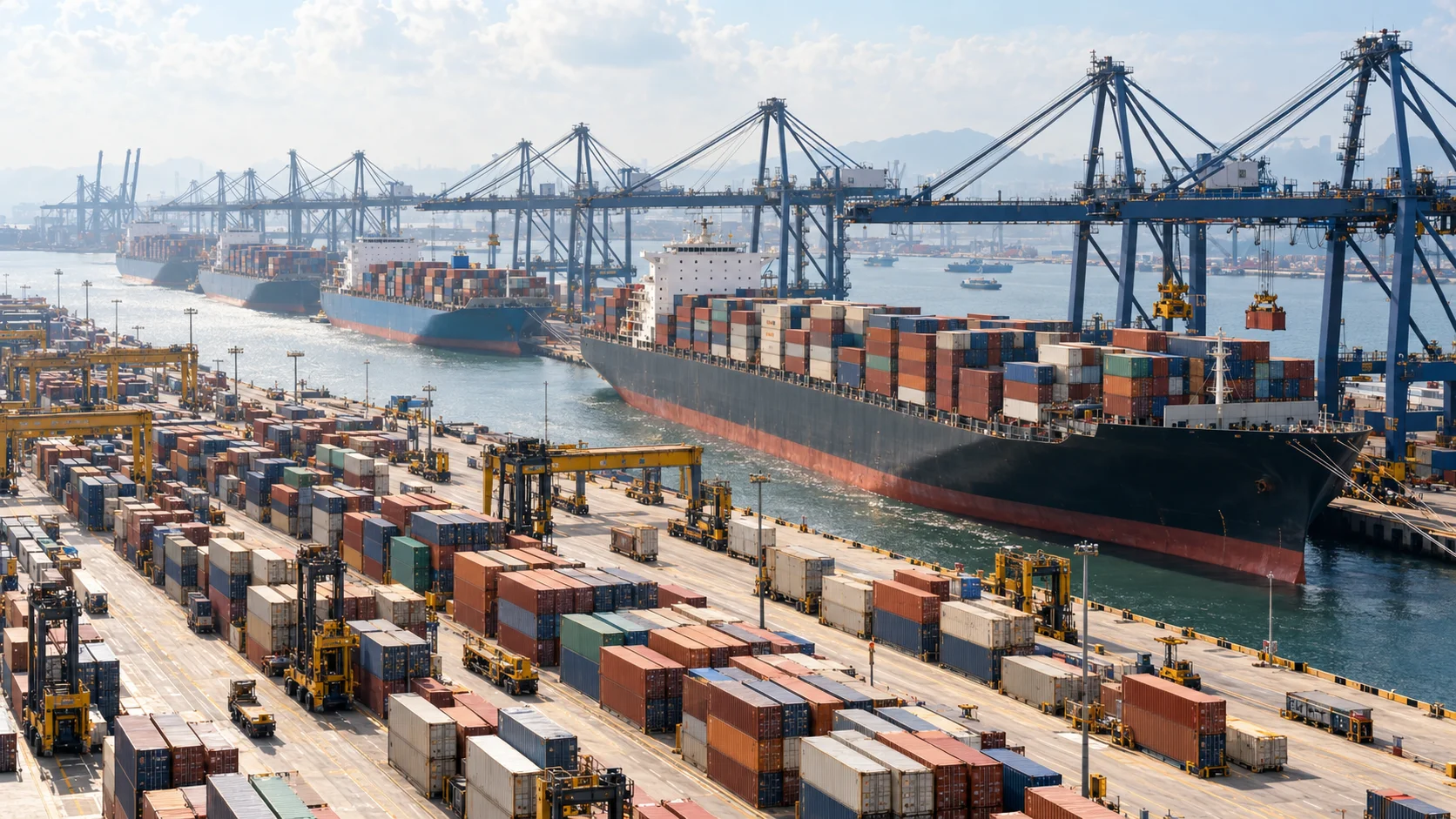
When an importer sources from multiple countries (China, Vietnam, India, Indonesia, Thailand) and wants to ship to Australia in a single container, cross-origin consolidation is the relevant structure. Cargo from each origin moves to a transit hub (typically Singapore or Port Klang), is cross-docked and consolidated into a single FCL, and the FCL moves to Australia.
This structure is more complex than single-origin supplier consolidation and is used by importers with established multi-country supply chains, not occasional multi-origin buyers. The operational requirements are significant: each origin shipment must be customs-cleared for export at its origin; the hub cross-dock must be coordinated to receive all shipments within a narrow time window to avoid extended storage; and the Australian import entry must correctly reflect all origins and their applicable duty rates and any applicable certificate of origin concessions (ASEAN-Australia FTA, India-Australia ECTA, etc.).
Economics: For a business importing 8 CBM from Vietnam, 7 CBM from China, and 5 CBM from India per cycle:
- Three separate LCL shipments to Australia: approximately AUD 3,100–3,700 combined (different rates per lane, minimum charges applying to each)
- Cross-origin FCL via Singapore hub: AUD 1,600–2,000 ocean freight from Singapore + AUD 380 destination + AUD 200–400 cross-dock fees at Singapore + three origin export LCL feeder costs (approximately AUD 800–1,100 combined) = AUD 2,980–3,880
At 20 CBM from three origins, the economics are tight. Cross-origin consolidation often wins on non-freight factors (simpler Australian clearance, lower damage risk from reduced co-loading handling, one delivery) even when freight cost is similar. At 30 CBM combined, cross-origin FCL is clearly cheaper than three separate LCL shipments.
Documentation complexity: Cross-origin consolidation requires careful handling of country of origin documentation. Each origin country’s goods must be correctly identified on the packing list and customs entry. If any origin qualifies for FTA preference (e.g., Vietnam under ASEAN-Australia FTA with Form D Certificate of Origin), the FTA documentation for those goods must accompany the consolidation and be correctly referenced in the Australian import entry. A customs entry that combines FTA and non-FTA goods must segregate them correctly or the FTA concession may be denied on audit.
4. Buyer Consolidation (Import Consolidation Programs)
Buyer consolidation, often called an Import Consolidation Program (ICP) or nominated forwarder program, is a formal arrangement where a larger importer places all or most of their ocean freight with a single freight forwarder under a structured program with agreed service levels, rates, and procedures.
Under an ICP, the forwarder assigns an origin depot or CFS for the importer’s exclusive or near-exclusive use, guarantees vessel space on agreed services, and manages the end-to-end logistics: supplier pickups from factory to origin depot, loading, ocean freight, Australian customs clearance, and delivery. The importer gets a single invoice per cycle covering all components, agreed transit time guarantees, and a dedicated account team at origin and destination.
When an ICP is appropriate: ICPs make financial sense for importers with at least AUD 400,000–500,000 in annual ocean freight spend (approximately 150–200 TEUs per year) and a reasonably predictable import cadence. Below this scale, the contracted rate advantage does not offset the commitment and administrative overhead of a formal program. Above this scale, the contracted rate discount (typically 10–20% below the forwarder’s spot rates for the same lanes), priority loading access, and reduced transaction cost of a managed program produce material savings.
ICPs also shift the forwarder relationship from transactional to partnership. The forwarder has committed resources and the importer has committed volume, creating mutual incentive to solve problems cooperatively rather than each party protecting their margin on individual transactions. This relationship structure matters most during freight market disruptions (peak season space tightening, vessel cancellations, port congestion) when spot customers are rolled and ICP customers are protected.
Consolidation at the FCL/LCL Threshold: The Decision That Moves the Most Money
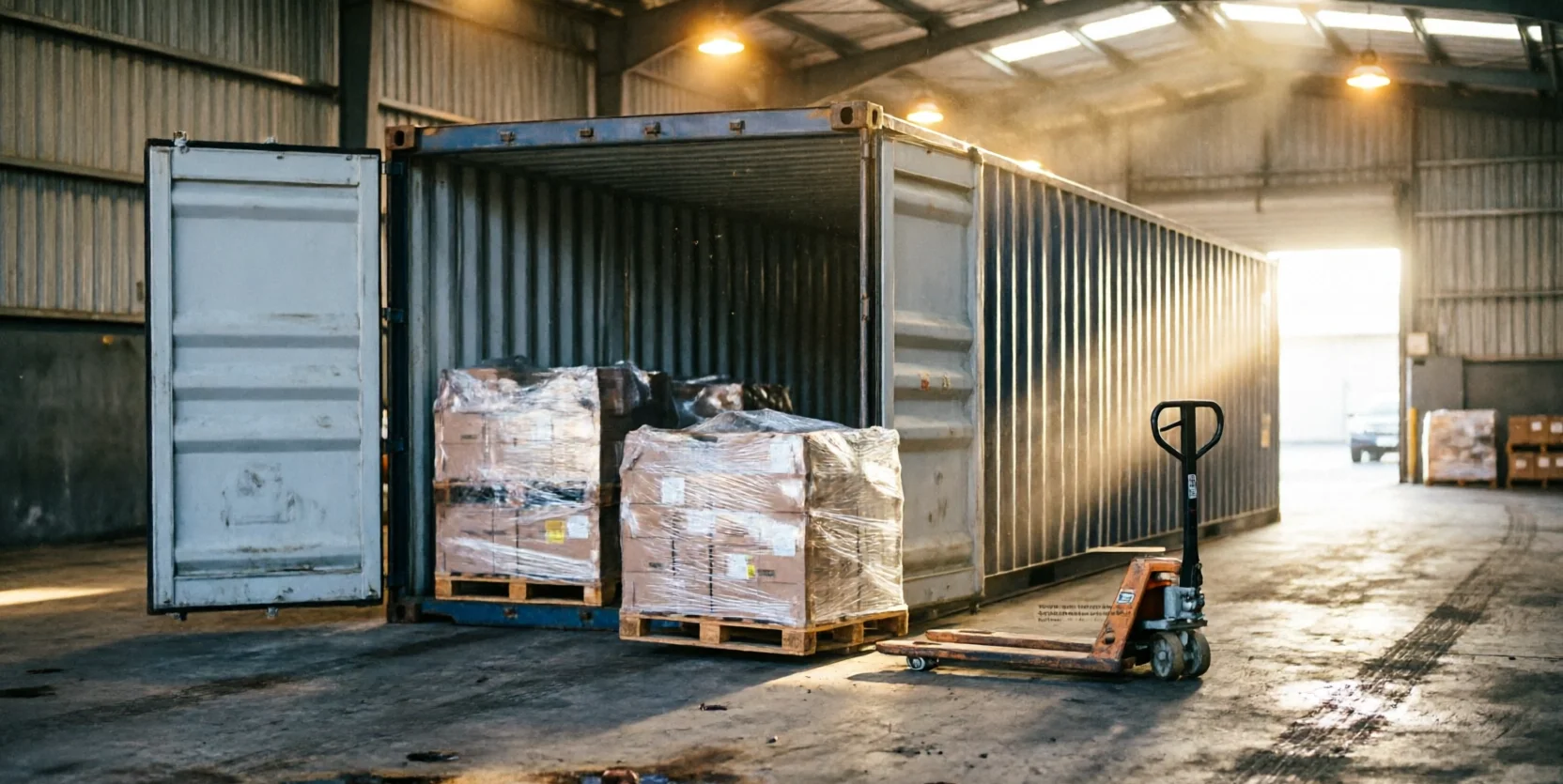
For most Australian importers, the highest-value consolidation decision is not choosing between the four structures above but the simpler choice of whether to consolidate individual LCL shipments into an FCL. This decision recurs with every order cycle and compounds over 12–24 cycles per year.
The threshold decision requires three inputs: your LCL all-in cost for the actual volume, the FCL all-in cost for the same lane, and the incremental carrying cost of the inventory delta if you must wait for more cargo to reach the FCL threshold.
Worked example at the threshold: An importer of industrial brushware regularly ships 11 CBM per month from Ningbo to Melbourne.
- LCL monthly cost: AUD 75/CBM × 11 + AUD 100 tailgate + AUD 350 destination = AUD 1,275
- 20ft FCL monthly cost: AUD 1,700 ocean freight + AUD 350 destination + AUD 400 cartage = AUD 2,450
- FCL premium over LCL at 11 CBM: AUD 1,175/month, or AUD 14,100/year
The importer’s goods value at AUD 80/CBM average = AUD 880 per CBM = AUD 9,680 for 11 CBM. To fill a 20ft FCL (approximately 26 CBM maximum), they would need to ship 15 CBM more than the current 11 CBM order, meaning they must either advance-purchase 15 CBM of additional demand or source an additional product line to ship in the same container.
The carrying cost of holding 15 CBM of additional inventory at AUD 880/CBM average value = AUD 13,200 additional inventory × 25% carrying cost rate = AUD 3,300/year. The freight saving from moving from LCL to FCL by increasing volume to 26 CBM: LCL 26 CBM cost = AUD 75 × 26 + AUD 100 + AUD 350 = AUD 2,400 vs FCL all-in AUD 2,450, essentially break-even. The crossover point for this specific lane and rate set is around 24–27 CBM, not 10–15 CBM as the generic rule of thumb would suggest.
This example illustrates why the generic “FCL saves money over 12 CBM” rule of thumb is unreliable. The actual crossover depends on destination handling charges (which are fixed and favour FCL more at some ports than others), the specific carrier’s LCL rate (some offer very competitive LCL on high-volume lanes), and whether tailgate or container transport cost is included in the comparison. Always run the calculation with actual quotes from your forwarder.
Timing Consolidation: The Order Alignment Problem
Supplier consolidation requires that all suppliers’ cargo is ready by the vessel cut-off date. In practice, suppliers deliver on different schedules, with different lead times, and sometimes with delays. The consolidation only works if the timing is manageable: either all suppliers can hit the same cut-off, or the importer accepts that some cargo will miss the consolidation and ship separately (at LCL rates).
Vendor-managed delivery windows: The most effective practice is to set a cargo-ready date in the purchase order that builds in a 5–7 day buffer before the vessel cut-off. This gives late suppliers a window to deliver without missing the consolidation. The cut-off date itself should not be shared with suppliers as the delivery deadline. Suppliers who know the exact cut-off often deliver on the last possible day, leaving no buffer for delays. Give suppliers a delivery deadline that is 5–7 days before the forwarder’s depot cut-off.
We did not understand this the first time we watched a consolidation program fall apart. Every supplier had a delivery date. Every date was, individually, reasonable. And the whole shipment still missed its cut-off, because nobody had connected the dots between what was reasonable for one supplier and what was workable for the group. Looking back, the fix was not more pressure on any single supplier. It was building a buffer that assumed, correctly, that reasonable people running independent schedules will not spontaneously synchronise on their own. You cannot see that connection looking forward, when each supplier’s promise looks fine in isolation. You can only see it looking back, after the cut-off has already passed once. Build the buffer before you learn the lesson the expensive way.
Partial consolidation policy: Define in advance what happens when a supplier misses the delivery window. Options: (a) hold the entire container until all cargo arrives, accepting the delay but preserving FCL economics; (b) ship the ready cargo as LCL and the late cargo on the next FCL cycle; (c) ship the ready cargo as FCL (accepting an underutilised container) and leave the late cargo for next cycle. Option (b) is usually the right answer when the delay is 5–10 days or more; option (a) when the delay is 1–2 days and the inventory risk of delay is manageable.
Supplier concentration and geographic clustering: Consolidation works best when suppliers are geographically close, ideally within one or two trucking days of the consolidation depot. Suppliers in Guangzhou, Dongguan, Shenzhen, and Foshan can all deliver to a Guangzhou CFS within 1–2 days. A supplier in Yiwu (Zhejiang Province) is 10–12 hours by truck from Guangzhou and might be better served by a separate Ningbo consolidation point. Splitting your supplier base across two consolidation depots adds complexity but may still be worthwhile if it reduces each supplier’s trucking cost and simplifies their delivery logistics.
Documentation for Consolidated Shipments
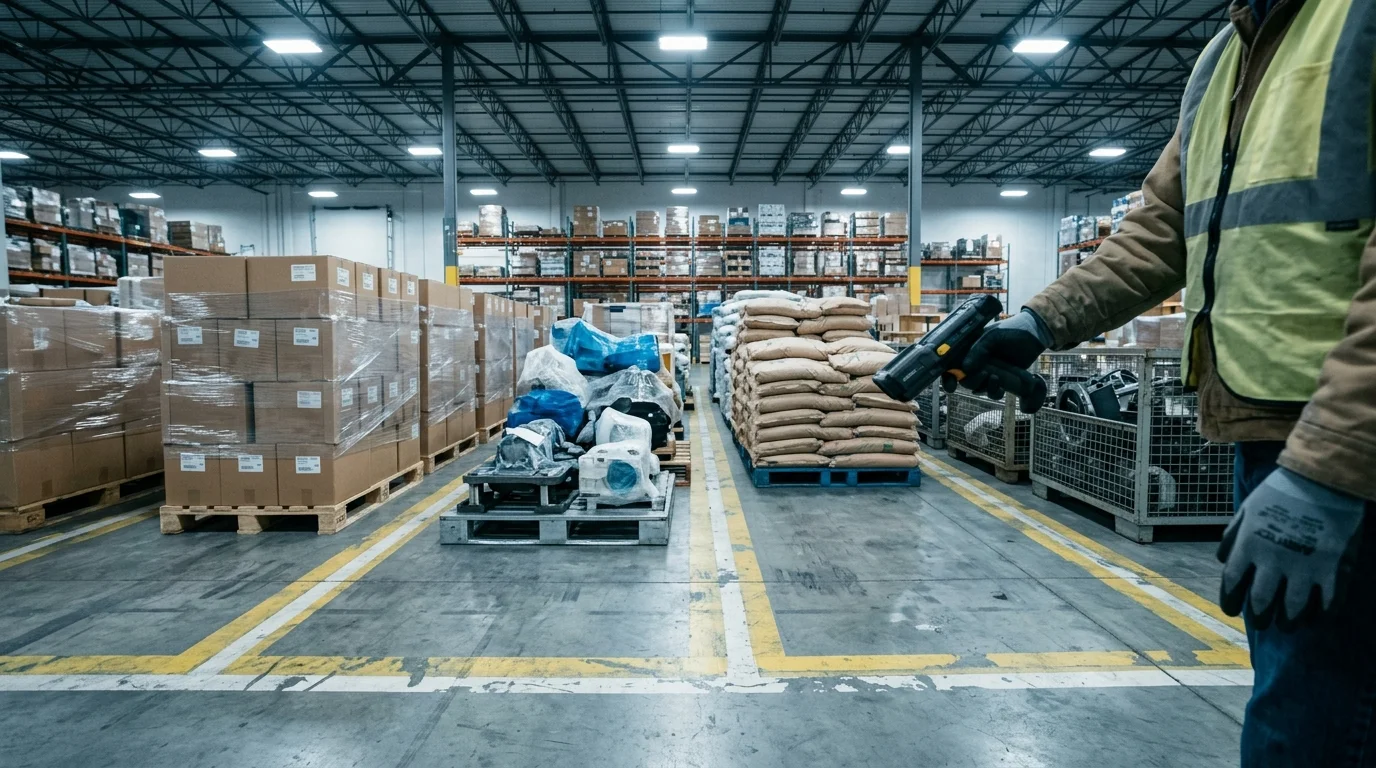
A consolidated FCL covering multiple suppliers requires more careful documentation than a single-supplier shipment, because each supplier’s cargo must be traceable from the factory to the Australian warehouse.
Packing list structure: A consolidation packing list should identify each supplier’s cargo in a separate section, with total weights and dimensions per supplier, and an overall shipment total. If the suppliers are in different countries, the country of origin must be shown per item or per section, not just at the shipment level, because the customs entry will need to apply different duty rates and possibly different FTA concessions to different portions of the cargo.
Commercial invoice requirements: If multiple suppliers have separate commercial invoices, the Australian customs entry must reference each invoice against the correct goods. Some importers consolidate multiple supplier invoices into one consolidated commercial invoice (produced by the importer, not the suppliers) for customs purposes. This is acceptable under Australian Border Force rules as long as the consolidated invoice reflects actual transaction prices and the individual supplier invoices are available for ABF review if requested.
Certificate of Origin for consolidated shipments: If FTA preferences apply to some suppliers’ goods but not others, each eligible supplier must provide a separate Certificate of Origin covering only their portion of the shipment. The customs broker must correctly reference the applicable CoO against the eligible line items in the import entry. A single CoO covering the whole consolidated shipment is not valid if cargo from multiple origin countries is included.
Consolidation and Cargo Insurance
Consolidated shipments require careful attention to cargo insurance, because the risk profile differs from a single-supplier FCL in ways that can affect whether a claim is paid in full.
Under a standard marine cargo policy (Institute Cargo Clauses A), all cargo in the container is covered at declared value, regardless of whether it came from one or multiple suppliers. However, two issues arise in practice:
Declared value accuracy: A consolidation covering four suppliers with separate commercial invoice values totalling AUD 85,000 must be insured for at least AUD 85,000 (and typically CIF + 10% under standard policy terms, so approximately AUD 93,500). If the cargo is under-insured, because the importer only declared the value of their largest supplier’s cargo and forgot to include the others, the insurer can apply the average rule, paying only the proportion of the claim that the declared value bears to the actual value.
Segregation in loss assessment: If only one supplier’s cargo is damaged in a consolidated FCL (e.g., damaged during stuffing at the origin depot), the loss assessment must identify and quantify only the damaged portion. A comprehensive packing list and photographic documentation of how the cargo was loaded, with cargo positions noted per supplier, provides the evidence needed to make a clean partial-loss claim rather than an entire-container claim.
For consolidations over AUD 50,000 in cargo value, confirm with your insurance broker that the policy covers consolidated shipments and that the declared value mechanism is correctly structured for multiple-invoice cargo. See Do You Need Cargo Insurance When Shipping? for the broader insurance framework.

Building a Consolidation Program Step by Step
Most importers treat consolidation as all-or-nothing, and that is the wrong frame. The real obstacle is circular: you cannot get supplier delivery discipline until you have run the program, and you cannot justify the program’s overhead until that discipline is proven. Break the circle with a three-supplier pilot in one origin cluster. Two cycles of real cut-off adherence and cost variance data make a stronger case for adding a fourth and fifth supplier than any spreadsheet model.
For an importer who currently ships LCL from multiple suppliers and wants to move to a structured consolidation program, the implementation sequence:
Step 1: Map your supplier geography and volumes. List every active supplier, their city of operation, and the CBM volume they ship per order cycle. Identify clusters: suppliers within the same city or region who can deliver to the same consolidation depot.
Step 2: Calculate the consolidation economics. Use your forwarder’s current LCL and FCL quotes for each cluster. Calculate total LCL cost per cycle for each cluster versus FCL cost including consolidation depot fees. Identify which clusters reach the FCL threshold at current volumes and which fall short.
Step 3: Align purchase order cycles. Identify the order cycle adjustments needed to synchronise suppliers within each cluster. This may mean negotiating a slightly earlier cargo-ready date with one supplier and a slightly later date with another to bring them within the same vessel cycle window.
Step 4: Establish the origin depot arrangement. Work with your freight forwarder to set up the consolidation depot arrangement: agreed depot location, storage fee schedule, delivery instructions for each supplier, and the cut-off date process.
Step 5: Pilot with one consolidation cycle. Run the first consolidation cycle and track the actual cost against the model. Pay attention to what went wrong: which supplier was late, whether the packing list was correctly structured, whether the Australian customs entry was correctly filed for the multi-supplier cargo.
Step 6: Standardise and scale. After a successful pilot, formalise the consolidation program: standardise the delivery instructions in the PO template, agree a regular vessel schedule with the forwarder, and track freight cost per CBM against the pre-consolidation baseline each month.
For importers with multiple supplier clusters in China or Southeast Asia, this six-step process typically takes 6–10 weeks from decision to first consolidated shipment. The freight cost reduction, which compounds over every order cycle, begins immediately from the first consolidation. Reductions of AUD 8,000–25,000 per year are common for importers who were previously shipping three or more separate LCL consignments per cycle from suppliers in the same origin region.
Swift Cargo assists Australian importers in structuring consolidation programs across major origin markets including China (Guangdong, Zhejiang, Jiangsu), Vietnam, Thailand, and India, with origin depot services, contracted FCL rates, and integrated customs brokerage on the Australian side. Visit swiftcargo.solutions/australia to model a consolidation program for your current supplier map.
For the core LCL vs FCL comparison, see LCL vs FCL for Australian Importers: When to Use Each. For how consolidation fits into shipping frequency planning, see How to Optimise Shipping Frequency for Your Import Business. For the total landed cost context, see Total Landed Cost When Importing to Australia.

Related reading: Freight Pricing to Australia Hides Costs in Five Buckets
Frequently Asked Questions
What is freight consolidation and how does it work for Australian importers?
Freight consolidation means combining multiple smaller shipments, either from different suppliers at origin or from different buyers at destination, into a single container or cargo unit to reduce the freight cost per unit. For Australian importers, there are two main forms. Supplier consolidation: the importer’s freight forwarder collects cargo from multiple suppliers at origin (typically in China or Southeast Asia), holds it at a consolidation warehouse, and loads everything into one FCL container when all cargo is ready. This allows an importer sourcing from 3–5 suppliers in the same region to ship a full 20ft or 40ft FCL rather than multiple LCL shipments, capturing FCL per-CBM economics. LCL groupage (also called LCL consolidation): the importer ships a single small consignment into the forwarder’s shared container alongside cargo from other buyers. The cost is lower than a dedicated FCL at small volumes but higher per CBM than FCL at volumes above the LCL/FCL threshold (typically 10–15 CBM). Consolidation decisions hinge on volume, timing, and the per-CBM cost differential at each method’s rate threshold.
How much does supplier consolidation save compared to shipping LCL from each supplier separately?
Savings depend on the number of suppliers, volumes, and origin location, but a typical scenario illustrates the scale. An importer sourcing from 4 suppliers in Guangdong Province, each shipping 5 CBM per cycle: four separate LCL shipments at AUD 75/CBM plus minimum charges and destination handling might total AUD 2,800–3,200. A single 20ft FCL consolidating all 20 CBM: AUD 1,800–2,200 all-in. Savings: AUD 600–1,400 per order cycle. Over 12 monthly cycles: AUD 7,200–16,800 per year in freight reduction. The supplier consolidation cost itself (forwarder warehouse-in, storage, and loading fees at origin) typically runs AUD 100–250 per supplier per consolidation, or AUD 400–1,000 for 4 suppliers, which is substantially less than the freight saving. Additional benefits: one customs entry (lower brokerage fees), one delivery to the Australian warehouse, and lower damage risk than four separate LCL consignments co-loaded by a consolidator.
What is an import consolidation program and should Australian importers use one?
An import consolidation program (ICP) is a formal, structured arrangement with a freight forwarder to handle all or most of an importer’s ocean freight under a single managed program. Instead of ad-hoc shipments, the forwarder manages a regular vessel schedule, consolidation at the origin depot, customs brokerage, and delivery on the Australian side under agreed service levels and rates. ICPs make sense for importers with AUD 500,000+ in annual landed goods value, multiple suppliers, and regular (at least monthly) shipment cadence. Benefits include contracted freight rates (typically 10–20% below spot), dedicated origin depot space, priority loading when vessel space is tight, simplified documentation (one master BL per cycle), and a single point of accountability for the supply chain. The trade-off is commitment: ICPs typically require volume commitment over a 12-month term. If import volumes drop significantly, the committed rate may become unattractive relative to the spot market.
What is cross-dock consolidation and when does it make sense for Australian importers?
Cross-dock consolidation is a technique where inbound cargo from multiple origins or suppliers is received at an intermediate point, sorted by final destination, and re-loaded without extended storage, typically within 24–48 hours. For Australian importers, this is most relevant when sourcing from multiple countries (e.g., China, Vietnam, and India) and wanting to consolidate into one container at a transit hub such as Singapore or Port Klang before the final leg to Australia. The cross-dock hub receives multiple smaller consignments, inspects them, and co-loads them into a single container bound for Sydney, Melbourne, or another Australian port. Cost saving versus direct separate LCL from each origin: typically AUD 400–900 per order cycle at the volumes most Australian multi-origin importers handle. The trade-off is transit time: cross-docking at a hub adds 3–10 days versus direct services, and hub inventory risk (goods sitting at the cross-dock waiting for other cargo) must be managed.