
Most Americans don’t lose money on an international move because ocean freight is “expensive.” They lose it because they ship the wrong mix of items, miss Thailand’s timing rules for duty-free clearance, or discover—too late—that door delivery in Bangkok is a scheduling problem as much as a shipping problem.
If you treat your move like a project—volume, timeline, customs eligibility, and a delivery plan—you can keep costs and surprises under control. This guide explains the decisions that matter: door-to-door vs port-to-port, sea vs air, realistic transit time, customs rules for used household effects, and the fee traps that show up when paperwork or timing slips. If you want a single checklist that also covers restricted items, quarantine, and pets, start with our Thailand relocation page.
Jump to a section
- Shipping household goods from the USA to Thailand: what to ship (and what not to)
- Door-to-door vs port-to-port shipping from the USA to Thailand
- Sea freight vs air freight for household goods to Thailand (cost vs speed)
- Thailand customs clearance for household goods (duty-free import rules)
- USA to Thailand household goods shipping time (typical transit timeline)
- Packing list requirements for Thailand customs (inventory + documentation)
- International moving insurance for USA to Thailand household shipments
- What causes delays when shipping household goods to Thailand
- Cost to ship household goods from the USA to Thailand (market trends)
- FAQ: Americans Moving to Thailand (Shipping & Relocation)
Shipping household goods from the USA to Thailand: what to ship (and what not to)
Most U.S. homes contain plenty of “commodity” items that cost less to replace in Thailand than to ship across the Pacific—especially bulky furniture and single-voltage appliances that don’t match Thailand’s 220–240V system.
What usually survives the cut is what you can’t easily replace: sentimental items, specialty equipment, and genuinely high-value pieces you know you will use in your Thai home. The rest—standard sofas, basic beds, everyday kitchenware—often costs more to move than to rebuy, especially once you add packing, inland delivery, and the risk of storage fees if delivery windows slip.
Two practical Thailand realities change the math:
- Space and access: Condos and many rental homes have tighter access constraints than typical U.S. houses. Large furniture that “fits on paper” can become a delivery and assembly problem.
- Climate: High humidity increases the stakes on packing. Mold and rust aren’t exotic edge cases—they’re common failure modes when shipments sit in a container, a warehouse, or a closed room after delivery.
Thailand’s duty-free treatment is built around used household effects in reasonable quantities. New goods, duplicates, and high volumes of boxed retail purchases can invite scrutiny; shipments that clear cleanly tend to look like an ordinary household move.

Door-to-door vs port-to-port shipping from the USA to Thailand
Door-to-door shipping
Door-to-door is the default for most relocating families because it bundles the parts that are easiest to underestimate: export documentation, destination handling, customs coordination, and the final-mile delivery constraints that come with Thai buildings and neighborhoods.
- Pickup at your U.S. address (and packing if you choose it)
- Export handling + ocean or air freight
- Thailand customs clearance coordination
- Delivery to your Thai address
Port-to-port shipping
Port-to-port can look cheaper, but it offloads risk to you. If paperwork needs correction, if clearance slows, or if your delivery address isn’t ready, the meter can start running—storage, demurrage, re-delivery attempts, and documentation fees can erase any headline savings. And if you’re choosing a discharge port for a Bangkok delivery, the decision has real schedule and cost consequences—see Laem Chabang vs. Bangkok Port for a shipper’s breakdown.
If you are moving to Thailand for the first time, the smarter trade-off is predictability: a clearance plan that matches your documents, and a delivery plan that matches your building’s rules.
Sea freight vs air freight for household goods to Thailand (cost vs speed)
Sea freight
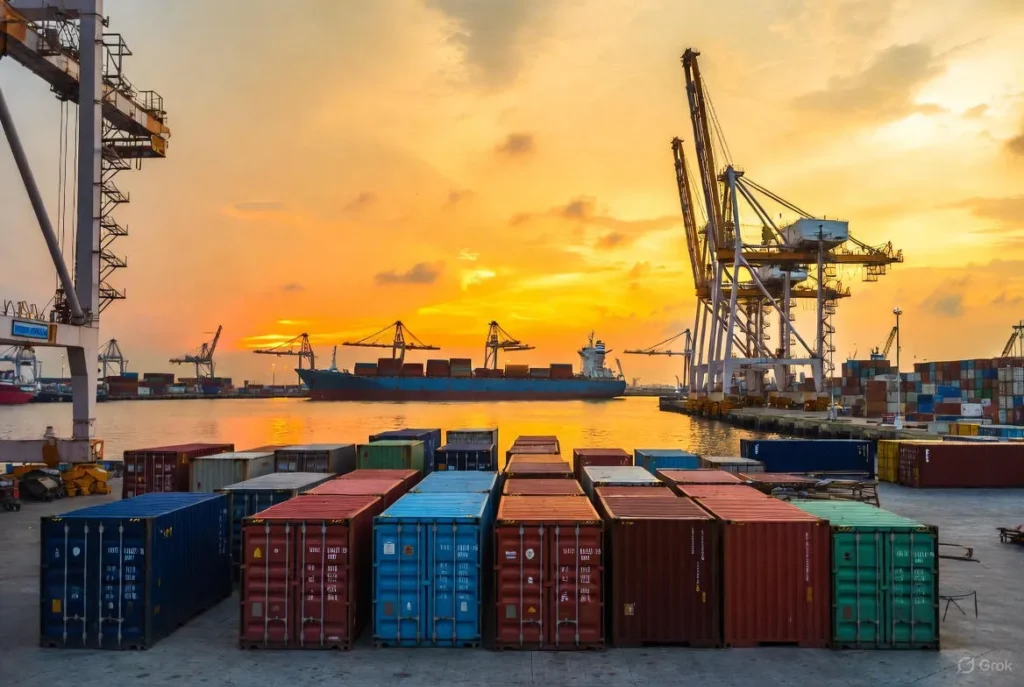
Sea freight is the standard choice for full household moves because cost per cubic meter is dramatically lower than air. You’ll usually be offered:
- LCL (Less than Container Load): Your shipment shares container space with other cargo. It can be cost-effective for small moves, but it adds consolidation steps and handling touchpoints.
- FCL (Full Container Load): You get a 20’ or 40’ container. It’s typically more predictable for larger moves because it avoids consolidation and reduces handling.
Air freight
Air freight is best used strategically: essentials you want quickly while the sea shipment crosses—clothing, work equipment, baby items, medications (where permitted), and a few household basics.
Thailand customs clearance for household goods (duty-free import rules)
Thailand Customs sets a timing window for duty exemption on used/secondhand household effects: shipments should arrive not earlier than one month before and not later than six months after the importer’s arrival (extensions may be possible in special cases). If your dates are tight, check Thailand’s 6‑Month Rule for Household Goods before you commit to a sailing date.
Verification (Thailand Customs): Used/secondhand household effects — duty exemption timing rule
In practice, clearance success is built on three things:
- Eligibility: Your visa pathway and residency situation must match the exemption you’re claiming (and the details vary by route—see what retirees can ship duty-free or DTV shipping rules if those routes apply to you).
- Timing: Your shipment must land in the allowed window relative to your entry.
- Documentation: Customs wants an itemized packing list and the shipping documents to match.
Thailand also limits duty-free treatment for certain electrical appliances (for example, multiple units can trigger duties/VAT). If you are shipping appliances at all, document ownership, confirm quantities, and expect closer scrutiny than you would for used clothing and personal effects.
USA to Thailand household goods shipping time (typical transit timeline)
Transit time is rarely just “time on the water.” It’s packing, consolidation (for LCL), sailing, clearance, and delivery scheduling.
- Air freight: Often roughly 3–10 days door-to-door for small shipments, depending on routing and clearance.
- Sea freight (LCL): Commonly 6–10+ weeks door-to-door once packing, consolidation, sailing, clearance, and delivery are included.
- Sea freight (FCL): Often more predictable than LCL because it avoids consolidation and some handling steps.
Thailand’s duty-free timing window makes scheduling more than a convenience issue. If you’re moving on a deadline, build buffer days into your clearance plan rather than trying to run the shipment “just in time.”
Packing list requirements for Thailand customs (inventory + documentation)
The packing list is not busywork. It’s the document Customs uses to decide whether your shipment looks like a household move—or a retail import.
Good packing lists are specific and consistent:
- Clear descriptions (avoid “miscellaneous”)
- Estimated values (even for used goods)
- Serial numbers for high-value electronics (when practical)
- Box numbering (Box 1 of 45, etc.)
That same list becomes your insurance backbone if you need to claim damage or loss.
International moving insurance for USA to Thailand household shipments
Before you ship, confirm what you’re actually buying. Policies can look similar and behave very differently at claim time.
- Does it cover partial loss/damage, or only total loss?
- Is settlement replacement value or depreciated value?
- Are water and moisture risks covered?
- Are there packing requirements tied to coverage?
If you pack yourself, insurers may limit coverage for breakables. That’s one reason many relocation shipments use professional export packing for fragile and high-value items.
What causes delays when shipping household goods to Thailand
Delays are usually boring—and expensive. The most common triggers are paperwork, timing, and final delivery readiness.
1) Paperwork mismatches
- Visa category doesn’t match the exemption being claimed
- Missing signatures, missing arrival dates, or inconsistent names
- Inventory descriptions that are too vague to clear quickly
2) Shipping dates outside the Customs timing window
- Shipment arrives too early or too late relative to your entry date
- Documents can’t support the “change of residence” story
3) Port congestion and schedule reliability
Even a perfectly documented shipment can land into a bad week. UNCTAD has described how rerouting away from key chokepoints increases vessel demand and contributes to congestion and delays.
Verification (UNCTAD): Suez and Panama Canal disruptions — congestion and delay pressure
4) Delivery isn’t ready
- Lease start dates don’t match ETA
- Buildings restrict delivery days/hours
- Elevators, parking access, or loading bays can’t support the delivery plan
Cost to ship household goods from the USA to Thailand (market trends)
Freight pricing moves when the system is under stress—longer routes, congestion, higher insurance and fuel costs, and less schedule reliability. UNCTAD has explicitly linked rerouting and chokepoint disruption to higher costs and operational pressure in global logistics.
Verification (UNCTAD): Why chokepoint disruption lifts costs
Data providers also quantify how disruptions show up in pricing spread. Xeneta, for example, noted that Panama Canal constraints coincided with large spot-rate spreads on certain trades during peak disruption.
Verification (Xeneta): Panama Canal disruption — measurable rate impacts
What it means for a household move: the most important “cost lever” is still the one you control—volume. Reduce what you ship, ship the right way for your volume (LCL vs FCL), and plan timing so you don’t pay storage and re-handling fees because the delivery plan wasn’t ready. When you’re ready to price it properly—freight, destination handling, customs coordination, and delivery—use the quote flow on our Thailand quote checklist.
FAQ: Americans Moving to Thailand (Shipping & Relocation)
How do I ship household goods from the USA to Thailand?
Choose sea freight (LCL or FCL) for full household moves, air freight for essentials, and work with a mover that handles U.S. export and Thailand customs clearance.
Sea freight is the default because it’s economical for volume. The practical decision is LCL (shared space, more handling) versus FCL (your own container, usually more predictable). What matters most is not the sailing date—it’s whether your timeline and documents support duty-free clearance and a smooth delivery plan in Thailand.
How much does it cost to ship household goods to Thailand from the USA?
Costs depend on volume (cubic meters), LCL vs FCL, origin city, and delivery location in Thailand.
Quotes are built from a cost stack: packing, export handling, ocean or air freight, destination handling, customs coordination, and inland delivery. The fastest way to lower cost is to lower volume—and to avoid fees that appear when clearance or delivery timing slips.
How long does shipping take from the USA to Thailand?
Air freight is often about 3–10 days for small shipments; sea freight is commonly 6–10+ weeks door-to-door.
Port-to-port time can be much shorter than door-to-door time. Consolidation (for LCL), customs clearance, and delivery scheduling are what stretch timelines. If your move relies on a timing window for duty-free clearance, build in buffer rather than trying to land the shipment “on the exact week.”
Should I use door-to-door or port-to-port shipping to Thailand?
Door-to-door is simplest for most first-time movers.
Door-to-door consolidates responsibility across pickup, export handling, freight, customs coordination, and delivery. Port-to-port can work, but it shifts risk to the importer—especially around documentation corrections, storage exposure, and arranging last-mile delivery in Thailand.
What is the difference between LCL and FCL when moving to Thailand?
LCL shares container space; FCL gives you a full container.
LCL is common for partial moves but adds consolidation and additional handling points. FCL reduces handling and can be more predictable for larger household shipments. The right choice depends on volume and how much schedule variability you can tolerate.
Do I need a 20ft or 40ft container to move from the USA to Thailand?
It depends on volume: 20ft suits many apartment moves; 40ft suits larger household moves.
A survey (virtual or in-person) estimates cubic meters required. Overbooking wastes money. Underbooking creates last-minute problems—either a second shipment or an expensive re-plan.
Can Americans import used household goods into Thailand duty-free?
Often yes, if you qualify under Thailand’s change-of-residence rules.
Duty exemption is typically tied to used household effects in reasonable quantities, supported by documentation and timing. New goods or duplicates can be assessed duties/VAT. Visa and residency status matter, so align your shipping plan with your immigration timeline before you book.
What is Thailand’s 6-month rule for household goods?
Thailand Customs generally requires used household goods to arrive within six months of your entry.
The published guidance states shipments should arrive not earlier than one month before and not later than six months after arrival (extensions may be possible). Missing the timing window can change the tax outcome or add documentation requirements.
What documents are required for Thailand customs clearance?
Passport, visa, bill of lading/air waybill, packing list, and exemption paperwork where applicable.
Clearance succeeds when names, dates, and descriptions match across documents. An itemized packing list with clear descriptions and reasonable valuations reduces inspection risk and speeds processing.
What items are restricted when shipping household goods to Thailand?
Some items are prohibited or restricted, and certain categories draw scrutiny.
Restrictions can apply to controlled items and certain equipment. Large quantities of brand-new goods can look like commercial import. If you’re unsure about an item category, verify before it’s packed and shipped.
Will Thailand charge duty or VAT on my personal belongings?
Possibly—especially for new items, duplicates, or shipments outside the allowed timing window.
Used household effects may qualify for duty exemption if you meet the rules and documentation requirements. If you don’t, Customs can assess duties/VAT based on category and declared value.
Do I need a detailed packing list for Thailand customs?
Yes—vague descriptions slow clearance.
Customs uses the packing list to classify goods. Clear descriptions, estimated values, and (where relevant) serial numbers reduce questions and help if you need to make an insurance claim.
How do I protect my shipment from humidity and mold during sea freight?
Use export-grade packing and moisture control.
Long sea transits plus Thailand’s humidity can damage wood, fabrics, and electronics. Moisture barriers, desiccants, and proper ventilation/packing methods are the difference between “arrived” and “arrived usable.”
What causes delays when moving household goods to Thailand?
Paperwork errors, timing mistakes, port congestion, and delivery scheduling.
The pattern is predictable: inconsistent documents, missed timing windows, congestion-driven schedule variance, and buildings that can’t accept delivery when the truck shows up. The fix is equally predictable: documentation discipline, timeline buffers, and a delivery plan that matches your building’s rules.
Where can I get a reliable quote to ship household goods from the USA to Thailand?
Get a door-to-door quote that itemizes the full cost stack.
A serious quote separates freight, destination handling, customs coordination, and inland delivery so you can compare like-for-like. If you want a tailored comparison, you can request a quote from Swift Cargo Thailand page and benchmark route and service options before booking.
Sources
- Thailand Customs — used/secondhand household effects duty exemption timing rule
- UNCTAD — Suez and Panama Canal disruptions (congestion, delays, cost pressures)
- Xeneta — Panama Canal disruption and measurable rate impacts