
Updated: January 2026 Written by Swift Cargo Solutions Team
If you’re considering retiring abroad in 2026, Thailand is still on the shortlist for one simple reason. It offers one of the strongest lifestyle-for-the-money equations you can find anywhere. Not because it is the cheapest option in the world, but because it combines affordability with excellent private healthcare access, strong daily convenience, and a culture that generally makes life easier for older adults. That said, the Thailand people retire to in 2026 is not identical to the Thailand people remembered from 2012 or even 2019.
- Why retire in Thailand (2026)
- Is Thailand right for you?
- Why retirees move to Thailand
- Who it’s for (and not for)
- Common concerns + how to reduce risk
- Cost of living (2026)
- Retirement visa options (2026)
- Healthcare for retirees
- Best places to retire (2026)
- The most complete retirement in Thailand FAQs on the web

Why Retire in Thailand in 2026: Pros, Cons, and What’s Changed
It is more developed, more international, and in the most popular areas, more expensive. Some places are also busier. The best strategy now is less about chasing the cheapest location and more about choosing the right base for your health, lifestyle, and budget. If you want the short answer up front, here it is.
Thailand remains one of the world’s strongest retirement destinations in 2026 because it combines lower living costs than most Western countries with strong private healthcare access and day-to-day convenience. The retirees who thrive here tend to move in stages, rent first, and choose locations based on real life rather than a vacation impression.
Thailand in 2026: what’s changed, and what hasn’t
Thailand is still an outstanding value for many retirees. However, it helps to go in with your eyes open. What has changed most in recent years is not that Thailand has become expensive. It is that premium areas have become more internationally priced, and your lifestyle choices matter more than they used to.
In 2026, most retirees notice a few clear shifts that are worth understanding upfront. Popular coastal destinations such as Phuket and Koh Samui have higher rent and service costs, especially in areas close to the beach or in modern new developments. Bangkok remains extremely convenient, but certain neighborhoods now price like global cities. Chiang Mai remains strong value, but seasonal air quality is a real factor in planning.
At the same time, the fundamentals that made Thailand attractive have not disappeared. The country still offers excellent private hospitals in major hubs, a wide range of housing choices, and daily services that make life feel easier for many retirees. The conclusion most experienced expats reach is simple. Thailand is still a great retirement destination, but it rewards people who plan with reality and choose their location carefully.
Why so many retirees choose Thailand
Most retirees who move to Thailand are not looking for luxury. They are looking for breathing room. They want a retirement that feels comfortable, warm, and financially sustainable without constant stress. For many people, Thailand delivers three advantages that are hard to match elsewhere.
First, the cost of living can still be dramatically lower than much of the United States, Canada, the United Kingdom, Australia, and parts of Europe. You are not locked into one budget tier. You can live simply in a lower cost area, or you can choose a high comfort lifestyle in Bangkok or Phuket. The point is that the range of options is wide.
Second, healthcare access is one of Thailand’s most important advantages. In Bangkok, Chiang Mai, Phuket, and other major hubs, private hospitals often offer modern facilities, strong diagnostics, and specialist access. For many retirees, the combination of quality and affordability is a major reason the move feels possible.
Third, Thailand is convenient. Daily life can be easier than many retirees expect. Services are widely available in major hubs, many neighborhoods are livable without a car, and you can build a comfortable routine without constant logistics.
What retirees often underestimate (the honest drawbacks)
A strong retirement destination is not perfect. Thailand has tradeoffs, and being honest about them makes planning easier. Heat and humidity can be intense, especially if you arrive in hot season and spend a lot of time outdoors. Some retirees love the warmth immediately, while others need time to adjust their routine. Air quality can also be a seasonal issue. In the north, the smoke season can affect Chiang Mai and the surrounding areas during certain months. This is why many retirees either plan seasonal travel or choose a southern base.
Distance from family is a real tradeoff. Many retirees decide the lifestyle benefits are worth it, but it takes intentional planning if you want regular time with children or grandchildren. Long-term elder care is also different from what many Western retirees are used to. Thailand can be excellent for routine care and many medical needs, but assisted living systems do not mirror those in the United States, Australia, or the United Kingdom. If later life care is a major factor for you, it is worth researching early.
Finally, visas, reporting, and banking are all manageable, but they work best when you treat them as a system. A simple document folder and calendar reminders prevent most stress. None of these are deal breakers for most retirees, but they are the realities that separate a calm relocation from a stressful one.
Who Thailand is best for (and who should think twice)
Thailand tends to be an excellent retirement choice for people who want warmth, strong private healthcare access, and a comfortable lifestyle on a realistic retirement income. It is especially well-suited to retirees who are willing to adapt to a different culture, enjoy a slower daily rhythm, and want the option of living very well without the financial pressure of a high-cost home country.
On the other hand, Thailand may not be ideal if you need to be close to family every week, if you strongly prefer four seasons, or if you want a highly predictable bureaucracy and public elder care system identical to your home country. Many retirees solve this by choosing a hybrid model. They spend part of the year in Thailand and part of the year at home, or they plan a trial year before committing long-term.
The practical takeaway
Thailand remains a top retirement destination in 2026, but the best results come from one approach. The simplest way to reduce risk is to move in stages. Visit first, then rent for a few months. Track your real spending, choose a location that fits your healthcare needs and daily lifestyle, and commit only once you have evidence that Thailand is the right fit.
If you do that, Thailand can offer something many retirees are searching for. A retirement that feels financially sustainable, socially connected, and genuinely enjoyable.
Is Thailand Right for Your Retirement? (Who It Suits Best)
This guide is written for people who are still in the decision and planning phase.In other words, it is designed for readers who are considering Thailand, actively researching, and trying to make smart choices before they commit. If you are the type of person who wants clear answers, practical steps, and a realistic view of what life looks like on the ground, you are in the right place.
It is especially useful if you want to reduce risk.That might mean protecting your budget so you do not overcommit, choosing a location that keeps healthcare convenient as you age, or building a plan that lets you test Thailand first before you ship belongings or make permanent decisions.You will likely get the most value from this guide if you are looking for facts, realistic planning advice, and a step by step approach rather than influencer content.
This guide may not be the best fit if you already live in Thailand long term and want advanced, local level detail, or if you are looking for loopholes and shortcuts around visa requirements. It is also not a lifestyle blog. The goal is simple.
By the time you finish reading, you should have a clear understanding of whether Thailand is right for you, and a practical plan to test it safely.
Why Retirees Move to Thailand: Lifestyle, Value, and Healthcare
People retire to Thailand for practical reasons, not because they are chasing a permanent vacation. For most retirees, the decision is driven by a mix of lifestyle and financial sustainability. They want to live well, but they also want to avoid the feeling that retirement is a slow financial squeeze.
Thailand continues to attract retirees from the United States, Canada, the United Kingdom, Australia, and Europe because it offers a combination that is difficult to replicate elsewhere. For many people, it provides lower day-to-day costs than much of the West, access to modern private healthcare in major hubs, and a wide range of living environments from city life to calm beach towns.
That does not mean Thailand is perfect. It does not mean it is cheap everywhere. It means that the overall value can be strong if you choose your location carefully and build a plan that matches your real lifestyle. This section explains the main reasons retirees choose Thailand, what has changed in recent years, and the tradeoffs that are easiest to underestimate.
Thailand solves three major retirement problems
Most retirees who relocate abroad are responding to the same three pressures. They are trying to reduce financial strain, protect healthcare access, and improve day-to-day quality of life.
First, it reduces cost pressure.
In many Western countries, retirees face increasing pressure from housing costs, healthcare expenses, and inflation. Even people with stable pensions can feel squeezed when rent, property taxes, and medical costs rise faster than income. Thailand can offer a lower-cost day-to-day lifestyle, particularly for renters, while still providing modern conveniences in most major hubs. The key point is not that Thailand is “cheap.” It is that Thailand gives retirees more choices. You can live simply in a lower-cost area or choose a high-comfort lifestyle in a major city. Many retirees find they can spend less while still living better.
Second, it improves healthcare access for many retirees.
Thailand’s private healthcare system is widely used by foreigners in Bangkok, Chiang Mai, Phuket, Pattaya, Hua Hin, and other established hubs. While standards vary by hospital and location, many retirees find routine medical care and diagnostics more accessible and more affordable than out-of-pocket pricing in the United States and other high-cost countries.
Third, it can improve lifestyle and quality of life.
Thailand offers warm weather for most of the year, a strong service culture, and a broad range of environments. Some retirees want a walkable urban life in Bangkok. Others want calm coastal living in places like Hua Hin. Others prefer the value and community of Chiang Mai. For many retirees, that flexibility supports a better quality of life on the same or lower monthly budget.
What’s changed in recent years (2026 reality check)
Thailand is not the same as it was a decade ago, and it is better approached with modern expectations. A few changes matter most for retirees planning in 2026. Some popular areas are more expensive than they were in 2018 and 2019, particularly tourist-heavy destinations and premium neighborhoods. In Bangkok and Phuket, certain parts of the market can feel close to international priced for modern rentals, imported products, and high-end lifestyle spending.
Thailand has also moved toward more structured long-stay rules. Visa enforcement and insurance documentation requirements have tightened in recent years, particularly for retirement visa categories. At the same time, Thailand has introduced new long-stay options. The LTR program and the Destination Thailand Visa reflect a shift toward clearer, documented long-term stays.
The overall result is straightforward. Thailand can still be an outstanding retirement destination, but it rewards retirees who plan carefully, verify current requirements, and avoid rushed decisions.
The tradeoffs you should know upfront
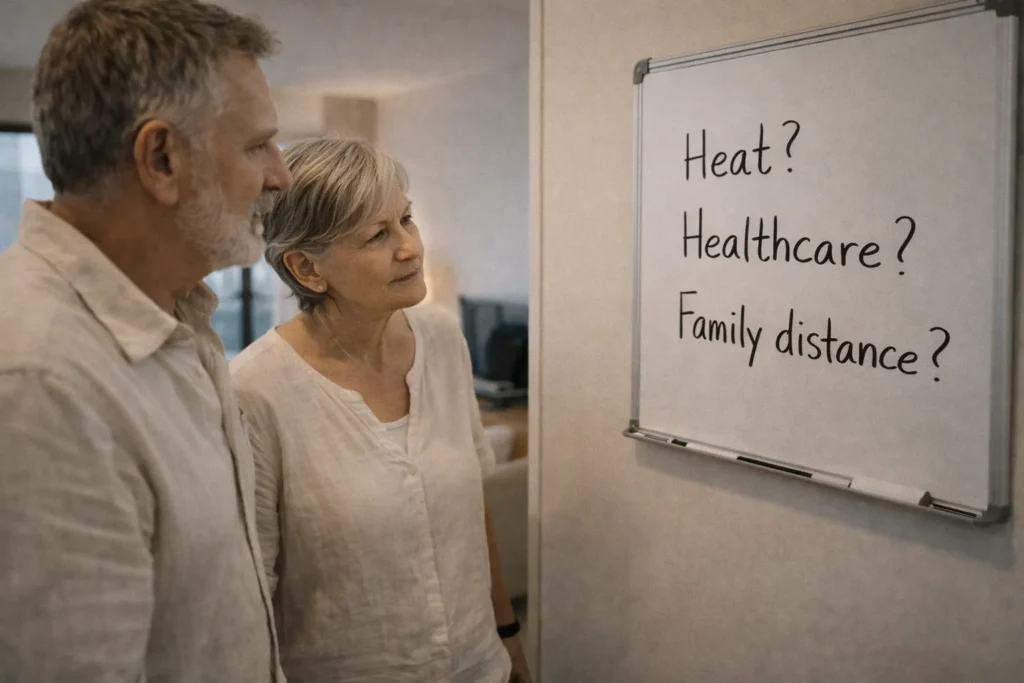
Thailand offers an excellent quality of life for many retirees, but it comes with tradeoffs that are easier to handle when you understand them early. Climate is one. Heat and humidity can be intense, and some regions experience seasonal air quality issues. Bureaucracy is another. Visas, renewals, and immigration reporting require ongoing compliance. These tasks are manageable, but they work best when you keep documents organized and treat compliance as a routine.
Distance is real. Living far from family can be emotionally challenging, especially during health events or major milestones. Many retirees solve this by budgeting for regular trips home and building a plan that allows part-time or seasonal living. Language is also a factor. Thailand is very English-friendly in major hubs, but less so in rural areas. A clear plan, especially a trial move approach, reduces most of these risks. The most important thing is to plan based on real life, not assumptions.
Retiring in Thailand: Who It’s For (and When to Think Twice)
Thailand can be an excellent retirement destination, but it is not a perfect fit for everyone. This is not a negative. It is simply part of choosing any country for retirement. The goal is to match your personality, health needs, and family situation to the reality of living abroad. If Thailand fits you, it can be extraordinary. If it does not fit you, the problems are usually predictable, and they tend to show up within the first year. This quick reality check is designed to help you assess fit early, before you invest too much time, emotion, or money.
Thailand is a strong fit if these statements feel true
Thailand tends to work very well for retirees who want a warm climate, strong private healthcare access, and a lower cost of living without sacrificing comfort. It is also a strong fit for people who enjoy flexibility. Many retirees thrive here because they do not need everything to be identical to home. They can adapt to a different rhythm, a different style of service, and a different kind of bureaucracy.
Thailand is especially suitable if you are comfortable renting long-term, living in an apartment or condo, and keeping your early decisions reversible while you test how daily life feels. If you like the idea of building a new routine, meeting new people, and doing retirement in a way that feels active rather than passive, Thailand often delivers that.
Thailand may be a difficult fit if these statements feel true
Thailand can be challenging if you need frequent physical proximity to family and you do not want long flights, long travel days, or time zone differences. It can also be a difficult fit if you strongly prefer four distinct seasons, or if you know that heat and humidity will make you unhappy day to day.
If you want a retirement lifestyle that relies on Western-style assisted living systems or public elder care services that work in a very familiar way, you should research carefully. Thailand can be excellent for many medical needs, but elder care systems and later life planning do not mirror those in the United States, Australia, or the United Kingdom.
Thailand also may not suit you if you want a country where bureaucracy is extremely predictable and where you do not want to manage any visa reporting or administrative requirements. None of these points are meant to discourage you. They are simply the most common reasons some retirees eventually decide to return home.
The easiest way to find out if Thailand is right for you
The only move that never makes the “I wish I’d known” list is the slow-motion move. Book a month-long scouting trip first, carry a notebook instead of a one-way ticket, then sign a six-month lease before you’ve even learned the Thai word for regret. Stay long enough to watch the power bill triple in March, to sit in Friday immigration queues, to see if the pharmacy stocks your statin when the rainy season backlog hits. Twelve months of actual grocery runs, visa extensions and dentist visits will vote louder than any spreadsheet. If the tallies still feel like a bargain and the mornings still feel like Saturday, you can ship the dog. If not, you leave with nothing more toxic than a cancelled lease and a stamp in a passport you never burned.
7 Common Retirement Concerns in Thailand (and How to Reduce Risk)
If you’ve been researching retirement in Thailand for any length of time, you’ll notice something quickly. Most people aren’t worried about one thing. They’re worried about several things at once. That is normal. Retiring abroad is not only about choosing a country you like. It is about making sure the move is financially sustainable, medically safe, and emotionally realistic. The good news is that most of the risks retirees worry about can be reduced with a simple approach. You do not need to solve everything on day one. You need to move in stages, keep early decisions reversible, and build a plan that protects you from the common regret points. Below are the seven most common fears retirees have, along with practical ways to reduce each one.
Fear #1: “What if I run out of money?”
Almost every retirement question eventually comes back to the same concern. Will I be okay long term? Thailand can make your budget go further, but it is still possible to overspend. This usually happens when someone chooses an expensive location, rents a property that is larger than they need, or tries to replicate a fully Western lifestyle without realizing how quickly those costs add up. The simplest way to reduce financial risk is to budget around normal life rather than vacation life, and to build buffers into your plan.
A practical way to do this is to choose your first rental based on what you can afford even if currency rates change, then track your actual monthly spending for the first three months. You do not need perfect numbers. You need realistic ranges. If your budget works comfortably in Bangkok or Phuket, it will usually work anywhere. If your budget only works in the cheapest areas, it can still work, but you should plan carefully and visit first.
Fear #2: “What if I get sick?”
Healthcare is one of the main reasons people choose Thailand, but it is also one of the biggest concerns. The reality is that many retirees are comfortable using Thai private hospitals, particularly in major hubs. What matters most is choosing the right location, having a sustainable insurance plan, and keeping your medical history organized.
If you have complex ongoing health needs, the lowest stress approach is to start in a major medical hub such as Bangkok, then expand later once you understand the healthcare system and know what you need.
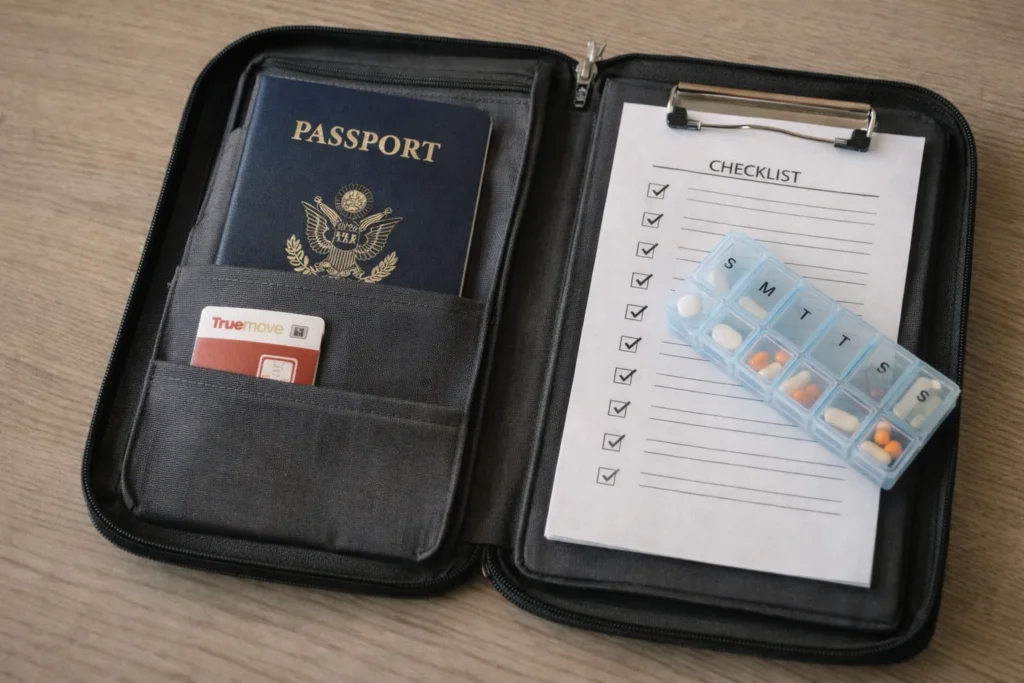
A simple risk reducer is to arrive with a written medical summary, your prescription history using generic names, and recent test results. That one step makes healthcare portable and reduces stress in emergencies.
Fear #3: “Will I be lonely?”
This is one of the most under-discussed parts of retiring abroad, and it is one of the biggest reasons some people return home. Thailand has large expat communities in many areas, but a community does not happen automatically. The retirees who thrive usually build a simple routine. They have a few places they go regularly, a social activity or hobby, and at least one group where they start to feel known.
The easiest way to reduce loneliness risk is to choose a location with an established retiree community for your first year and to commit to one or two weekly activities early. Routine matters far more than most people expect, especially in the first ninety days.
Fear #4: “Am I abandoning my family or grandkids?”
This fear is real, and it deserves respect. For many retirees, the decision is less about Thailand and more about guilt. Will I regret being far away? What helps is to think in terms of connection rather than distance. Many retirees build a plan around two home bases. They live part of the year in Thailand and part of the year at home, or they schedule regular trips back for key events.
A practical approach is to budget for travel and treat Thailand as a quality-of-life base rather than a forever decision. For some families, Thailand becomes a place children and grandchildren love to visit. For others, the best arrangement is seasonal living. The key is to plan intentionally rather than assume you will “figure it out later.”
Fear #5: “What if I hate it after six months?”
The terror of burning every bridge back home keeps thousands of would-be expats awake at night, yet it’s the one anxiety that dissolves on contact with reality. Thailand rewards the incrementalist: land on a 60-day tourist stamp with a notebook instead of a one-way ticket, lease a small condo near the beach, and let the country audition for you. Three monsoon-soaked months later you’ll either be pricing annual leases or booking a flight home—still owning the house, the car and the friends you left behind. Stretch the experiment to a full year and you’ll cycle through hot season, wet season, cool season, visa runs, hospital queues and every red-tape ritual that separates vacation from life. Only then, after the romance has been stress-tested by power outages and immigration forms, does it make sense to ship the dog, sell the snow-blower, and sign the yellow tab Chanote.
Fear #6: “Can I handle the bureaucracy?”
Thailand is generally comfortable to live in, but it does have administrative requirements. Visas, renewals, reporting, and paperwork are not difficult when organized, but they can feel stressful if you leave them to the last minute. The lowest stress approach is to treat compliance like a system. Keep your documents in one folder, set calendar reminders, and avoid shortcuts that rely on unlicensed agents. Shortcuts often create larger problems later.
Fear #7: “Is Thailand changing?”
Yes, Thailand is changing, and it is important to be honest about that. Thailand is more popular than it was a decade ago, certain areas are more expensive, and immigration and insurance rules have become more structured. At the same time, Thailand continues to invest in infrastructure and healthcare, and it has introduced new long-stay pathways that reflect a clearer and more regulated approach to long term residency. The solution is simple. Plan based on current reality, verify official requirements, and keep flexibility in your plan. If you rent first and avoid rushed decisions, change becomes something you can adapt to rather than something that creates stress.
The big takeaway
Retiring in Thailand does not need to be one big leap. For most people, the safest approach is a series of reversible steps. Visit first, rent for a few months, confirm healthcare and community fit, and only then make long-term decisions. That is how you get the benefits of Thailand without taking unnecessary risks. The most important thing is to plan based on real life, not assumptions.
Cost of Living: How Much It Costs to Retire in Thailand (2026)
For most retirees, the money question comes first, and it is the right place to start. Not because retiring in Thailand is complicated, but because there is no single perfect number. Thailand can be very affordable, and it can also become surprisingly expensive if you choose a premium location, rent more space than you need, rely heavily on imported products, or try to replicate a fully Western lifestyle. So rather than chasing an “average cost of living,” the best approach is to work with realistic ranges and to understand the small number of factors that actually drive monthly spending.
This section gives you practical budget tiers, real-world snapshots, and a simple way to stress-test your plan.
The money reality in 2026 (what’s changed)
Thailand is still a strong value compared to most Western countries, but it is not as cheap as it was a decade ago.
In 2026, the biggest changes retirees notice are straightforward.
Popular areas cost more than they used to, particularly modern rentals in Bangkok, Phuket, and Koh Samui. Rent is the main swing factor in most retiree budgets, which means your costs rise or fall based largely on location and housing choices. Currency movement also matters more than people expect, because a weaker home currency can raise your monthly costs quickly if you operate without a buffer.
The good news is that Thailand still gives retirees options. If you plan based on ranges, rent first, and budget for normal life rather than vacation life, many retirees can live very comfortably.
The three lifestyle tiers (the simplest way to budget)
Most retirees fall into one of three spending patterns.
Lean and simple
Think 35 m² fan-cooled flat a 15-minute songthaew ride from the beach, morning markets where your weekly veg costs less than a single latte back home, electricity that nudges 600 baht only if you forget to switch the AC off at night, and an import bill that stops at a jar of Marmite and the odd block of cheddar.
Comfortable (the most common)
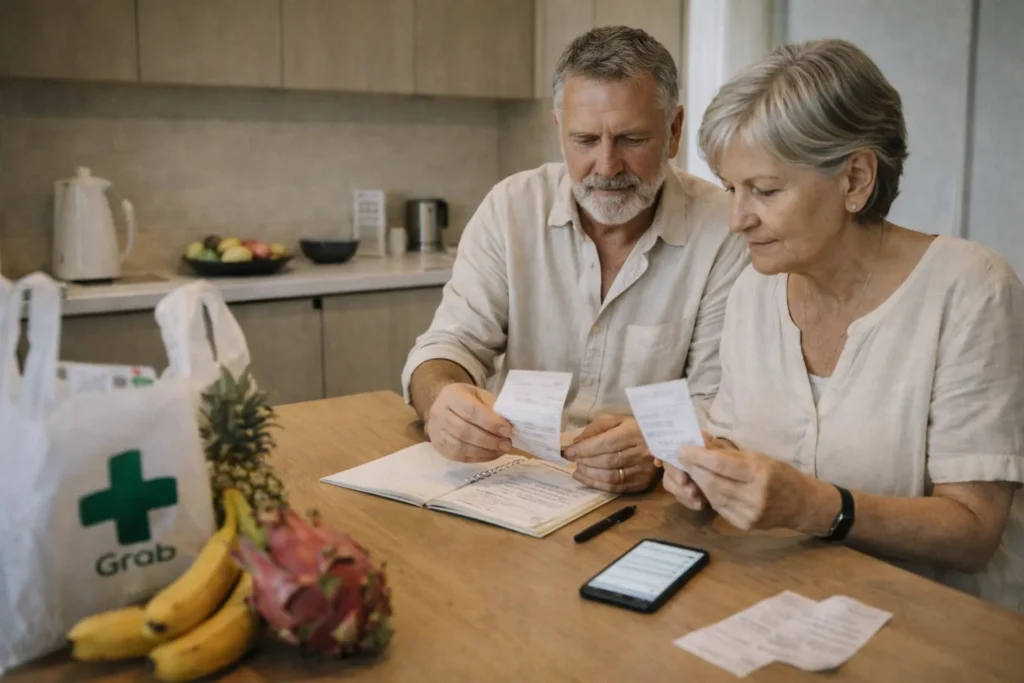
A glass-wrapped 1-bed with a salt-water pool downstairs, lunch over rice and dinner over Reddit recommendations, Grab rides when the sky looks angry, Friday craft beers that don’t require a second mortgage, and a mid-tier insurance policy that keeps the cardiac arrest strictly metaphorical.
High comfort or luxury
Top-floor sea-view duplex where the doorman knows your dog’s name, menus that read like a Michelin roll-call, supermarket trolleys heavy with French butter and Norwegian salmon, a driver who waits while you finish the massage, and a health plan so platinum it practically comes with a concierge cardiologist.
What retirees typically spend in 2026 (monthly ranges)
These ranges are in US dollars and assume a normal, settled lifestyle rather than tourist spending. Lean and simple tends to fall around $1,200 to $1,800 per month for a single retiree, or $1,800 to $2,700 per month for a couple. Comfortable, which is where many retirees land, tends to fall around $1,800 to $3,000 per month for a single retiree, or $2,500 to $4,000 per month for a couple. High comfort or luxury tends to fall around $3,000 to $5,500 or more per month for a single retiree, or $4,000 to $7,000 or more for a couple. These ranges can work in most retiree hubs. The main exception is premium neighborhoods in Bangkok or Phuket, where housing can push you toward the high comfort tier.
Three real budget snapshots (what a month can look like)
The best way to budget is to see what a normal month looks like in practice. Your exact spending will vary, but these are realistic patterns many retirees follow.
Snapshot A: Chiang Mai (single, comfortable)
Many retirees choose Chiang Mai because it offers strong value, walkable neighborhoods, and a large expat community.
A typical monthly budget might include rent for a one-bedroom condo in the $450 to $850 range, utilities and internet in the $80 to $170 range, food and groceries in the $300 to $600 range, transport in the $60 to $200 range, healthcare in the $80 to $250 range, and lifestyle spending in the $250 to $600 range. A realistic total is often $1,700 to $2,700 per month.
Snapshot B: Hua Hin (couple, comfortable)
Hua Hin tends to suit retirees who want a calmer coastal lifestyle, good services, and a visible retiree community. A typical monthly budget might include rent for a condo or small house in the $650 to $1,200 range, utilities and internet in the $100 to $220 range, food and groceries in the $500 to $900 range, transport in the $120 to $300 range, healthcare in the $150 to $400 range, and lifestyle spending in the $400 to $900 range. A realistic total is often $2,500 to $3,900 per month.
Snapshot C: Bangkok (single or couple, comfortable to high comfort)
Bangkok offers the deepest healthcare access and international infrastructure in Thailand. Many retirees choose it for convenience, but housing costs vary dramatically by neighborhood. A typical monthly budget might include rent for a modern one-bedroom condo in the $700 to $1,600 range or more, utilities and internet in the $120 to $250 range, food and groceries in the $450 to $900 range, transport in the $100 to $300 range, healthcare in the $150 to $450 range, and lifestyle spending in the $500 to $1,200 range. A realistic total is often $2,500 to $4,700 per month or more.
The five costs that actually drive your budget
Instead of tracking dozens of line items, focus on the handful of costs that tend to determine whether retirement feels affordable or stressful. Rent and location is the main variable. Two retirees with the same income can live very different lifestyles simply based on where they choose to live. Your lifestyle mix matters as well. Thailand is affordable when you live like you are in Thailand. If most of your spending is imported groceries, wine, Western restaurants, and premium services, your costs rise quickly.
Electricity is the most common surprise expense, because air conditioning use can change your bill dramatically depending on home size and daily habits.
Healthcare and insurance strategy also matters. Routine care can be affordable out of pocket in many cases, but major medical events are where planning makes the biggest difference.
Flights home and travel are the final major driver. Many retirees underestimate travel back to family. For some people, one round-trip home each year is enough. Others plan for two trips, or budget for family visits to Thailand. Either way, it is not only a cost decision. It is a planning factor that shapes your retirement rhythm.
Three hidden costs retirees underestimate
Most retirees budget for rent and food, but a few costs often surprise people in the first six months. Electricity in hot season is one of them, especially if you are home during the day and use air conditioning heavily. In practice, many retirees see electricity costs range from roughly $40 to $60 in cooler months to $120 to $250 or more in hot season, depending on home size and air conditioning use.
Imported lifestyle spending is another. Western groceries, alcohol, brand-name products, and international dining can quietly raise your monthly cost of living. Long-stay administration costs also surprise some retirees. Visa renewals, reporting trips, and agent fees can add up over time. A simple fix is to build a buffer and assume a learning curve. Your first six months are often slightly more expensive than your long-term average.
Why couples do not usually engage in double-spending
A useful budgeting insight is that couples rarely spend twice. Housing, utilities, and transport are shared, which means many couples find their spending is closer to about 1.3 to 1.6 times a single person’s lifestyle rather than two times. This is one reason Thailand can be especially attractive for couples with stable retirement income.
The simplest way to stress-test your plan
If you want a low-stress way to know whether your budget works, use this test. First, build your budget as if you are living in a higher-cost hub such as Bangkok or Phuket, even if you plan to live somewhere cheaper. Second, add a healthcare buffer and annual travel home. Third, add a currency fluctuation buffer so exchange rate changes do not create stress. If your plan works under those conditions, Thailand will usually feel comfortable almost anywhere.
The big takeaway
The goal is not to retire in Thailand as cheaply as possible. The goal is to retire in Thailand in a way that feels comfortable, sustainable, and enjoyable without money stress. For many retirees in 2026, a realistic comfortable range is about $1,800 to $3,000 per month for a single retiree, or $2,500 to $4,000 per month for a couple. And if you want to reduce risk further, the best strategy is still the same. Visit first, rent for three to six months, extend to twelve months, and then commit.

Thailand Retirement Visa Options (2026): O, O-A, O-X, LTR, Elite
For most people, visas are the part of retiring in Thailand that feels the most intimidating. Not because the options are impossible, but because the rules change over time, different embassies interpret requirements slightly differently, and much of the online advice is outdated or overly simplified. The goal of this section is to give you a clear, calm overview of the main long-stay pathways retirees use in 2026, and a practical way to think about choosing the right one. This guide is not legal advice. Visa rules can change, so always confirm requirements through official sources before applying.
The main visa pathways retirees use in 2026
Most retirees choose one of the following options. The most common retirement routes are the Non-Immigrant O and the Non-Immigrant O-A. Some retirees qualify for the O-X long-stay retirement visa, which is available only to certain nationalities and generally comes with stricter financial and insurance requirements.
Thailand has also created newer long-stay programs. The Long-Term Resident program includes a Wealthy Pensioner category with a longer structure, and Thailand Privilege offers a paid long-stay option designed to reduce administrative friction. Finally, some retirees use the Destination Thailand Visa as a structured way to spend meaningful time in Thailand while they decide. It is not a retirement visa, but for the right person it can function as a trial-year tool.
The decision framework (how to choose your likely path)
Forget colour-coded visa charts for a minute; pick your lane by looking in the mirror. Fifty-plus with a monthly pension that covers rent, tacos and the odd hospital visit? Draw a straight line to the Non-Immigrant O or its older sibling the O-A—still the most travelled retirement on-ramp. Can you prove the thick end of eight grand a month hits your account without you lifting a finger? Print the statements and angle for the Long-Term Resident Wealthy Pensioner stamp; the paperwork is fussier, but the payoff is a ten-year horizon and immigration officers who stop treating you like a tourist.
Allergic to queues, forms and anything that smells like bureaucracy? Swipe the credit card, buy the Thailand Privilege membership and let the concierge open the velvet rope. Still in the “try before you die” phase, undecided on jungle or beach, city or rice paddy? Park yourself on the Destination Thailand Visa—six-month chunks, renewable up to five years, no retirement label required, just enough runway to figure out if the Land of Smiles is sticking or just a fling.
Non-Immigrant O (Retirement)
This is one of the most common starting points for retirees. In many cases it is issued as a ninety-day visa that can be extended in Thailand. Some retirees use it as a staged entry route, arriving first and then handling the longer extension locally once they meet requirements.
Common requirements typically include proof of age eligibility, proof of retirement income or savings, a valid passport, and supporting documents such as a background check or medical certificate depending on where you apply. Extensions inside Thailand often involve proof of funds and local paperwork, so it helps to keep your documentation organized. Because embassy and consulate checklists can vary, you should always confirm the current list with the Thai embassy or consulate in your country.
Official consulate guidance for the Non-Immigrant O retirement pathway is published through Thai embassy and consulate sources.
Non-Immigrant O-A (One-year Retirement Visa)
The O-A is one of the most widely used retirement visas for foreigners aged fifty and older. It is designed for retirees who want a structured one-year retirement visa route and who can meet financial proof and insurance requirements. Common requirements typically include proof of age eligibility, proof of financial capacity, and qualifying health insurance documentation. Some applicants also need medical certificates and police clearance documents, depending on consulate rules. Because the O-A is more documentation-heavy, it rewards careful preparation.
One key reason the O-A feels more complex is the insurance requirement. In many cases, the O-A is associated with minimum insurance coverage thresholds that are commonly referenced as forty thousand baht outpatient and four hundred thousand baht inpatient, along with requirements to provide documentation from approved providers.
Official insurance requirement guidance is published through Thai embassy and consulate sources, as well as government-linked insurance resources. The practical takeaway is simple. If you are planning to use the O-A route, confirm the current insurance list and documentation requirements through official sources before applying.
Non-Immigrant O-X (Long-stay Retirement Visa)
The O-X is a longer retirement visa option, but it is not available to everyone. It is limited to certain nationalities and it generally requires stronger financial documentation and insurance.
Common requirements typically include stronger proof of financial capacity, qualifying health insurance, and supporting documentation that may include police clearance and medical certificates. Because availability and checklists differ by nationality, this pathway should always be confirmed through official consulate guidance before planning around it.
If you qualify, it can offer a longer-term structure, but it should be approached carefully and confirmed through official consulate sources.
LTR Wealthy Pensioner (Ten-year Program)
Thailand’s Long-Term Resident program includes a category for retirees called Wealthy Pensioner. It is administered through the Thailand Board of Investment infrastructure and designed as a longer, more structured residency pathway than the traditional retirement visas.
Common requirements typically include documented retirement income that meets program thresholds, valid health insurance coverage, and supporting documentation that proves eligibility. The application process is more structured than traditional visas and is designed for retirees who can provide clear, verified financial documents. The official LTR program site outlines benefits and conditions for the Wealthy Pensioner category.
A practical way to think about LTR is that it is designed for retirees who can document stable retirement income and who prefer a longer-term structure with fewer annual renewals.

Thailand Privilege (Elite)
Thailand Privilege, often referred to as the Elite visa, is a paid long-stay option. Common requirements typically include a valid passport, payment of the selected membership package, and completion of the program’s application and background screening process. Unlike traditional retirement visas, this option is not based on retirement income deposits, but it should still be approached carefully and verified directly through official program channels.
Some retirees choose it because it removes complexity. Instead of meeting retirement financial requirements, you pay for a long-stay structure and supporting services. Because packages and pricing can change, treat this option as a convenience-based choice and verify current terms directly before committing.
Destination Thailand Visa (DTV): useful for a structured trial year
The Destination Thailand Visa is not a retirement visa, but it is relevant for planning. Official descriptions describe DTV as a visa designed for longer stays of up to one hundred and eighty days, with an option to extend for another one hundred and eighty days.
Common requirements typically include proof of eligibility under the program category you apply through, proof of funds or income, and standard identity documentation. Because DTV is not a retirement visa, the strongest use case for retirees is as a structured trial-year tool while you explore long-term options.
In a retirement planning context, DTV can work well for people who want to spend meaningful time in Thailand while they explore locations, healthcare access, and daily life. The key point is that DTV does not replace retirement visa pathways. It is best used as part of a staged approach.
What retirees get wrong about visas (and how to avoid stress)
Most visa stress comes from a small number of misunderstandings. One common mistake is treating visa requirements as a one-time issue. In reality, long stays often involve ongoing compliance such as extensions, address confirmation, and periodic reporting. The solution is to treat compliance as a routine system rather than something to panic about.
Another mistake is relying on outdated online advice. Visa rules change. Always confirm your current requirements through official embassy or consulate sources. A third mistake is choosing a visa based on what seems easiest in the moment rather than what is sustainable long term. The best visa choice is the one you can meet financially and administratively without stress.
The big takeaway
Most retirees do not need a complicated visa strategy. They need a realistic pathway that fits their age and financial situation, a system for compliance that feels manageable, and the discipline to confirm current requirements through official sources before applying. If you treat visas as a system rather than a mystery, they become manageable. The most important thing is to plan based on real life, not assumptions.

Healthcare in Thailand for Retirees: Hospitals, Insurance, Planning
For many retirees, healthcare is the deciding factor, sometimes even more than cost of living. Thailand’s private healthcare system is one of the main reasons the country remains a top retirement destination. In major hubs, retirees have access to modern private hospitals, strong diagnostic services, and care that often feels comparable to international standards.
The practical way to think about healthcare in Thailand is simple. It can be excellent, and it can be affordable, but it still requires planning. This section explains how healthcare works in practice, what retirees typically spend for routine care, how insurance fits into real life and visa planning, and how to choose a base that keeps healthcare convenient as you age.
The system in plain English: public vs private
Thailand has both public and private healthcare. Most foreign retirees use private hospitals and clinics for routine care, diagnostics, and specialist visits, especially in Bangkok, Chiang Mai, Phuket, Hua Hin, and Pattaya or Jomtien. Private hospitals usually offer modern facilities, shorter wait times, and more predictable service. In major hubs, they often also have international patient departments and stronger English support.
Public hospitals can be extremely affordable and can include highly skilled doctors. However, they often involve longer wait times, less English support outside major cities, and more administrative complexity. In practice, many retirees use private hospitals for most care and keep public hospitals as a backup option depending on location.
What healthcare feels like in practice (how appointments work)
One reason retirees like healthcare in Thailand is that it often feels simple. In many private hospitals, you can book quickly, see a doctor the same day for non-emergency care, complete diagnostics such as bloodwork or imaging during the same visit, and receive prescriptions on-site. Major private hospitals often have systems designed for foreigners. This can include English-speaking staff in key departments, international help desks, and billing support.
That said, experiences vary by hospital and by region. This is one reason location matters.
In major hubs, many retirees choose a “home hospital” early. Some prefer internationally known private hospitals because the systems, language support, and coordination feel familiar. Others choose well-run Thai private hospitals that are less expensive but still high quality. For small issues, many retirees use neighborhood clinics for speed and simplicity, then use a larger hospital for diagnostics or specialist care. The best approach is to test a few options during your first months and decide where you feel confident.
What healthcare costs in Thailand (realistic retiree ranges)
Healthcare costs vary by hospital, location, and whether you choose public or private care. The best way to budget is to think in realistic ranges. In many private hospitals, retirees often see consultation fees in the $30 to $80 range. Basic bloodwork and lab packages often fall in the $50 to $200 range, depending on what is included. Simple diagnostics such as X-rays or ultrasounds are often in the $30 to $200 range. Dental cleanings are often in the $30 to $100 range.
Prescription medication pricing varies widely, but many common medications are affordable. If you take specialized medication, the safest approach is to confirm availability before relocating. Hospital charges and procedure pricing vary significantly depending on whether you choose a premium international hospital, a mid-tier private hospital, or a smaller clinic. A practical way many retirees approach this is to pay routine care out of pocket and reserve insurance for larger risks.
For planning purposes, it also helps to have a rough sense of larger costs. An emergency room visit that includes a doctor consultation and basic tests is often measured in the low hundreds of dollars at many private hospitals, although it can climb quickly if imaging or admission is required. Short inpatient stays can range widely depending on the hospital tier and room type, and larger procedures can move into the thousands or tens of thousands. This is why many retirees use out-of-pocket for routine care but keep insurance or a serious emergency buffer for major events.
If you want a simple benchmark for budgeting, assume that routine outpatient care is usually manageable, but serious events are where costs become meaningful. Your planning goal is not to predict every medical scenario. It is to avoid a situation where one event forces rushed decisions.

The three healthcare plans retirees use (and which one fits you)
There is no single best healthcare strategy. Most retirees choose one of three approaches.
Plan A: Full private insurance
This suits retirees who want predictable coverage and protection from major medical bills. Premiums usually increase with age and pre-existing conditions can affect pricing, but for many retirees, the peace of mind is worth it.
Plan B: Hybrid approach (out-of-pocket routine care plus catastrophic insurance)
This is one of the most common approaches. Routine care is often affordable out of pocket, and insurance is used for major events. The key is discipline. You still need a savings buffer.
Plan C: Self-insure
Some retirees choose to pay everything out of pocket. This can work, but it only makes sense if you have strong savings, a serious emergency buffer, and a realistic understanding of what major procedures can cost. Self-insuring works until you have one major event. If you choose this route, you need a plan that does not rely on good luck.
Health insurance and visas (what matters in 2026)
Some long-stay visa pathways, especially the Non-Immigrant O-A retirement visa, are associated with minimum insurance requirements. Requirements and enforcement can change over time, and may vary by embassy or immigration office. If you plan to use a retirement visa pathway, confirm insurance requirements through official sources before applying. This is one of the easiest ways to avoid delays and stress.
Choosing where to live based on healthcare access (a simple decision tool)
Your address in Thailand is also your medical insurance policy: pick it with the same cold-eyed realism you once used to pick a mutual fund. If today’s body still jogs at dawn, a sleepy northern town or beach village can feel like paradise on pocket change—but joints stiffen and arteries harden, so map the nearest ambulance route before you fall in love with the sunset. Bangkok remains the country’s ICU-on-tap, a 30-minute skytrain web that funnels you into cardiac cath labs and oncology wards the day something ominous shows up on a scan. Chiang Mai trades the capital’s adrenaline for mountain air and a grey-haired expat tribe, yet still keeps four JCI-accredited hospitals on speed-dial. Phuket lets you pair morning swims with CT scanners, though everything from rent to remoulade carries an island surcharge. Hua Hin and Jomtien sell themselves as perpetual Saturday golf, night markets, sand between the toes. Remember that when the diagnosis gets exotic, the best surgeon is still a three-hour highway dash away.
A common retiree strategy is to start in Bangkok for the first six to twelve months, then move to a quieter location once you understand the system.
Prescriptions and continuity of care (make your healthcare portable)
If you do one thing before retiring abroad, make your healthcare portable. Thailand is much easier to navigate when you arrive with your medical history organized. Before you travel, prepare a written medical summary that includes conditions, surgeries, and allergies. Prepare a prescription list with generic names and dosages. Bring recent test results such as bloodwork, imaging, and specialist reports.
If you take specialized medication, confirm availability in Thailand before relocating. A simple practical tip is to keep a digital folder with cloud storage and an offline copy so you can access your records quickly.
The medical go folder checklist (highly recommended)
A medical go folder reduces stress in emergencies. It should include copies of your passport and visa details, insurance documents and emergency contact numbers, a medical summary letter, your prescription list using generic names, recent test results, allergies and emergency instructions, and contact details for your home-country doctor. This is one of the highest-leverage things you can do for peace of mind.
A calm warning about long-term care
This guide focuses on independent retirement planning, but it is worth being clear about one point. Thailand can be excellent for routine care and many medical needs, but long-term assisted living and complex elder-care planning is not the same as it is in many Western countries. If you expect you may need intensive long-term care later in life, research this early. Consider maintaining a home-country safety net, keeping a serious savings buffer, and being realistic about where you want to live in your later years. This is not a reason not to retire in Thailand. It is simply part of good planning.
The big takeaway
Thailand’s private healthcare system is one of its strongest retirement advantages, but retirees get the best results when they plan. A low-stress approach is to choose a base with strong hospital access, plan an insurance strategy you can sustain long-term, keep your medical history organized, and keep early decisions reversible until Thailand is proven to fit. The most important thing is to plan based on real life, not assumptions.
Best Places to Retire in Thailand (2026): Bangkok, Chiang Mai, Hua Hin, Phuket
Where you live in Thailand will shape your retirement more than almost anything else. Two retirees can spend the same amount each month and have completely different experiences simply because of location. One might live in a walkable neighborhood near hospitals, cafes, and an established expat community. Another might choose somewhere cheaper but feel isolated, struggle with transport, and find healthcare inconvenient.
So rather than asking, “What’s the best place to retire in Thailand?” a better question is this. What’s the best place for your lifestyle, health needs, and comfort level in 2026 reality? This section gives you a practical heatmap of the most common retiree bases, the tradeoffs that matter, and the kind of retiree each location tends to suit.
How experienced retirees choose a location (the factors that actually matter)
Before you fall in love with a city, it helps to evaluate it the way long-term retirees eventually do. Most location decisions come down to a small set of factors. Healthcare access is usually the top priority, especially as people age. Community matters as well, because loneliness is one of the most common reasons retirees leave Thailand. Climate and seasons matter more than many people expect, whether that means heat, heavy rain, or smoke season in the north.
Walkability and daily convenience are also important. Many retirees do not want to drive or ride scooters. A walkable neighborhood can reduce stress and improve safety. Airport access matters for family visits and for travel during smoke season or hot season. Finally, cost matters, especially rent and the kind of spending that comes from living in international areas. If you know your top two priorities, your location shortlist becomes much easier.
It also helps to remember that “Bangkok” or “Phuket” is not one experience. Neighborhoods matter. In Bangkok, living near transit and hospitals can feel calm and convenient, while living far from transport can feel isolating. In Phuket, the difference between a busy tourist strip and a quieter residential area can determine whether daily life feels relaxing or exhausting. Chiang Mai varies by district as well, and in Pattaya and Jomtien, the right neighborhood is the difference between a lifestyle you enjoy and one you quickly want to change.
Bangkok (best healthcare access, highest convenience, more city intensity)
Bangkok is the most future-proof base for healthcare access. If you want specialists, international clinics, and the deepest hospital network, Bangkok is the strongest option. It also offers the most modern infrastructure in Thailand. Public transport is excellent by regional standards, services are widely available, and flights home are easy.
Bangkok suits retirees who enjoy a modern city rhythm and want maximum convenience. It can also work well as a first-year base even if you plan to move later. Housing costs vary dramatically by neighborhood.
In 2026, a one-bedroom condo typically ranges from roughly $700 to $1,600 or more, depending on location, building quality, and proximity to transit. A common retiree pattern is to start in Bangkok for six to twelve months, then move to a quieter base once settled.
Chiang Mai (strong value, strong community, seasonal air quality)
Chiang Mai is one of Thailand’s most popular retiree destinations because it offers a rare mix of affordability, culture, walkability, and community. For many people, it feels easy to settle into. Chiang Mai tends to suit retirees who want a livable city with cafes, culture, and a slower pace than Bangkok. It also has a large expat network, which makes it easier to build routine and connections.
The main tradeoff is seasonal air quality. Smoke season can be a real issue in certain months, which is why many retirees either travel south during that period or choose a different base. In 2026, a one-bedroom condo typically ranges from roughly $450 to $850 for good quality housing in popular areas.
Hua Hin (classic retiree hub, calm coastal life, easy rhythm)
Hua Hin is one of Thailand’s most established retiree towns. It is coastal, developed, and calmer than Phuket. Many retirees choose Hua Hin because daily life feels predictable and comfortable. It tends to suit retirees who want a beach-town lifestyle without heavy nightlife, and who like being within reach of Bangkok for specialist care. The main tradeoff is that Hua Hin is quieter. For many retirees that is the appeal. For others it can feel too slow. In 2026, rent for a one to two-bedroom condo or small house often ranges from roughly $650 to $1,200 depending on location and housing style.
Phuket (developed island life, strong hospitals, higher cost)
Phuket is one of Thailand’s most developed island destinations. It can be an excellent base if you want beach lifestyle plus modern infrastructure. It also tends to be one of the most expensive places to retire, especially in premium areas. Phuket suits retirees who want coastal living, modern services, and strong private hospital options outside Bangkok. The tradeoffs are higher rent and lifestyle costs in many neighborhoods, plus traffic and peak-season crowds.
In 2026, a one-bedroom condo often ranges from roughly $800 to $2,000 or more depending on the area and proximity to the beach.
Pattaya and Jomtien (large retiree community, strong value, neighborhood matters)
Pattaya and Jomtien are often misunderstood. While Pattaya has a nightlife reputation, it also has one of Thailand’s largest retiree communities. Many retirees live in quieter areas, especially Jomtien and surrounding neighborhoods. This area tends to suit retirees who want an established expat community, strong value on rent, and easy access to Bangkok and major airports.
The tradeoff is that neighborhood selection matters. Some areas will not match everyone’s lifestyle preferences, so it is worth visiting and testing before committing. In 2026, a one-bedroom condo often ranges from roughly $450 to $1,000 depending on building quality and proximity to the beach.
Koh Samui (beautiful island base, slower pace, healthcare tradeoffs)
Koh Samui is a popular choice for retirees who want a calmer island lifestyle. It can be an excellent quality-of-life base, but it is important to be realistic about convenience and healthcare. Samui suits retirees who enjoy nature and a slower rhythm and who do not mind occasional logistics challenges. The main tradeoff is that complex specialist care may require travel to Bangkok. In 2026, a one-bedroom condo or small house often ranges from roughly $700 to $1,500 or more, depending on location and season.
Krabi (quiet coastal scenery, smaller infrastructure, fewer crowds)
Krabi offers natural beauty, a slower pace, and generally fewer crowds than Phuket. It suits retirees who want a quieter coastal lifestyle and do not require constant city-level convenience. The tradeoffs are smaller expat infrastructure and more limited healthcare options, depending on where you live. In 2026, rent for a one-bedroom unit is often roughly $500 to $1,200, depending on area and proximity to Ao Nang and main hubs.
Udon Thani and Isaan (lowest cost, more local lifestyle, less English)
Isaan is a very different retirement experience. It can be significantly cheaper, slower paced, and deeply local, which some retirees love. It can also be challenging if you want convenience, strong English support, and easy access to large expat networks. This region tends to suit retirees who want maximum cost savings, are comfortable with Thai culture differences, and do not require constant English support. It is also a common choice for retirees with Thai family connections. The tradeoffs are reduced English support and more limited specialist access. In 2026, rent is often far lower than in major hubs, commonly in the $250 to $700 range depending on housing type.
A simple shortlist approach (how to choose without overthinking)
If you want a practical way to choose a location without months of research, use this approach. Choose one place that is strong for healthcare access, often Bangkok. Choose one place that matches your lifestyle ideal, whether that is a beach town, a calm city, or a value hub. Spend time in both, then rent in your favorite for three to six months. This creates clarity quickly and keeps your first move reversible.
When you test a location, try to experience it the way you would actually live. Spend weekdays there, not just weekends. Do normal errands, visit a hospital or clinic, and see what your routine would feel like during work hours, hot afternoons, and rainy days. A city that feels perfect on a short holiday can feel very different when it becomes daily life, and this kind of real-world testing reduces regret.
Best places if you want a specific lifestyle (quick guide)
Bangkok stacks specialists the way other cities stack malls—future-proof, but you’ll breathe concrete. Hua Hin trades skyscrapers for sea breeze and a retirees’ golf calendar that looks like a social-security yearbook. Chiang Mai gives you mountain mornings, night-bazaar dinners and an expat population large enough to sustain three different pickle-ball clubs. Phuket delivers the postcard—white sand, yacht marinas, hospitals that look like five-star hotels—priced accordingly. Pattaya and Jomtien hand you a barstool and a calendar of charity pub quizzes, all on a pension-friendly tab. Koh Samui slows the clock to island time; just accept that “urgent care” still means a ferry or flight. Krabi’s limestone cliffs screen out the tour-bus crowds, leaving quiet beaches and a clinic that can handle stitches but not strokes. Head to Udon Thani or anywhere else in Isaan if your dream is rice-field sunrises, 50-cent noodles and a monthly rent lower than a Bangkok cocktail round.
The big takeaway
There is no single best place to retire in Thailand. The best place is the one that matches your lifestyle, budget, and healthcare needs. And the easiest way to make the right decision is still the same. Visit first, rent for three to six months, extend to twelve months if it works, and then commit.
Rent First, Buy Later (or Never): The Property Reality + Trial Move Plan
If you take one principle from this guide, let it be this. Retiring in Thailand works best when you keep the early decisions reversible. That is why most experienced expats, especially retirees, follow a simple approach. They rent first, live normally, and decide later. This is not just a financial strategy. It is a risk strategy.
The biggest retirement mistakes in Thailand are usually not dramatic. They are quiet mistakes that happen early, often because someone feels pressure to commit before they have lived through normal day-to-day life. This section explains why renting is the default, what you should know about buying, and how to use a trial move plan so you can make long-term decisions with real evidence.
Why renting is the default for most retirees
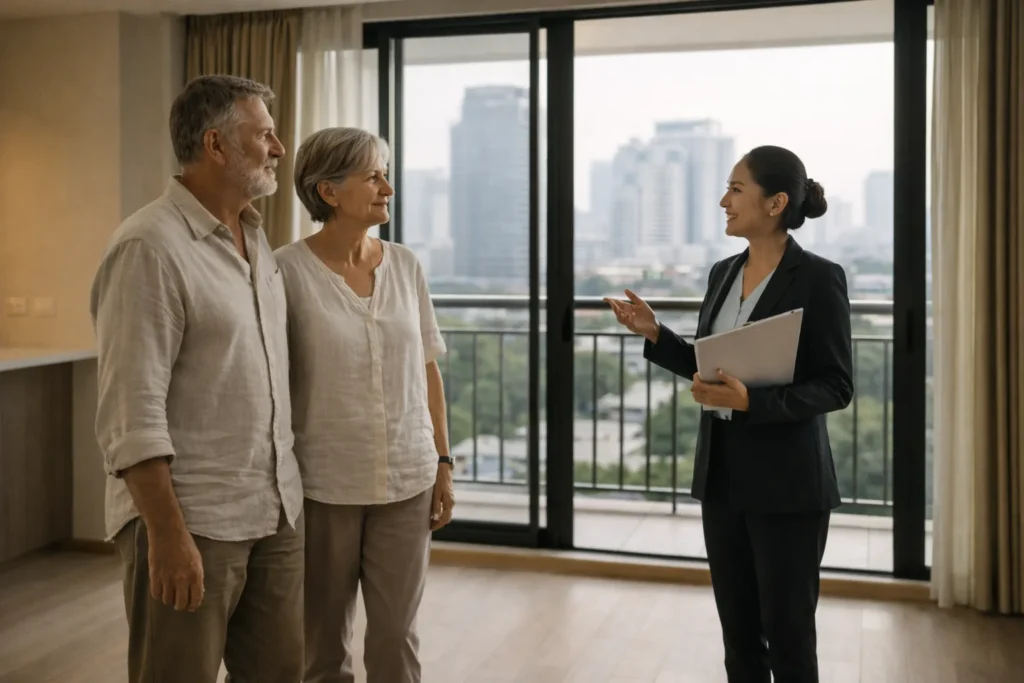
Thailand is one of the easiest countries in the region to rent long-term. In established retiree hubs, you will find modern condos, small houses, and fully furnished rentals across a wide range of price points. Many rentals include basic furnishings and appliances, which makes it easy to arrive with luggage, settle quickly, and avoid unnecessary upfront spending.
Renting gives retirees three advantages that are difficult to replicate through early buying.
First, it preserves flexibility. If you realize you prefer a different neighborhood, climate, or pace of life, you can move without financial pain.
Second, it allows reality testing. The first few months in a new country often feel like a honeymoon phase. Renting gives you time to learn what life actually feels like when it becomes routine, including shopping, healthcare, transport, weather, and community.
Third, it supports better decision-making. Even within the same city, your experience can change dramatically depending on the neighborhood. Renting helps you choose the right base based on lived experience rather than assumptions.
Many retirees who eventually buy still rent first, because it leads to smarter choices.
The calm property reality (what you should know upfront)
Buying property in Thailand is not impossible, but it is different from many Western countries. The key point is that property ownership rules are not built around foreign retirees buying houses on land. Foreigners can generally buy condominiums under specific rules.
It is also worth knowing that condo quality in Thailand can vary dramatically by building management, maintenance standards, noise insulation, and community rules. A building that looks perfect in marketing photos can feel very different after a few months of daily life. This is another reason renting first is so valuable. It lets you test the building, the neighborhood, and the reality of long-term comfort before you commit. Foreigners generally cannot own land outright in the same way Thai nationals can.
Some ownership structures promoted to foreigners, such as long leases, company structures, or nominee arrangements, can be complex. They can also carry legal risk if handled incorrectly. Because of this, most retirees do not need to buy property to enjoy a great lifestyle. Long-term renting is common, normal, and often preferable.
If you ever decide to buy later, the best time is when you have enough lived experience to know what you want and enough stability to treat the decision carefully. This guide does not provide legal advice. If you ever consider purchasing property, use qualified legal support and avoid shortcuts.
Why retirees regret buying too early
The pattern is consistent. Someone visits Thailand, falls in love, and buys quickly or signs a long lease. Six months later, they realize they chose the wrong neighborhood, the wrong building, or even the wrong lifestyle base. Sometimes the problem is not Thailand. It is an early decision.
Most regret stories come from retirees who bought in tourist-heavy areas without realizing how seasonal crowds affect daily life, underestimated climate differences, discovered they needed better healthcare access, or realized they wanted a different community. Renting first prevents most of these mistakes.
The Trial Move Plan (the lowest-risk way to retire abroad)
Instead of treating retirement as a one-time leap, the trial move plan treats it as a staged transition. It works because it keeps the first year reversible. A practical trial plan has four stages.
First, visit for two to four weeks with a planning mindset. This trip is not about the highlight reel. It is about testing daily life, exploring locations, and seeing what healthcare and neighborhoods actually feel like.
Second, rent for three to six months and live normally. Track your spending, test your routines, and confirm whether you are building community.
Third, if it is working, extend to twelve months. A full year matters because weather, air quality in the north, and peak tourist season all change daily life.
Fourth, commit only after the trial. Once you have evidence, you can decide whether to stay full-time or part-time, whether to ship more belongings, and whether buying property is worth considering. This approach does not slow you down. It protects you from regret.
What to do with your belongings during a trial move
This is one of the first practical questions many retirees face.
What do you do with your belongings if you are not ready to fully commit?
Most retirees use one of three approaches.
Some travel light and store everything at home for maximum flexibility.
Some ship only essentials such as clothing, personal items, and a few sentimental pieces.
Others use a hybrid plan. They store most items, then ship more later once Thailand is proven to fit.
The staged approach works because you do not have to solve everything on day one.
You can keep the first year simple and make shipping decisions only after you have real confidence.
The short version (a plan you can actually follow)
If you want the safe path, this is it.
Visit and shortlist two to three locations.
Rent for three to six months before making any long-term commitments.
Choose a base with strong healthcare access.
Track your real monthly budget using actual spending.
Build routine and community early.
Extend to twelve months if it is working.
Ship belongings only after you are confident.
Consider property only after meaningful local experience.
The big takeaway
The difference between retirees who thrive in Thailand and retirees who regret the move is rarely about Thailand itself.
It is usually about how the move was made.
If you keep early decisions reversible, rent first, test carefully, and commit only after you have evidence, retirement in Thailand becomes not just possible, but genuinely enjoyable.
The most important thing is to plan based on real life, not assumptions.
Banking & Moving Money (A Practical, Low-Stress Setup)
For many retirees, banking feels like a small detail until something goes wrong.
A card gets blocked, an ATM fee stacks up, a transfer takes longer than expected, or a banking app fails at the worst moment. None of these problems are dramatic on their own, but they can create anxiety when you are living abroad.
The good news is that the solution is simple.
You do not need a complex financial strategy to retire in Thailand.
You need a setup that is reliable, redundant, and easy to manage long-term.
This section explains what experienced expats do in practice, and how to build a calm system for income, transfers, and day-to-day spending.
The most important rule: never rely on one bank or one card
If you talk to long-term expats, you will hear the same advice repeated again and again.
Do not rely on one bank or one card.
Cards get blocked, accounts get flagged, and policies change.
A resilient retirement setup is built on backups.
Most retirees aim for a simple “two of everything” structure. Two ways to access money, two debit cards, two credit cards, and two transfer methods.
This is not paranoia.
It is the difference between a small inconvenience and a stressful emergency.
Should you open a Thai bank account?
For many retirees, a Thai bank account makes daily life easier.
It can simplify rent payments, utilities, and local payment apps. It also reduces repeated foreign transaction fees. Depending on your visa pathway, it can also help with certain financial documentation requirements.
However, opening a Thai bank account is not identical for everyone.
Bank policy can vary by bank and by branch, and your visa type can affect what is possible.
Most banks typically ask for some combination of your passport, visa details or entry stamp, proof of address, and a local phone number, along with additional documents depending on branch policy.
If having a Thai bank account is important to your plan, the easiest path is to open it in a major expat hub and to expect some variation by branch.
The Thai banks most expats use (and why)
Most retirees who open a Thai bank account choose a major bank with strong branch coverage and modern mobile banking.
The names you will see most often include Bangkok Bank, Kasikornbank (KBank), Siam Commercial Bank (SCB), and Krungsri.
For most retirees, the “best” bank is simply the one with a convenient branch near where you live and a mobile app you can use comfortably.
How retirees usually handle spending day to day
Most retirees settle into a simple pattern.
They use a Thai debit card for local spending, a foreign credit card for larger purchases and consumer protection, and cash for markets, tips, and small vendors.
Thailand is increasingly cashless in major areas, but cash is still useful and sometimes necessary.
The practical goal is to avoid carrying large amounts of cash while keeping enough on hand for normal life.
Moving money to Thailand (the common options)
Most retirees use one of three methods.
International bank transfers, sometimes called SWIFT transfers, are often used for larger moves of money, savings transfers, and situations where bank documentation is helpful.
Transfer services such as Wise are commonly used for regular monthly transfers because fees and exchange rates are often more favorable and the process is more transparent.
ATM withdrawals using foreign cards can work during a trial move, but they are less efficient long-term because fees add up.
In practice, many retirees start with ATM withdrawals for simplicity, then shift to a stable transfer method once they are settled.
A calm way to handle currency movement (without becoming a trader)
Exchange rates matter, but most retirees do not need to time the market.
The safest approach is usually simple.
Keep a buffer, transfer on a schedule, and avoid relying on perfect exchange rates.
Many retirees keep two to three months of living costs accessible, then transfer monthly or quarterly, depending on comfort.
Most problems happen when someone operates with no buffer and no margin.
Retirement income: pensions, Social Security, and consistency
If your income comes from a pension or Social Security, the goal is consistency.
Many retirees keep their retirement income flowing into a home-country account, then transfer a predictable amount to Thailand on a set schedule.
A simple monthly transfer is often the lowest stress approach.
The main risk is not that transfers fail.
The main risk is a delay combined with a lack of buffer.
A buffer turns a small delay into a non-event.
The emergency buffer retirees should plan for
Even if your budget is strong, an emergency buffer makes retirement feel calm.
Many retirees aim to keep at least three months of living expenses accessible, along with additional reserves for medical events, emergency travel home, and visa administration costs.
This is not about fear.
It is about stability.
A simple setup that works (the two-bank, two-card approach)
If you want a reliable, low-stress structure, this is what many experienced retirees use.
They keep a home-country bank account for income and reserves, a Thai bank account for local spending, a Thai debit card, a foreign debit card as backup, a foreign credit card for larger purchases, and a second card as a secondary backup.
For transfers, they use one primary method, such as Wise or SWIFT, and a backup method in case the main option has an issue.
They also keep a small cash reserve at home.
This setup is simple, resilient, and easy to maintain.
The big takeaway
You do not need to be a finance expert to retire in Thailand.
You need a system that avoids the common failure points: relying on one account, one card, or one transfer method.
With basic redundancy and a small emergency buffer, banking becomes a background task rather than a constant source of stress.
The most important thing is to plan based on real life, not assumptions.
Safety, Scams & Legal Realities
Thailand is generally a safe place to retire, especially in established expat hubs.
Most retirees experience day-to-day life as calm and predictable, and many people find Thailand feels safer than the cities they lived in at home.
But “generally safe” is not the same as “risk-free.”
For retirees, the risks that matter most are practical rather than dramatic: road safety, scams that target newcomers, and avoidable administrative mistakes that create unnecessary stress.
This section is designed to help you feel confident, not paranoid.
Road safety (the biggest day-to-day risk)
If you ask long-term expats what the biggest real-world risk is in Thailand, most will not say crime.
They will say the roads.
Thailand has a high rate of road traffic injuries, and road safety is widely recognized as a serious national issue.
For retirees, the main danger point is not walking down the street. It is riding scooters, getting on unfamiliar motorbikes, or driving in high-density traffic without experience.
A calm rule of thumb is this. If you are not an experienced rider, avoid scooters.
Many retirees thrive in Thailand without needing to drive. The safest lifestyle setup is often the simplest: choose a walkable neighborhood, use Grab or taxis when needed, and treat transport as a convenience rather than something you must handle personally.
If you do drive, drive defensively, avoid aggressive traffic zones, and always wear a seatbelt.
Crime and personal safety (what retirees should realistically expect)
In the main retiree hubs, Thailand is generally safe from violent crime in day-to-day life.
Petty theft happens, and there are nightlife areas where trouble is more likely, but for most retirees the safety story is straightforward.
Choose a good neighborhood, use normal common sense, and avoid high-risk nightlife situations.
Most retirees who feel safest do a few simple things consistently.
They keep phones and wallets secure in crowded areas, avoid leaving valuables unattended, and store important documents such as passports in a secure place at home.
If you are arriving alone, it is worth taking the first few weeks slowly. Most safety issues happen when people feel overconfident in a new environment.
The scams that actually target retirees (and how to avoid them)
Most scams in Thailand are not sophisticated.
They rely on people being new, eager to solve problems quickly, and willing to trust strangers.
The best protection is simple: slow down, verify details, and avoid rushing decisions.
Rental and deposit scams often involve listings that look unusually cheap, pressure to send money quickly, and excuses for why you cannot view immediately. The simplest rule is also the most effective. Never send a deposit before viewing. Verify the unit exists and the person has authority to rent it.
Visa agent scams and unlicensed helpers usually involve promises of guaranteed outcomes or secret shortcuts. Those shortcuts can create bigger problems later. If you use help, choose reputable providers, insist on transparency, keep copies of everything submitted, and avoid anyone selling “loopholes.”
Investment pitches and expat opportunities often involve condo guaranteed returns claims or high-return schemes marketed as easy income for foreigners. A calm rule is to ignore anything framed as urgent, guaranteed, or “everyone is doing it.”
Romance scams exist everywhere. The practical rule is simple: do not send money to someone you have not met and built trust with in real life.
You do not need to be cynical. You simply need to protect yourself.
Legal and compliance mistakes retirees commonly make
Most legal trouble expats experience in Thailand is not serious crime.
It is administrative mistakes.
The most common one is overstaying a visa.
Overstaying can lead to fines and potentially more serious consequences depending on the situation. The solution is straightforward. Set calendar reminders well in advance, keep your visa information in one document folder, and avoid leaving renewals to the last week.
Another common mistake is forgetting routine reporting requirements.
Many long-stay foreigners must confirm their address with immigration periodically. This is manageable, but forgetting creates unnecessary stress. A repeating calendar reminder prevents almost every issue.
Finally, some retirees run into problems with controlled items and medications.
Some medications and substances can be regulated differently than at home. If you take specialized medication, confirm legality and availability before bringing large quantities. Do not assume that what is normal at home is treated the same way abroad.
The calm paperwork system that prevents most problems
The retirees who experience the least stress tend to do one simple thing.
They keep their documents organized.
A basic system that works is a digital folder stored in the cloud with an offline backup, and a physical folder for originals.
Most retirees keep copies of passports, visas, entry stamps, insurance, rental agreements, and emergency contacts together in one place.
Add a calendar reminder system for visa dates and reporting.
It takes one afternoon to set up, and it prevents most avoidable headaches.
If you want a quick checklist, keep it simple:
- Passport copies and key visa pages
- Proof of address and rental agreement
- Insurance documents and emergency numbers
- A short medical summary and a prescriptions list
What to do if something goes wrong
Even with good planning, things happen.
You lose your passport, your card is blocked, or you have a medical emergency.
The goal is not to panic. It is to have a basic response plan.
Keep a digital backup of your passport and key documents, ideally in cloud storage with an offline copy as well. Carry a small emergency cash reserve at home so you are not dependent on one card or one ATM network. Store important numbers offline, including your bank contact details, insurance emergency lines, and a trusted local contact.
It also helps to know where your nearest embassy or consulate is located, and what the process is for replacing a passport. In most cases, a lost passport is inconvenient rather than catastrophic when you have copies and a calm plan.
If you have a medical emergency, your earlier preparation pays off. A medical summary, a prescription list using generic names, and insurance details can reduce stress and improve coordination.
Most problems are solvable quickly when you have your basics organized.
The big takeaway
Thailand is generally safe for retirees, but the country rewards calm, practical habits.
Avoid scooters if you are not experienced. Choose walkable neighborhoods. Slow down when making decisions. Treat visas and paperwork as a system.
If you do those things, safety becomes a background factor rather than a constant concern.
The most important thing is to plan based on real life, not assumptions.
A few simple preparations reduce stress dramatically:
- Keep digital copies of key documents
- know the nearest hospital and police station in your area
- Maintain backup cards and a small emergency fund
- Save emergency contact numbers in your phone and in writing
The goal is not to expect problems, to make sure problems don’t become crises.
English, Culture & Social Life (Avoiding Loneliness)
If cost of living and healthcare are the practical foundations of retirement, community is the difference between a good retirement and a lonely one.
Many retirees assume Thailand will automatically feel social because it has visible expat hubs and long-running retiree communities. In reality, loneliness is one of the most common reasons people leave Thailand, and it often surprises people who expected to be “fine.”
The good news is that loneliness is not a mysterious problem.
It usually comes from predictable choices: choosing a location for price instead of lifestyle fit, arriving without a routine, or treating the community as something that will happen naturally.
This section explains how English-friendly Thailand really is, how culture affects daily life, and what actually works when it comes to building a social life that lasts.

Start with the right question: what kind of retirement do you want to live?
A useful way to choose a location is to stop thinking in terms of cities and start thinking in terms of your retirement identity.
What did you imagine doing in retirement when you had time?
Some retirees imagine mornings at the gym and long walks in the heat. Others imagine golf, pickleball, or joining a sailing club. Some want cooking classes and markets. Others want a quiet beachfront routine with books, cafes, and a small circle of friends.
Once you know your “activity picture,” your location choices become clearer.
You can then ask a more practical second question: does this place have enough community and structure to support that lifestyle?
This is where an established retiree community matters. It is not about living in an expat bubble. It is about choosing a place where your retirement routines have easy entry points.
You can research this online through expat Facebook groups, Meetup events, local club pages, and even Google searches such as “Chiang Mai walking group,” “Hua Hin expat club,” or “Phuket golf society.” A good real estate agent in an expat area can often also tell you what the social ecosystem looks like because they see where retirees actually settle and why.
How English-friendly Thailand really is (and where it changes)
Thailand is one of the more English-friendly countries in Southeast Asia, especially in the places where most retirees live.
In Bangkok, Chiang Mai, Phuket, Hua Hin, Pattaya, and Koh Samui, you can usually handle most daily life in English. Hospitals and private clinics are used to dealing with foreigners. Many service businesses and restaurants in expat areas operate comfortably in English.
That said, English-friendly is not the same as English-fluent.
Outside major hubs, and sometimes even in local neighborhoods within hubs, English can be limited. This is not a problem. It just means you should plan for small moments of friction.
The practical takeaway is simple. In most retiree hubs, you do not need Thai to live, but learning a few phrases and using translation apps will make your life easier and your interactions warmer.
Culture: what retirees usually love (and what can confuse you)
Many retirees find Thai culture genuinely pleasant to live within.
Thailand tends to be polite, service-oriented, and respectful toward older people. Daily life often feels less confrontational than in many Western cities, and the social tone is usually calm.
However, cultural differences can create misunderstandings if you arrive with Western assumptions about how problems should be handled.
A helpful mindset is to think in terms of harmony and face.
Direct confrontation, visible anger, and public embarrassment are often avoided. In service situations, a calm tone usually gets better outcomes than pressure or frustration.
This matters more than it sounds.
The retirees who feel happiest long term are usually the ones who treat Thailand as its own culture rather than a cheaper version of home. They enjoy the differences, and they allow daily life to be slightly different without turning every inconvenience into a conflict.
Why retirees feel lonely (and the patterns that create it)
Thailand can be socially easy, but it does not automatically create connections.
The first month often feels exciting. The risk comes later, once the novelty fades and you realize your life routine is no longer anchored by work, familiar friendships, or nearby family.
Loneliness usually happens for one of three reasons.
First, someone chooses a location that is cheap but isolated.
Second, they spend most of their time only with their partner and do not build independent connections.
Third, they rely on occasional social events rather than building a routine.
The solution is not complicated. It is rhythm.
The retirees who thrive socially tend to build a predictable week. They go to the same places, participate in one or two recurring activities, and gradually become familiar faces.
What actually works: building community in the first 90 days
If you want the simplest method that works for most retirees, focus on repeated contact.
Friendships rarely come from one-off social events.
They come from doing something regularly enough that people start to recognize you.
Activity-based communities tend to work best because they make conversation natural. Golf clubs, gyms, yoga studios, walking groups, cycling groups, cooking classes, volunteering opportunities, and community breakfasts create structure.
Many retiree hubs also have expat clubs that run predictable weekly events, and these can be a strong starting point even if you do not stay deeply involved.
If you arrive alone, it often helps to choose one activity and commit to it for a month. The goal is not to find your best friends immediately. The goal is to create familiarity and momentum.
A simple plan that works for many people is this:
- Pick one weekly activity that matches your interests and show up consistently.
- Pick one social space you like (a cafe, gym, or group) and become a regular.
- Join one local online community group and use it for events and practical advice.
You do not need to do everything.
You need to do something consistently.
Relationships, dating, and the social side of retirement
Some retirees move to Thailand with a partner. Others arrive single.
Thailand can be a positive environment for relationships, but it is worth being realistic.
If you are single, dating exists, but it comes with cultural differences and sometimes with scams. The safest approach is the same as it is anywhere: take your time, meet in public, and do not mix money with early trust.
If you arrive with a partner, it helps if both people develop independent social outlets.
A common challenge is that one partner builds a routine quickly while the other feels isolated.
This is another reason a trial-year approach is useful. It gives you time to find your rhythm, understand the social environment, and adjust before making long-term decisions.
Thai language: Do you need it, and should you learn it?
You can survive in English across every retiree ZIP code from Hua Hin to Phuket, but you’ll feel it: the waiter’s tight smile when you point at the menu like it’s radioactive, the taxi driver who nods and then U-turns into gridlock because “near the big temple” could be any of 847 temples. A dozen words of Thai flips the script. Sawasdee krub/ka delivered with the right eyebrow dip turns you from walking ATM to honoured guest; ordering “pet mak” instead of miming a fire extinguisher earns respect and the correct chili level. Fluency is MBA-level overkill; think of it as learning just enough golf to keep pace with the foursome “courtesy, numbers, directions, the occasional joke”. Apps will get you 80 % of the way while you wait for your visa run; classes in Chiang Mai double as happy hour, complete with retirees trading IPA recommendations and divorce stories. Either route buys you faster service, fairer prices, and the quiet satisfaction of watching a grandmother grin because the foreigner bothered.
The big takeaway
Thailand can be an easy place to live, but a good retirement requires more than affordability.
The retirees who enjoy Thailand long-term usually treat the community as part of the plan.
Start with your retirement lifestyle and interests, choose a base that supports them, and build a weekly routine that creates repeated contact.
If you do that, Thailand can offer not only a comfortable retirement but a socially rich one.
The most important thing is to plan based on real life, not assumptions.
Shipping & Storage: What To Do With Your Belongings
Once you start planning retirement in Thailand, a practical question shows up quickly.
What do you do with your belongings?
Some retirees sell almost everything and start fresh. Others ship a full household.
But the most common and lowest-risk approach is usually somewhere in the middle, especially if you are still in the trial-move phase.
The goal is not to ship as much as possible.
The goal is to avoid expensive mistakes, keep your move reversible in the first year, and bring only what will genuinely improve your quality of life.
The three realistic approaches (and who each one suits)
Most retirees end up choosing one of three pathways.
Option 1: Sell and start fresh.
This is the simplest approach, emotionally and logistically. It suits retirees who are already downsizing, who do not have many sentimental items, and who want a clean reset.
Thailand has modern furniture, household items, and everyday conveniences readily available in major cities and retiree hubs.
The tradeoff is that you may later regret selling a few quality essentials or sentimental pieces.
Option 2: Trial move first, ship later.
For most retirees, this is the safest and most flexible strategy.
You travel with what you need for three to six months, store the rest securely at home, and only ship more once Thailand feels right.
This reduces risk, keeps your options open, and prevents the most common regret: shipping everything before you are sure.
Option 3: Ship a full household once you are committed.
This can make sense if you plan to stay long-term in one location and you have valuable items that genuinely matter to your daily comfort.
The key point is timing.
Shipping too early is one of the most common regret points, especially if you later change cities, move into a condo with limited storage, or decide Thailand is better as a part-time base.
What retirees usually bring (and what they usually leave behind)
A helpful rule is simple.
Ship what is meaningful, not what is replaceable.
In practice, most retirees bring a mix of personal essentials, sentimental items, and a small number of quality pieces that are difficult to replace.
Common items retirees travel with or ship include photos and keepsakes, specialty kitchen items, preferred clothing, certain tools, and medical equipment where appropriate.
What retirees usually avoid shipping is bulky furniture, large appliances, and low-value household goods that cost more to ship than they are worth.
Thailand is one of the easiest places to replace everyday household basics, and doing so can be less stressful than managing a full container in the early months.
Why timing matters (and why “ship later” is often the smartest decision)
Shipping is not only about cost.
It is about certainty.
Many retirees ship everything early because they feel pressure to complete the move.
But retirement abroad works best when you keep the early decisions reversible.
If you rent first and live in Thailand for a few months, you learn things that are almost impossible to predict from research alone.
You learn what kind of home you prefer, whether you want a condo or a house, how storage works locally, what you can buy easily, and whether you are likely to stay in one region long term.
That information makes shipping decisions dramatically easier.
It is the difference between guessing and knowing.
Customs and paperwork (the part that makes or breaks the experience)
International household shipping is rarely difficult because of the transport itself.
It is difficult because of the paperwork.
Thailand has rules and documentation requirements for importing household goods. The exact requirements can vary depending on what you are shipping, whether items are new or used, your visa status, and how the shipment is declared.
Most delays happen for predictable reasons.
Item lists are unclear. Documentation is incomplete. Restricted goods are included. Or a shipment is treated as commercial rather than personal.
The practical takeaway is simple. Treat shipping like a paperwork process, not only a transport process.
If your documentation is clean and your inventory is accurate, your experience is usually far smoother.
Storage strategies that keep the first year flexible
Storage is what makes a staged retirement move possible.
Store at origin (home country).
This is the most common approach during the trial phase. It makes returning home easy, allows you to ship later if you stay, and avoids paying for storage in two countries.
Store in Thailand.
Some retirees choose to store items in Thailand once they are more committed. This can be useful if you are moving between rentals, waiting for a long-term home, or want flexibility without shipping everything immediately.
Hybrid approach.
Some retirees keep high-value or deeply sentimental items stored at home while storing seasonal or non-essential items in Thailand.
The goal is not to optimize perfectly.
The goal is to keep your move reversible until you are sure.
When you decide to ship (how to do it the smart way)
When you reach the point where shipping to Thailand makes sense, the best outcomes typically result from a straightforward approach.
Get more than one quote. Ask for documentation requirements upfront. Confirm what is included, such as packing, insurance, customs handling, and final delivery. If you choose to work with Swift Cargo, we will always provide this to you upfront.
Avoid vague pricing and unclear scope.
And plan timelines with a buffer, because international shipping rarely aligns perfectly with life plans.
Most importantly, do not ship everything until Thailand feels like home.
A calm note on support (without the hard sell)
If and when you decide to ship household goods, or if you want to store belongings during a staged move, it can help to work with a provider that is experienced with international household shipments, customs documentation, and storage coordination at both ends.
SwiftCargo supports this kind of planning for retirees, especially those using a trial-move approach, and can advise on the practical realities of shipping, customs, and storage when you are ready.
The big takeaway
Shipping can either make your retirement move smoother or create stress you did not need.
For most retirees, the lowest-risk strategy is still the simplest.
Trial move first. Store at home. Ship later only when you are confident Thailand fits.
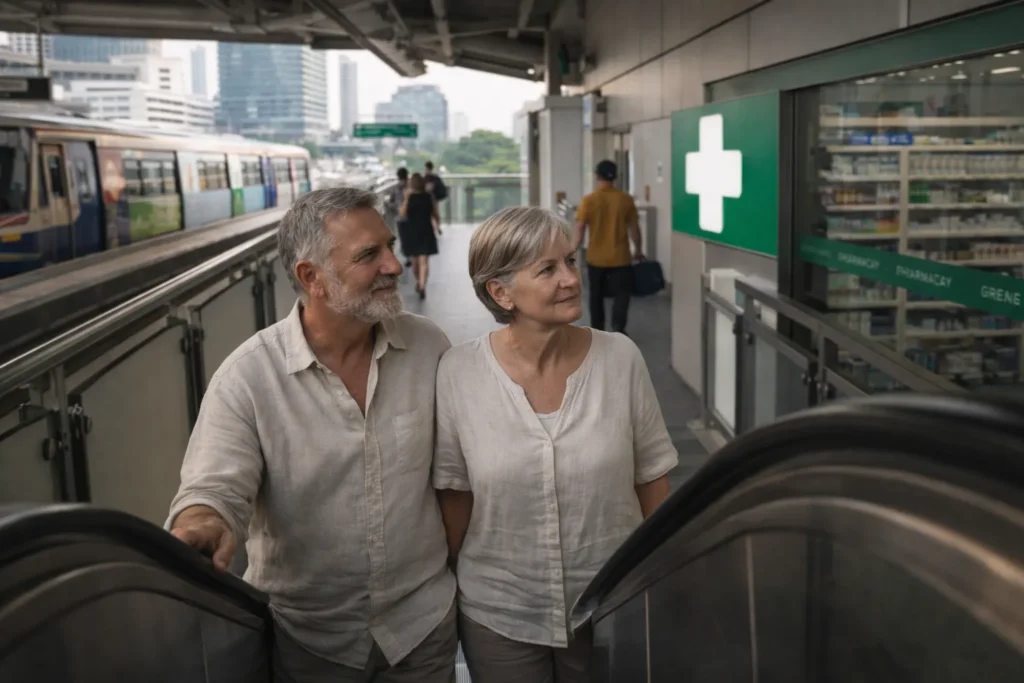
Final Thoughts: A Calm, Realistic Path to Retiring in Thailand
Retiring in Thailand in 2026 is not a cinematic escape; it is an engineering project. The ones who last treat the kingdom like a laboratory: arrive on a tourist stamp, lease a plain condo, log every baht, note which pharmacy stocks your blood-pressure pills, and repeat for two seasons. They learn that a retirement visa is just a spreadsheet with a stamp, that the nearest cardiac unit matters more than the nearest beach club, and that Friday night trivia at the British pub can anchor a life more firmly than a chanote. Thailand will never be flawless—immigration queues still stretch, sidewalks still vanish—but it keeps delivering warm mornings, MRIs for the price of a stateside copay, and restaurant bills that let pensions breathe. Do not sell the house, ship the dog, or tattoo the deed until the data say yes. Collect months, not miles; evidence, not anecdotes. When the numbers and the routines feel boringly normal, you will know the experiment worked.
12 months out — Research and planning
This stage is about clarity.
You’re not trying to solve every detail. You’re trying to identify whether Thailand is realistically a fit — and what your likely pathway would be.
Focus on:
- Budget reality: which lifestyle tier you fit into
- Visa pathway: Which visa route is most realistic for your situation
- Location shortlist: 2–3 places to explore (based on healthcare and lifestyle)
- Healthcare planning: identify major hospitals in each location
- Family planning: decide what “connection” looks like (visits, seasonal time, etc.)
Practical outputs by the end of this stage:
- a monthly budget range you feel confident in
- a shortlist of locations
- a first-trip plan
Nine months out — The scouting trip (2–4 weeks)
This trip is where most people move from “idea” to “plan.”
Treat it less like a vacation and more like a lifestyle test.
What to do on this trip:
- spend real time in 2–3 locations
- Visit neighborhoods you could realistically live in
- Do a hospital visit or at least research private hospital options nearby
- Look at rental listings in your price range
- test daily routines: groceries, coffee shops, transport, walking paths
- Join a local expat Facebook group and attend one meetup
What you’re trying to learn:
- Does this location feel comfortable day-to-day?
- How does the climate feel to you?
- Does the lifestyle feel energizing or tiring?
Practical advice: If possible, do this trip during a season that matters to you (hot season, wet season, or smoke season depending on region).
Six months out — Choose your trial move strategy
At this point, most retirees decide whether they want:
- a short test (3–6 months)
- a longer trial (6–12 months)
- or a full commitment
For most people, a 3–6 month rental is the sweet spot.
It gives you enough time to experience normal life and make decisions with real information.
Key decisions in this stage:
- Choose your first location (based on comfort and healthcare access)
- Choose your rental plan (short lease first)
- decide what you will bring and what you will store
- Start medical and insurance planning
- build your “banking redundancy” setup (two cards, backup access)
If you’re still uncertain:
This is exactly why the trial move exists.
It allows you to move forward without betting everything on the decision.
Three months out — Admin and preparation
This is where you turn the plan into logistics.
Don’t overcomplicate it.
A few simple actions here can remove most stress later.
Checklist for this stage:
- Confirm your visa documentation requirements
- Finalize health insurance approach (if needed for your pathway)
- Request your medical summary letter and prescription lists
- Create your “Medical Go Folder.”
- Set up your phone plan for two-factor authentication (banking)
- Ensure you have backup cards and access to funds
- Confirm how you will access money in Thailand
Housing:
- Book your first accommodation (short lease)
- avoid committing to long leases early
Belongings:
- decide what you will travel with
- Book storage if needed through Swift Cargo Solutions
- Delay major shipping decisions until after your trial move
One month out — Final checklist (keep it simple)
This stage is mostly about reducing surprises.
Final checklist:
- flights and arrival plan
- accommodation confirmed
- copies of passport, visa documents, and insurance details
- emergency contact list
- basic medication and prescriptions
- backup cards and emergency buffer
- digital copies of important documents
Practical advice:
Pack for 90 days.
Most retirees realize they need less than they expected — and the rest can be solved after arrival.
First 90 days in Thailand — what to prioritize
Your first 90 days are not about being “fully settled.”
They are about establishing stability.
Top priorities:
1) Healthcare familiarity
- know your nearest private hospital
- register if needed
- Get a basic health check if appropriate
2) Immigration rhythm
- understand your reporting requirements
- Keep visa documents organized
- set calendar reminders
3) Budget reality
- track actual spending
- Adjust expectations based on real life
4) Routine and community
- Choose a few weekly habits
- Attend social activities early
- avoid waiting for the community to “happen.”
5) Location confirmation
- After 60–90 days, ask: “Does this feel like home?”
At the end of your first 90 days, you should have enough real information to decide:
- whether to stay longer
- whether to try a different city
- whether to extend to 12 months
- whether it’s time to ship more belongings
Month 6–12 — Confirm, extend, commit
This is where retirement in Thailand becomes real.
If the trial move feels right, the next stage is:
- extend your rental
- experience different seasons
- Refine your budget system
- build deeper social routines
- Consider whether you want a longer-term visa structure
- decide whether long-term renting or purchasing makes sense (for you)
The goal here is confidence.
You’re no longer “trying Thailand.”
You’re building a life.
FAQs (Real Questions People Google About Retiring in Thailand)
Below are the most common questions people ask when they’re considering retiring in Thailand.
For most retirees, a comfortable lifestyle in Thailand in 2026 typically falls around:
Single: $1,800–$3,000/month
Couple: $2,500–$4,000/month
You can live on less in lower-cost areas, and you can easily spend more in Bangkok, Phuket, or if you choose a highly Western lifestyle.
The biggest cost variable is usually rent.
If you want the lowest-risk plan, do a 3–6 month trial move, track real spending, then decide.
Many retirees do. The key is whether your Social Security income covers your lifestyle tier and location. Thailand is often workable on Social Security if you: Choose housing carefully, live in a mid-cost city (Chiang Mai, Hua Hin, Pattaya/Jomtien) and keep a mostly local lifestyle
If you want a high-comfort lifestyle in Bangkok or Phuket, Social Security alone may be tight unless you have additional savings or pension income.
There is no single “best” visa — the best visa is the one that fits your age, finances, and risk tolerance.
Most retirees choose one of these three:
Non-Immigrant O-A (Retirement Visa) if they are 50+ and meet financial + insurance requirements
LTR Wealthy Pensioner if they qualify and want a longer-term structure
Thailand Privilege (Elite) if they prefer a paid convenience route
If you are not ready to commit yet, many retirees start with a trial move strategy and then formalize a long-stay visa once they are sure.
Many retirees choose to have health insurance — and some visa pathways may require it.
Even if you plan to pay out-of-pocket for routine care, insurance can protect you from major hospital costs.
Most retirees use one of three strategies:
– full private insurance
– hybrid (out-of-pocket routine + catastrophic coverage)
– self-insure (only if savings are strong)
If you are planning a retirement visa, always confirm the current insurance requirements with official sources.
Thailand is generally considered safe for retirees in day-to-day life, particularly in established expat hubs. Slow down on major financial decisions and avoid scams
The biggest real-world risk is usually road safety, not crime.
Basic precautions go a long way: Avoid scooters if you are not experienced, use taxis/Grab and walkable neighborhoods
It depends on what you want.
Here are the most common matches:
– Bangkok: best healthcare access and city convenience
– Hua Hin: calm coastal retiree hub
– Chiang Mai: strong value + strong expat community
– Phuket: beach lifestyle with modern infrastructure (higher cost)
– Pattaya/Jomtien: large retiree community + affordability
– Koh Samui: island life with some healthcare tradeoffs
The best strategy is to rent first and choose your long-term base after living locally.
ost retirees rent — and many who eventually buy still rent first.
Buying can be complex for foreigners, and it’s rarely necessary to enjoy a great retirement lifestyle.
Renting gives you flexibility, which is extremely valuable in your first year.
If you ever decide to buy, make that decision only after you’ve lived in Thailand long enough to be confident about location and long-term plans.
Foreigners can generally buy condominiums under certain rules, but land ownership is different and property structures can be complex.
If you consider purchasing property, always use qualified legal advice and avoid shortcuts.
Loneliness is one of the most common challenges for retirees abroad — and one of the biggest reasons people return home.
The good news is that Thailand is one of the easiest countries in Asia to build community, especially in expat hubs.
The key is routine: Join one or two groups early, commit to weekly activities, and build a small network in your first 90 days
If you take social life seriously early, retirement feels connected — not isolating.
The biggest mistake is moving too fast.
This often looks like:
– committing to a long-term lease without testing the neighborhood
– buying property early
– Shipping everything before confirming Thailand fits
– underestimating visa paperwork and reporting
The safest approach is staged:
Visit → rent for 3–6 months → extend → commit later.
Most retirees choose one of three options:
– sell most items and start fresh
– trial move and store belongings at home
– ship a household once committed
The best approach for most people is:
trial move first → store at home → ship later if needed.
This keeps your move reversible and reduces regret.
Most retirees report that the first 30–90 days are the adjustment phase.
By 3 months, you usually:
– understand daily routines
– have a healthcare plan
– have a basic social rhythm
– feel confident navigating your neighborhood
By 6–12 months, you usually know whether Thailand is a long-term fit. That’s why the trial move approach works so well.
Thailand is generally still affordable compared to most Western countries — but it’s not as cheap as it was a decade ago.
Some parts of Bangkok and Phuket can now feel “international priced,” especially in premium areas.
Thailand still offers strong value — particularly if you:
– Choose housing carefully
– Live in a mid-cost region
– mix local and Western lifestyle habits
Start with these three steps:
1) Build a realistic budget range (lean / comfortable / high comfort)
2) Research the most likely visa pathway for your situation
3) Plan a 2–4 week scouting trip to test two or three locations
From there, the best next move for most people is to rent for 3–6 months and make the decision with real experience.
The big takeaway
If you only remember one principle, make it this:
Keep early decisions reversible.
Thailand can be an excellent retirement choice — especially when you move in stages, rent first, and commit only once you’re confident.
Conclusion and your next steps
If you have scrolled this far you have already outrun the pack: you treated a postcard fantasy like a due-diligence deck. Thailand will still be hot, cheap and flat-out foreign in 2026, but the ones who never post regret porn on Facebook all follow the same unsexy playbook: land, lease, log every baht, repeat. They sign no sale deed until the rainy season has flooded the soi twice and the immigration officer greets them by nickname. Community first, chanote later; evidence over anecdotes. Do that and you collect the country’s perks, sunlight on your balcony, surgeons who trained at Johns Hopkins, dinner for three bucks—without staking your last nickel on a dream that looked better with a Valencia filter.
Your best next step (if you’re still deciding)
If you’re still in the early phase, the safest approach is simple:
1) Choose 2–3 locations to explore
2) Plan a scouting trip
3) Rent for 3–6 months
4) Track your real expenses
5) Extend to 12 months if it’s working
6) Commit only when Thailand genuinely fits
This is the “low regret” path.
Bookmark this guide (we keep it updated)
Visa rules, insurance requirements, and cost-of-living numbers can change over time.
We keep this guide updated regularly — including changes that matter to retirees.
If Thailand is on your shortlist, it’s worth bookmarking this page so you can return when you’re closer to a decision.
When you’re ready to ship or store belongings
Many people reading this guide will eventually reach a point where the move becomes real:
- You’re ready to ship a household
- Or you want to store belongings during a trial move
- Or you want help planning customs and logistics properly
If and when that time comes, it’s worth speaking with an experienced provider early — not because shipping is difficult, but because planning reduces surprises.
At SwiftCargo, we help people relocate internationally with a staged approach — including support with customs documentation and storage options at both ends.
This guide is designed to stand on its own, but if you want advice or quotes when the time is right, you can contact us through the site.
Keep early decisions reversible.
Thailand can be an outstanding place to retire — especially when you move carefully, test first, and commit only once you’re confident.
Retiring in Thailand Sources (Updated January 2026)
Thai Consulate-General in Chicago — Non-Immigrant Long Stay Visa (O-A / O-X)
Used for: Official retirement visa requirements, eligibility criteria, documentation requirements, and baseline visa structure (O-A and O-X).
Thailand Board of Investment (BOI) — Long-Term Resident (LTR) Visa Portal
Used for: Official LTR visa categories (including Wealthy Pensioner), privileges, validity, and eligibility framework.
Thailand Privilege Card (Official) — Membership Package Comparison
Used for: Official Thailand Privilege visa program structure, membership tiers, and package overview (for the “paid simplicity” option).
Thai Customs Department — Household Effects / Duty Exemption Guidance
Used for: Official definitions of household effects, duty exemption eligibility rules (owned/used requirement), and “reasonable quantity” guideline for retirees shipping goods.
Thailand.go.th (Government Portal) — Criteria for Duty Exemption on Used Household Effects
Used for: Plain-English government summary of duty exemption criteria and common restrictions (e.g., “one unit each” for some appliances).
World Health Organization (WHO) — Thailand Road Safety
Used for: Evidence supporting the guide’s safety framing (road safety as the largest day-to-day risk) and official traffic fatality statistics.
U.S. Department of State — Thailand Travel Advisory
Used for: Official safety and security advisory baseline for U.S. retirees (general risk posture and border area notes).
UK Government (FCDO) — Thailand Travel Advice
Used for: Official safety and legal considerations for UK retirees (reinforces non-US safety guidance and risk framing).
Thai General Insurance Association (TGIA) — O-A Health Insurance Guidelines
Used for: Clarifying reference for O-A insurance minimum coverage thresholds (supporting detail; official visa pages still take priority).
Thai Customs (English site) — Importing Used/Secondhand Household Effects
Used for: Supporting customs definitions of “household effects” and reinforcing eligibility wording in a second official customs page.
Reuters — Thailand to Impose 10% Duty on Low-Cost Imports (Jan 1, 2026)
Used for: Background context on customs policy tightening in 2026 (not directly household goods, but relevant to “customs rules evolve”).
Budget & Cost-of-Living Sources (Used in Sections 6, 9, and FAQs)
Numbeo — Cost of Living in Thailand (Updated Dec 2025)
Used for: Directional national-level cost-of-living benchmarks and price ranges (food, utilities, transport) to support our budget tier estimates and general affordability comparisons.
Exiap — Cost of Living in Thailand (Based on Numbeo Data)
Used for: Plain-English interpretation of Thailand vs US cost-of-living difference and supporting affordability framing (secondary but easy for readers to understand).
Thailand Insider Guide — Cost of Living in Thailand (2025/2026)
Used for: Secondary budget examples and lifestyle-tier framing by region (useful for narrative ranges and “comfortable vs lean” explanation).
GoDigit — Cost of Living in Thailand in 2026
Used for: Additional supporting cost-of-living ranges and category breakdowns (utilities, rent, groceries) as a secondary validation source.
Healthcare & Hospital Cost Sources (Used in Sections 8 and FAQs)
Bangkok Hospital Headquarters — Pricing & Payment
Used for: Official hospital guidance on pricing structure and payment processes (supports the claim that major private hospitals provide price transparency and estimates).
Bumrungrad International Hospital — Patient Finance & Insurance Information
Used for: Official confirmation that Bumrungrad provides transparent pricing policies and price estimation for procedures (supports “cost estimate provided” claims).
Samitivej Hospital — Patient Resources / Accommodations & Charges (Official)
Used for: Official hospital statement that charges vary by room type and admission length, and that price lists are subject to change (supports our use of ranges rather than fixed prices).
ExpatDen — Cost of Healthcare in Thailand (Full Breakdown)
Used for: Practical “real world” healthcare cost ranges for expats and retirees, including typical ranges for surgeries, public vs private care, and premium hospital context (secondary but widely cited).
The Thaiger — Doctor Consultation Costs in Thailand
Used for: Supporting evidence for typical consultation ranges in public vs private hospitals (helps back up our consultation cost estimates).