Core Questions (Thailand as a retirement destination)
Is Thailand a good place to retire in 2026?
Yes — for many retirees, Thailand remains one of the strongest retirement destinations if you want lower day-to-day costs, good private healthcare access, and a lifestyle that feels active rather than restricted. The key is that Thailand is not “cheap everywhere,” and the retirement experience varies dramatically by location.
Retirees who thrive tend to choose a base that matches their real routine. They rent first, live normally for a few months, and only commit once they have evidence that the location fits their budget, climate tolerance, and healthcare needs. If you approach the move in stages, Thailand can offer an unusually high quality of life for the money in 2026 and beyond.
What type of retiree does Thailand suit best?
Thailand tends to suit retirees who want warmth, private healthcare access, and a lifestyle where daily comfort is achievable on a realistic retirement income. It works especially well for people who enjoy being out in the world — cafes, markets, walks, gyms, travel — and who feel energized by a new environment.
It also suits retirees who are comfortable with a little paperwork and a different pace of doing things. Thailand rewards patience and flexibility. If you can treat small inconveniences as part of living abroad, you will likely enjoy the lifestyle. If you need everything to work exactly as it does at home, it can feel frustrating.
Who should not retire in Thailand?
Thailand may not be the right fit if you need frequent in-person family support, struggle with bureaucracy, or require ongoing specialist care that is only available in your home country. It can also be challenging if you dislike heat, have limited mobility and choose a non-walkable area, or feel uncomfortable living in a culture where communication norms and problem-solving are different.
Thailand can still work for many of these situations, but it requires more careful planning. The clearest indicator is this: if you would feel anxious being far from your existing support system, a part-time or seasonal setup may be a better first step than a full move.
What are the biggest downsides of retiring in Thailand?
The downsides are real, but they are predictable.
The first is bureaucracy. Immigration reporting, visa renewals, and documentation requirements are manageable, but they are not optional, and they can feel tedious if you prefer a low-admin life.
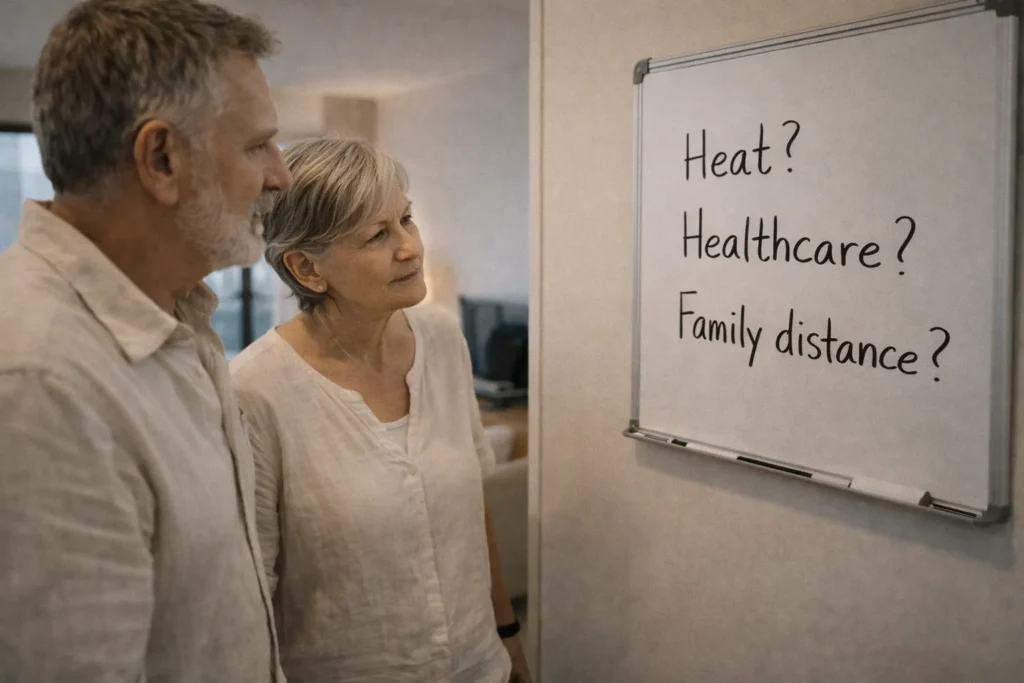
The second is climate. Heat and humidity can be intense, especially in the south, and the rainy season can affect mood and routines if you are not prepared.
The third is distance from family. For many retirees, the emotional weight of being far from children and grandkids is the biggest tradeoff, even if practical communication is easy.
Finally, costs can rise quickly if you live a highly imported lifestyle. Western groceries, premium housing, and frequent international travel can narrow the savings gap.
Is Thailand safe for retirees?
Thailand is generally safe for retirees in day-to-day life, particularly in established expat areas. Violent crime is not the primary concern for most retirees.
The most meaningful risk is road safety. Thailand’s roads can be chaotic, and scooters are a common injury source, especially for newcomers.
The second risk is predictable scams aimed at foreigners, which are usually avoidable if you move slowly, verify before you pay, and avoid “too good to be true” deals.
If you choose a walkable neighborhood, use Grab or taxis instead of scooters, and keep your paperwork organized, Thailand typically feels calm and safe for most retirees.
Cost of living + budget questions
How much money do you need to retire in Thailand?
A realistic way to think about retirement budgets in Thailand is by lifestyle tier, not by a single number.
In 2026, many retirees live comfortably on roughly $2,000–$4,000 per month, depending on location and how Western your lifestyle is. A single retiree can often live well at the lower end of that range in Chiang Mai, Hua Hin, or Pattaya/Jomtien. Bangkok and Phuket tend to require more to maintain the same comfort level, mainly due to rent.
The best approach is to budget based on your likely rent, healthcare plan, and how often you will travel home. If those three numbers make sense, the rest of the lifestyle is usually easy to manage.
Can you retire in Thailand on $1,500 per month?
Yes, it is possible, especially in lower-cost areas, but it requires a simpler lifestyle and fewer expensive habits. On $1,500 per month, most retirees rent modest housing, eat mainly Thai food, keep alcohol and imported shopping limited, and avoid high-cost coastal areas.
It is most realistic if you are single, have stable health, and do not need premium private insurance. It can also work well if you treat Thailand as a quiet, local lifestyle rather than a resort lifestyle.
A practical tip is to test this budget in reality before committing. A three-month rental trial will quickly show whether your spending habits fit the number.
Can you retire in Thailand on $2,000 per month?
For many retirees, yes. $2,000 per month is often enough for a comfortable lifestyle in mid-cost retiree hubs, particularly if you are careful with rent and maintain a mostly local lifestyle.
This budget typically supports a one-bedroom rental, local dining, utilities, transport, and normal leisure spending. What it may not cover comfortably is frequent international travel, premium housing in top tourist zones, or high-end private insurance.
If you want the lowest stress approach, treat $2,000 as a baseline and build in a buffer for healthcare, flights home, and unexpected costs.
Can you retire in Thailand on Social Security alone?
Some retirees can, and many do, but it depends on your monthly benefit amount and your location.
If your Social Security income is $2,000+ per month and you live in a mid-cost area, Social Security can often cover a comfortable lifestyle. If your benefit is closer to $1,500 per month, you can still live in Thailand, but you will likely need to choose a lower-cost location and keep discretionary spending modest.
Social Security alone becomes tight in Bangkok and Phuket if you want Western-style housing, frequent dining out, and premium private insurance.
A practical approach many retirees use is to live comfortably day to day on Social Security, while keeping savings for major travel, medical events, and long-term buffers.
What are the biggest hidden costs retirees underestimate?
Most retirees underestimate costs that are not visible in the “daily lifestyle” category.
Electricity is one of the biggest surprises, especially if you run air conditioning daily. Imported groceries and specialty items can also add up quickly.
Healthcare is another hidden cost, not because routine care is expensive, but because insurance premiums and major procedures can change your budget if you do not plan.
Finally, travel home is often underestimated. A retirement plan that works on paper can feel stressful if you have not budgeted for one or two international trips per year.
Is Thailand cheaper than the United States for retirees?
For most retirees, yes — especially when it comes to housing, dining, personal services, and routine private healthcare. Many retirees find they can live in Thailand at a comfort level that would be financially difficult to maintain in the US.
However, the gap narrows if you choose a highly Western lifestyle. Imported goods, premium housing, international school-level neighborhoods, and frequent travel can push costs closer to US levels.
The most reliable savings tend to come from three areas: rent, daily food, and healthcare pricing. If those work in your favor, Thailand is usually significantly cheaper.
Is Thailand cheaper than Europe for retirees?
Thailand is often cheaper than Western Europe for housing, dining, and personal services, and it can offer a higher day-to-day comfort level for the same monthly budget.
However, the savings depend on where you live in Europe and how you live in Thailand. If you come from a high-cost city and adopt a mostly local lifestyle, the difference can feel dramatic. If you live a highly imported lifestyle in Bangkok or Phuket, the gap narrows.
For many European retirees, Thailand’s value comes from affordable rent, warm weather, and easy access to private healthcare without long wait times.
What is the average rent in Thailand for retirees?
Rent varies widely by city, neighborhood, and building quality, so it is better to think in ranges.
In 2026, a one-bedroom apartment or condo commonly ranges from roughly $300 to $1,200+ per month. Chiang Mai, Hua Hin, and Pattaya/Jomtien often sit in the lower to mid ranges for similar quality. Bangkok and Phuket can be significantly higher, especially in prime neighborhoods or newer buildings.
Two practical points matter. First, location within a city matters as much as the city itself. Second, renting first is the easiest way to avoid overpaying, because you can learn which neighborhoods match your lifestyle.
How much does healthcare cost per month in Thailand?
It depends on your health status and how you plan to handle risk.
If you are healthy and pay out-of-pocket for routine care, many retirees find monthly healthcare spending stays relatively low, with occasional higher months when they do checkups or diagnostics.
If you use private insurance, premiums often become the main monthly cost and can range widely depending on age, coverage level, and whether you choose international or Thailand-based plans.
A practical way to budget is to separate routine costs from major-risk protection. Budget for routine visits and medication, then decide whether you want insurance, catastrophic coverage, or self-insurance based on your risk tolerance and savings.
Do retirees pay a lot for utilities in Thailand?
Utilities are usually affordable, but electricity can become a meaningful expense if you use air conditioning heavily.
Most retirees find that water is inexpensive and internet is reasonably priced, but electricity spikes during hot months. The largest variable is your home type and your air conditioning use.
A practical approach is to choose a well-insulated unit, use air conditioning strategically, and confirm that your building’s electricity billing is at standard rates.
Visa questions
What visa do you need to retire in Thailand?
Most retirees use a retirement visa pathway based on being age 50+, typically either: • a Non-Immigrant O route (often extended inside Thailand), or • a Non-Immigrant O-A retirement visa (often issued through a Thai embassy or consulate)
Some retirees also qualify for longer-term options like the O-X retirement visa (limited nationalities) or the LTR (Long-Term Resident) “Wealthy Pensioner” category.
The best visa is not the one that looks easiest online. It’s the one you can maintain calmly year after year — meaning you can consistently meet the financial requirements, maintain any insurance requirements, and keep up with routine immigration reporting.
Because requirements can change and embassy checklists differ slightly by country, the final step is always to confirm the official checklist for your nationality before you build your plan around a visa type.
What is the Thailand retirement visa?
“Retirement visa” is a general term people use for Thailand’s long-stay options for foreigners aged 50 and older.
In practice, the most common routes are: • Non-Immigrant O-A (often issued as a one-year visa through an embassy/consulate), and • the Non-Immigrant O route, which is commonly used for a one-year retirement extension once inside Thailand
Both pathways are built around the same idea: you must show you can support yourself financially and stay compliant with immigration rules. Some routes also include insurance requirements.
The takeaway is that “retirement visa” isn’t one product — it’s a category of long-stay options, each with its own checklist and renewal process.
What are the requirements for the O-A retirement visa?
The O-A visa is one of the most widely used retirement options, but it’s also one of the more documentation-heavy pathways.
In most cases, requirements fall into three main areas:
Age eligibility: you must be 50+. Financial proof: you must demonstrate you can support yourself (often through a required level of funds or qualifying income documentation). Health insurance: O-A applicants typically need insurance that meets Thailand’s minimum coverage requirements and is documented correctly.
Some embassies also require supporting documentation such as police clearance or medical certificates, and processing timelines can vary.
The best way to avoid stress is to plan early, because collecting documents often takes longer than the visa itself.
Do you need health insurance for a Thai retirement visa?
For the O-A retirement visa, yes — health insurance is usually a required part of the application, and missing or incorrect insurance documentation is one of the most common reasons applications are delayed.
For other retirement routes, insurance requirements can vary depending on your visa type, where you apply, and current enforcement practices. Even when insurance isn’t strictly mandatory, many retirees still choose coverage because it protects against large unexpected costs, especially later in life.
A practical way to think about this is to separate two questions: 1. Is insurance required for your visa pathway? 2. Regardless of the visa rule, what level of medical risk protection makes you feel safe?
What is the difference between O-A and O-X visas?
The O-A is the more common retirement visa and is usually structured as a one-year long-stay retirement visa with annual renewal steps as long as you remain eligible.
The O-X is designed as a longer-term retirement visa, but it is limited to certain nationalities and usually comes with stricter financial and insurance requirements. It is less commonly used simply because fewer people qualify.
In practical planning terms, most retirees start by evaluating the O or O-A routes first. The O-X is usually relevant only if you qualify and want a longer structured framework.
What is the LTR visa for retirees?
Thailand’s Long-Term Resident (LTR) program includes a category for retirees called “Wealthy Pensioner.” It is designed for retirees who can document higher retirement income and meet structured eligibility requirements.
The advantage of LTR is that it is built as a longer-term framework and can reduce annual administrative friction compared to traditional retirement extensions.
The tradeoff is that eligibility thresholds are higher and documentation is more formal — you need to prove income, insurance, and compliance clearly.
If you qualify, it can be one of the most future-proof retirement options in Thailand because it’s designed for long-term stability, not year-to-year uncertainty.
Can you live in Thailand permanently as a retiree?
Thailand does not offer a simple “retire permanently” visa in the same way some countries do, but many retirees live in Thailand long-term by renewing retirement extensions year after year.
In practice, long-term retirement in Thailand comes down to routine compliance: • maintaining your financial requirement • meeting any insurance rules tied to your visa • renewing on time • completing ongoing reporting requirements
Some retirees choose longer-term frameworks like the LTR or Thailand Privilege to reduce annual renewals, but even those options still require maintaining compliance.
Long-term living is absolutely possible — it just works best when you treat immigration requirements as part of your normal life routine.
What is 90-day reporting in Thailand?
90-day reporting is a requirement for many long-stay foreigners to confirm their current residential address to Thai immigration every 90 days.
It is not a visa renewal. It is simply an address confirmation process.
The important part is that it’s ongoing — if you stay long term, you will repeat it regularly, and missing it can create avoidable stress or penalties.
Depending on your location and current rules, it may be possible to do it online, in person, or through approved methods. Most retirees make it easy by setting calendar reminders and keeping a simple folder of documentation ready.
Is it hard to renew a Thai retirement visa?
For most retirees who meet the requirements, renewals are manageable — but they reward preparation.
Problems typically happen for predictable reasons: • incomplete documentation • misunderstanding how financial requirements must be maintained • insurance documentation issues (if required for your pathway) • leaving the renewal too late
If you keep your documents organized and give yourself enough time, renewals become a routine administrative task rather than a stressful event.
Can you test Thailand first before applying for a retirement visa?
Yes — and for many retirees, it’s the smartest approach.
A trial move lets you confirm whether Thailand fits your lifestyle, climate tolerance, healthcare needs, and budget before you commit to long-term visa structures, shipping, or property decisions.
Many retirees start with shorter stays, then transition to a long-stay visa once they are confident. The key is to test real life, not tourism: rent in a normal neighborhood, live through weekdays, test healthcare access, and track spending.
This staged approach reduces regret dramatically — and it gives you the evidence you need to choose the right visa pathway with confidence.
Healthcare questions
Is healthcare in Thailand good for foreigners?
Yes — in major cities and established expat hubs, Thailand’s private healthcare system is widely used by foreign retirees and is often considered one of the country’s strongest retirement advantages.
In places like Bangkok, Chiang Mai, Phuket, Pattaya, and Hua Hin, private hospitals typically offer modern diagnostics, access to specialists, and appointment availability that can feel significantly easier than what many retirees are used to at home. Many large hospitals also have international patient departments and staff who can communicate in English, especially in key clinical and billing areas.
The key point is that healthcare quality varies by location and hospital tier. If healthcare is a top priority for you, choose a base within easy reach of strong private hospitals and use your first few months to test a “home hospital” that feels reliable.
Are hospitals in Thailand expensive?
Compared to many Western countries, private hospitals in Thailand are often significantly less expensive — especially for routine consultations, diagnostics, and outpatient care.
Many retirees find that everyday medical care is manageable out of pocket, which is one reason Thailand can feel financially sustainable. A standard doctor consultation, basic lab work, or routine imaging is often priced in a way that doesn’t feel alarming.
However, major events can still be expensive. Emergency admissions, specialist procedures, surgery, and longer inpatient stays can move into the thousands or tens of thousands of dollars, depending on the hospital tier, room type, and complexity of care.
A practical way to plan is to assume routine care is affordable, but to protect yourself against serious events through either insurance or a dedicated emergency buffer.
Should retirees get private insurance in Thailand?
Many retirees do — especially if their visa pathway requires insurance, or if they want predictable protection against large medical costs as they age.
Others choose a hybrid approach: paying out of pocket for routine care and maintaining catastrophic coverage (or a strong emergency buffer) for major events. This approach can work well in Thailand because routine care is often affordable, but it still requires discipline and real financial reserves.
The calm planning question is not “Do I need insurance?” It’s: What is the worst-case medical cost that would disrupt my retirement plan, and how will I cover it?
If you want less uncertainty, insurance can provide peace of mind. If you have strong savings and prefer flexibility, hybrid planning can work — but only if you have enough buffer to handle serious events without stress.
Which Thai cities have the best healthcare?
Bangkok generally has the strongest overall healthcare ecosystem in Thailand, including high-end private hospitals, specialist depth, and the widest range of diagnostics and treatments. This is why many retirees choose Bangkok as their first-year base, even if they later relocate to a quieter area.
Chiang Mai is usually considered the strongest healthcare hub in the north, with several well-regarded private hospitals and an established retiree community.
Phuket has strong private hospitals for an island base, but it can be more expensive, and complex specialist needs may still require occasional travel to Bangkok.
Hua Hin and Pattaya both have solid private healthcare for routine care and many specialist needs, but retirees with complex conditions often prefer being closer to Bangkok’s hospital network.
A simple planning rule is: if you expect complex specialist care over time, Bangkok (or easy access to Bangkok) is the most future-proof choice.
Can you get prescription medication in Thailand?
Many common prescription medications are widely available in Thailand through hospital pharmacies and licensed local pharmacies, often at affordable prices.
The main planning issue is continuity — especially if you take specialized medications or medication that varies by brand name across countries.
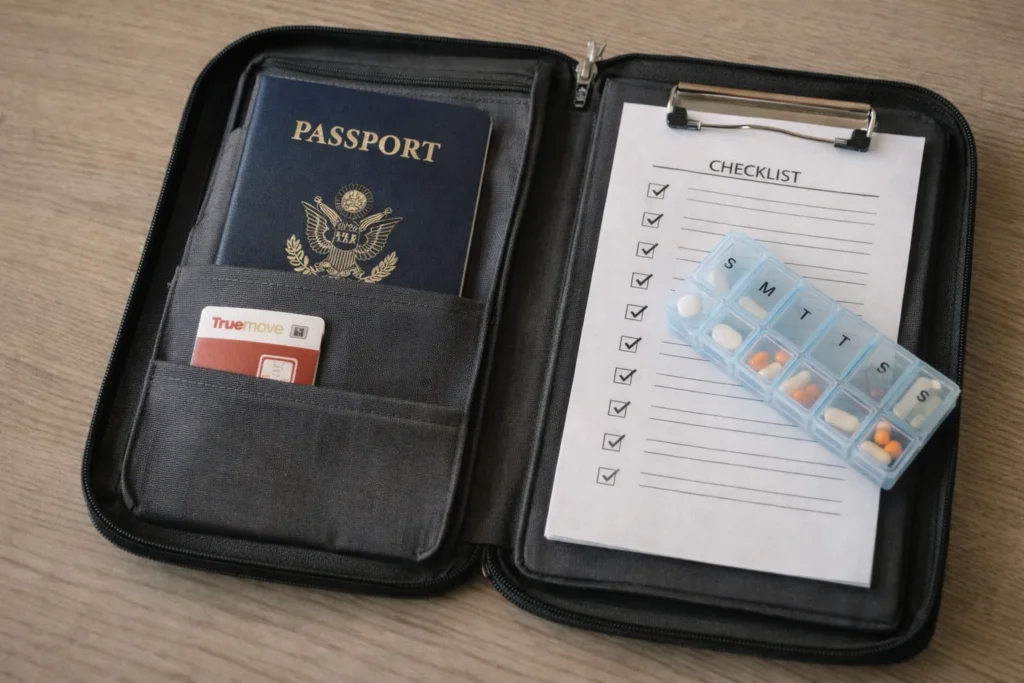
The safest approach is to arrive with a medical summary and a prescription list using generic medication names (brand names differ across regions). It’s also smart to bring copies of recent test results and, if possible, a short letter from your home doctor describing your conditions and current medications.
If you rely on specialized medication, confirm availability in Thailand before relocating — ideally by checking with a major hospital pharmacy in your chosen area. That prevents the only problem that tends to catch retirees off guard: not the price, but availability.
Where to live questions
What are the best places to retire in Thailand?
The best places to retire in Thailand depend on what you want your daily life to look like. Thailand is not one retirement experience. A retiree who wants walkability, hospitals, and city convenience will choose differently from a retiree who wants quiet coastal living or maximum cost savings.
That said, the most common retiree bases in 2026 include Chiang Mai (strong value and community), Hua Hin (calm coastal retiree hub), Bangkok (best healthcare access and infrastructure), Phuket (developed island life but higher cost), and Pattaya/Jomtien (large retiree community with strong rental value).
A practical way to choose is to start with your non-negotiables. If healthcare access is the top priority, Bangkok or a city with strong private hospitals is the safest base. If you want a calmer daily rhythm, Hua Hin is often a strong first choice. If you want value and an established expat network, Chiang Mai fits many retirees well, with the caveat of the smoke season.
The smartest approach is to visit and rent first. Neighborhoods matter as much as cities, and a short trial stay will tell you more than months of online research.
Is Chiang Mai good for retirees?
Chiang Mai is one of Thailand’s most popular retiree bases because it offers a livable city environment with strong value, a visible expat community, and a slower pace than Bangkok. Many retirees enjoy the café culture, food scene, and the ability to build a routine without feeling overwhelmed by traffic or crowds.
It tends to suit retirees who want an active but not hectic lifestyle, enjoy cultural life, and want affordability without feeling remote. Chiang Mai also offers a good balance between modern convenience and a more relaxed daily rhythm.
The main tradeoff is seasonal air quality. Smoke season can affect Chiang Mai and the surrounding areas for part of the year, which is why many retirees either travel south during that period or choose a different base if they have respiratory sensitivity.
Healthcare access in Chiang Mai is solid for routine and many specialist needs, but retirees with complex medical situations sometimes prefer being closer to Bangkok’s hospital network.
Is Hua Hin good for retirees?
Hua Hin is often considered one of Thailand’s most retiree-friendly towns because it offers a calm pace, an established expat community, and a lifestyle that feels easy to maintain long-term. It is coastal, developed, and generally quieter than Phuket, which appeals to retirees who want beach-town living without constant crowds or nightlife intensity.
Hua Hin tends to suit retirees who value routine, walkable areas, and a slower daily rhythm. It is also popular with people who want to be within reach of Bangkok for major hospitals, since Bangkok is accessible for specialist appointments when needed.
The tradeoff is that Hua Hin can feel quiet compared to larger cities, and some retirees eventually want more variety. That is why renting first is a smart approach. It lets you test whether you enjoy the pace after the honeymoon phase wears off.
Is Phuket good for retirees?
Phuket can be excellent for retirees who want island life, beach access, and modern infrastructure, but it is one of the more expensive places to live in Thailand. Costs rise quickly in beach-adjacent areas and premium neighborhoods, especially for modern housing and imported lifestyle spending.
Phuket tends to suit retirees who want a resort-like environment, enjoy international dining and services, and have a budget that comfortably supports higher rent. It can feel extremely convenient if you choose the right area, and many retirees enjoy the ease of having everything nearby.
The main tradeoffs are traffic, peak-season crowds, and higher living costs compared to inland retiree hubs. Healthcare access is strong for an island, with reputable private hospitals, but complex specialist care may still require occasional trips to Bangkok.
If Phuket is your dream base, the lowest-risk approach is to rent in a quieter residential area first rather than committing near the busiest tourist zones.
Is Bangkok a good place to retire?
Bangkok is a strong retirement base for retirees who want the best healthcare access in Thailand, excellent infrastructure, and the convenience of a true global city. It offers specialist depth, international clinics, and services that can make daily life feel very easy once you are settled.
Bangkok suits retirees who enjoy city life, want walkable neighborhoods near transit, and value being close to top-tier hospitals. It can also work well for retirees who want a high-comfort lifestyle without owning a car, because transport options are better than most other parts of Thailand.
The tradeoff is that Bangkok is more expensive than many other parts of Thailand, particularly in premium neighborhoods, and it can feel intense if you prefer a quiet pace.
A common approach is to start in Bangkok for the first six to twelve months to establish healthcare systems and routines, then decide whether you want to stay long-term or move to a quieter base once you know what you value most.
Rent vs buy + property questions
Should retirees rent or buy in Thailand?
For most retirees, renting first is the best decision because it keeps your move flexible and reduces risk. Thailand is easy to rent in, and long-term rentals are common in the main retiree hubs. Renting also lets you learn what daily life actually feels like before you make a permanent commitment.
The biggest reason retirees regret buying is not the property itself. It is that they bought too early. Neighborhoods matter, buildings vary widely in quality, and your preferences often change once Thailand becomes normal life rather than a vacation.
A practical approach is to rent for at least six to twelve months, ideally across different seasons, and only consider buying once you know you are staying long-term and you understand what you truly want. Many retirees never buy at all and still live extremely comfortably.
Can foreigners buy property in Thailand?
Foreigners can generally buy condominiums in Thailand under specific legal rules, but they cannot directly own land in the same way Thai citizens can. This is one reason many foreign retirees rent long-term rather than buying.
Some structures marketed to foreigners, such as long leases or ownership through companies, can be more complex and need careful handling. These structures are not automatically bad, but they require proper legal guidance and a clear understanding of your rights and obligations.
If you ever consider purchasing, the safest approach is to treat it as a legal process rather than a lifestyle decision. Use reputable legal advice, confirm the rules carefully, and avoid rushed decisions driven by sales pressure or short-term excitement.
Is it a good idea to buy a condo in Thailand as a retiree?
For some retirees, buying a condo can make sense, especially if you are confident Thailand is your long-term base and you have a clear reason to buy beyond emotion. Owning can provide stability, reduce rent uncertainty, and allow you to shape your home exactly how you want.
But buying too early is one of the most common retirement mistakes. Building quality, noise, management standards, and neighborhood fit often become clear only after living locally. A building can look perfect in photos and still feel wrong after three months of real life.
A low-risk strategy is to rent in your preferred building or neighborhood first. If you still feel confident after six to twelve months, then buying becomes a much more informed decision. Most importantly, treat buying as optional. Thailand is a country where long-term renting is normal, and many retirees prefer keeping their lifestyle flexible.
Safety + scams questions
What scams should retirees watch for in Thailand?
Most scams that affect retirees in Thailand are not sophisticated. They rely on newcomers being eager to solve problems quickly and trusting the first person who offers an easy shortcut.
The most common scam pattern involves property and rentals. If a listing looks unusually cheap, the owner pressures you to send a deposit before you view it, or the story includes urgency, it is safer to walk away. A simple rule prevents most issues: never send money before you have seen the property and verified the landlord or agent.
The second common category involves visa services. There are reputable agents, but there are also unlicensed helpers who promise “guaranteed outcomes” or quiet shortcuts. Those shortcuts can create bigger problems later. If you use help, choose a provider with a long track record, ask for clear receipts and documentation, and avoid anyone who discourages transparency.
The third category involves investment pitches targeted at foreigners, including condominium “guaranteed return” claims or high-yield opportunities marketed in expat circles. A useful rule is to treat anything with urgency, guaranteed returns, or pressure to act quickly as a warning sign.
Thailand is generally safe, and most retirees never experience serious scams. The best protection is simply to slow down, verify details, and make decisions on your timeline, not someone else’s.
Is Thailand dangerous for older foreigners?
For most retirees, Thailand does not feel dangerous in everyday life. In established retiree areas, daily routines are usually calm, and violent crime is not the main concern.
The most meaningful risk for older foreigners is road safety. Many injuries and serious incidents involve scooters and unfamiliar traffic patterns. If you want to reduce risk dramatically, choose a walkable neighborhood, use Grab or taxis instead of scooters, and avoid riding on motorbikes unless you are genuinely experienced.
The second risk is avoidable legal and administrative trouble, such as visa overstays or missed reporting requirements. These situations are rarely dramatic, but they create stress when they happen. The best solution is simple: keep documents organized and use calendar reminders.
The third risk is being targeted as a newcomer by small scams. These are usually avoidable by moving slowly and avoiding rushed decisions.
If you approach Thailand with normal caution and choose your location carefully, it is generally a safe, comfortable retirement destination for older foreigners.
Moving + logistics questions
Should you ship your belongings to Thailand or start fresh?
For most retirees, the lowest-risk approach is to start with a trial move and bring only essentials. Thailand is easy to live in with very little, rentals are often furnished, and most household items can be purchased locally without difficulty.
Shipping makes the most sense once you are confident you are staying long-term and you have specific items that matter: sentimental belongings, specialty tools, high-quality personal items, or equipment that would be expensive or difficult to replace.
Furniture and large appliances are usually not worth shipping unless you have a very specific reason. The cost and complexity can outweigh the benefit, and it is common for retirees to change locations within Thailand after their first year.
A practical staged approach is to store most belongings at home, live in Thailand for three to twelve months, and then ship only what still feels important once Thailand is proven to fit.
How hard is it to ship household goods to Thailand?
Shipping household goods to Thailand is manageable, but it is not something to do casually. The process is less about transportation and more about documentation and customs compliance.
Most delays and frustration come from paperwork issues: incomplete item lists, unclear ownership details, restricted items included in the shipment, or mismatched documentation between the shipper, receiver, and local customs requirements.
It usually goes more smoothly when you ship later in the process, after you have a stable address and a clear long-stay setup. If you ship early while you are still moving between rentals or uncertain about your long-term base, shipping can create unnecessary stress.
The calm approach is to treat shipping like a project: plan timelines with buffer, keep a clear inventory list, confirm documentation requirements early, and avoid shipping anything you are not prepared to declare properly.
What is the best way to test Thailand before moving permanently?
The best way to test Thailand is to run a trial move designed around real life rather than tourism.
Start with a short planning trip of two to four weeks to shortlist locations and understand what neighborhoods actually feel like. Then rent for three to six months in your top choice and live as you would normally live: grocery shopping, healthcare access, transport routines, and weekday life.
If it still feels right, extend to a full year. A year matters because it lets you experience seasonal changes such as heat, rain, peak tourist season, and, in the north, smoke season.
During the trial period, keep the move reversible by storing most belongings at home and delaying shipping until you are sure. When the time comes to coordinate shipping or storage at both ends, using an experienced international provider such as SwiftCargo can reduce customs, documentation, and timing stress without turning the move into a major project.
12-month plan questions
What should you do first if you want to retire in Thailand?
Start by making the decision smaller. Your first job is not to “move to Thailand.” Your first job is to reduce uncertainty.
Begin with three practical steps. First, set a realistic monthly budget range based on how you actually want to live, including rent, healthcare, and at least one trip home per year. Second, shortlist two to three locations that match your health needs and lifestyle preferences rather than just the cheapest option. Third, identify the visa pathways you are most likely to qualify for so you know what documentation and financial requirements you would need to meet.
Once those three pieces are clear, plan a short planning trip designed around real life rather than sightseeing. Spend time in normal neighborhoods, visit a hospital, test transport, and track what daily spending feels like.
The biggest early mistake retirees make is committing too quickly. If you approach the process as a staged transition, you protect yourself from regret while still moving forward.
How long should you test Thailand before committing?
Most retirees benefit from at least three to six months living in Thailand before making major long-term decisions. That is long enough to experience daily routines, confirm healthcare access, and see whether you are building a comfortable social rhythm.
A full twelve-month trial is ideal if you want maximum confidence, because it lets you experience Thailand across seasons. Weather, heat, rain, tourist peaks, and, in the north, smoke season can all change what daily life feels like. What feels perfect for two weeks can feel different after three months of normal living.
If you want the lowest-risk approach, think in stages. Start with a short planning trip, then rent for three to six months, then extend to a year if it still feels right. Only after that should you consider buying property, shipping most of your belongings, or fully cutting ties at home.
This staged approach is not slower. It is smarter. It gives you real evidence before you make irreversible choices.
“Common mistakes” questions
What is the biggest mistake retirees make in Thailand?
The biggest mistake is moving too quickly. People choose a location, sign a long lease, buy property, or ship most of their belongings before they have experienced normal life in Thailand.
Thailand can feel perfect during a short visit, especially if you stay in a resort-style area or travel during ideal weather. But daily life is different. Heat, rain, traffic, noise, and neighborhood fit matter more than most people expect, and it takes time to learn what you actually enjoy and what slowly wears you down.
The lowest-risk way to prevent this mistake is to move in stages. Rent first, keep the first year flexible, and give yourself enough time to experience Thailand across seasons. That one approach prevents most regret because it keeps your decision reversible until you have real evidence.
What do retirees regret most after moving to Thailand?
The most common regret is not planning for the reality of daily life. Many retirees underestimate how much their experience depends on routine, community, and location fit.
A move can feel exciting at first, but without structure it can also feel isolating. Some retirees choose locations that are cheaper but too remote, and discover that convenience and healthcare access matter more than saving a few hundred dollars a month. Others choose tourist-heavy areas that feel fun for a month but exhausting long-term. Some underestimate humidity or seasonal air quality and realize it affects their energy and mood more than expected.
The retirees who thrive tend to do three things early: they choose a location with strong healthcare access, they build a social routine within the first month, and they keep the move reversible until they are confident. If you do those three things, most other challenges become manageable.
Is it better to live in Thailand year-round or part-time?
For many retirees, the best answer is “it depends on what you value most,” because the difference is not only about cost. It is about family connection, health routines, and how you want your retirement to feel emotionally.
Living in Thailand year-round tends to suit retirees who want full immersion, stable routines, and a stronger sense of community. It can be easier to build friendships and daily rhythm when you are not constantly coming and going, and it often makes visas, housing, and healthcare relationships more straightforward.
Part-time living tends to suit retirees who want to stay closely connected to family, who prefer certain seasons at home, or who simply feel calmer knowing they still have a “base” in their home country. Many retirees find that spending six to nine months in Thailand and the remainder at home gives them the best of both worlds: quality of life and affordability in Thailand, while still maintaining meaningful time with children, grandchildren, and familiar healthcare systems.
A practical way to decide is to ask yourself what you are optimizing for. If you want the lowest stress and strongest long-term connection in Thailand, year-round living can be ideal. If you want flexibility, family time, and the ability to reassess each year, part-time living can be a better fit.
Can you move to Thailand slowly instead of all at once?
Yes, and for most retirees, moving slowly is the smartest approach because it reduces regret and keeps your early decisions reversible.
A staged move allows you to confirm that Thailand fits your real life, not just your vacation impression. It also lets you make smarter decisions about where to live, how to handle healthcare, and whether you truly want to ship belongings or reduce your home-country footprint.
Many retirees start with a planning visit, then rent for three to six months, then extend to twelve months once they have more confidence. During this period, they keep their home-country arrangements simple and flexible. They avoid buying property, signing long leases without testing the neighborhood, or shipping everything they own until they have enough lived experience to know what they actually want.
A staged move is not indecisive. It is responsible. It’s how you make a major international life change without turning it into an all-or-nothing gamble.
What’s the best overall strategy for retiring in Thailand?
For most retirees, the best strategy is to treat retirement in Thailand as a staged transition rather than a single permanent leap.
Start by building a realistic monthly budget based on how you actually want to live, including healthcare planning and at least one trip home per year. Then shortlist two to three locations that match your lifestyle and health needs. Visit with a planning mindset, not just as a tourist. Rent first. Track real spending. Test healthcare access and your ability to build routine and community.
If Thailand still feels right after three to six months, extend to a full year so you experience normal life across seasons. Only after that should you consider irreversible commitments like buying property, shipping most of your belongings, or fully cutting ties at home.
This approach works because it reduces the biggest retirement risk: making large decisions based on hope rather than evidence. Thailand can offer an extraordinary retirement, but the retirees who thrive here tend to do one thing consistently: they move carefully, keep early decisions reversible, and commit only once Thailand has proven itself in real life.
If you’re considering retiring abroad in 2026, Thailand is still on the shortlist for one simple reason. It offers one of the strongest lifestyle-for-the-money equations you can find anywhere. Not because it is the cheapest option in the world, but because it combines affordability with excellent private healthcare access, strong daily convenience, and a culture that generally makes life easier for older adults. That said, the Thailand people retire to in 2026 is not identical to the Thailand people remembered from 2012 or even 2019.
Why Retire in Thailand in 2026: Pros, Cons, and What’s Changed
It is more developed, more international, and in the most popular areas, more expensive. Some places are also busier. The best strategy now is less about chasing the cheapest location and more about choosing the right base for your health, lifestyle, and budget. If you want the short answer up front, here it is.
Thailand remains one of the world’s strongest retirement destinations in 2026 because it combines lower living costs than most Western countries with strong private healthcare access and day-to-day convenience. The retirees who thrive here tend to move in stages, rent first, and choose locations based on real life rather than a vacation impression.
Thailand in 2026: what’s changed, and what hasn’t
Thailand is still an outstanding value for many retirees. However, it helps to go in with your eyes open. What has changed most in recent years is not that Thailand has become expensive. It is that premium areas have become more internationally priced, and your lifestyle choices matter more than they used to.
In 2026, most retirees notice a few clear shifts that are worth understanding upfront. Popular coastal destinations such as Phuket and Koh Samui have higher rent and service costs, especially in areas close to the beach or in modern new developments. Bangkok remains extremely convenient, but certain neighborhoods now price like global cities. Chiang Mai remains strong value, but seasonal air quality is a real factor in planning.
At the same time, the fundamentals that made Thailand attractive have not disappeared. The country still offers excellent private hospitals in major hubs, a wide range of housing choices, and daily services that make life feel easier for many retirees. The conclusion most experienced expats reach is simple. Thailand is still a great retirement destination, but it rewards people who plan with reality and choose their location carefully.
Why so many retirees choose Thailand
Most retirees who move to Thailand are not looking for luxury. They are looking for breathing room. They want a retirement that feels comfortable, warm, and financially sustainable without constant stress. For many people, Thailand delivers three advantages that are hard to match elsewhere.
First, the cost of living can still be dramatically lower than much of the United States, Canada, the United Kingdom, Australia, and parts of Europe. You are not locked into one budget tier. You can live simply in a lower cost area, or you can choose a high comfort lifestyle in Bangkok or Phuket. The point is that the range of options is wide.
Second, healthcare access is one of Thailand’s most important advantages. In Bangkok, Chiang Mai, Phuket, and other major hubs, private hospitals often offer modern facilities, strong diagnostics, and specialist access. For many retirees, the combination of quality and affordability is a major reason the move feels possible.
Third, Thailand is convenient. Daily life can be easier than many retirees expect. Services are widely available in major hubs, many neighborhoods are livable without a car, and you can build a comfortable routine without constant logistics.
What retirees often underestimate (the honest drawbacks)
A strong retirement destination is not perfect. Thailand has tradeoffs, and being honest about them makes planning easier. Heat and humidity can be intense, especially if you arrive in hot season and spend a lot of time outdoors. Some retirees love the warmth immediately, while others need time to adjust their routine. Air quality can also be a seasonal issue. In the north, the smoke season can affect Chiang Mai and the surrounding areas during certain months. This is why many retirees either plan seasonal travel or choose a southern base.
Distance from family is a real tradeoff. Many retirees decide the lifestyle benefits are worth it, but it takes intentional planning if you want regular time with children or grandchildren. Long-term elder care is also different from what many Western retirees are used to. Thailand can be excellent for routine care and many medical needs, but assisted living systems do not mirror those in the United States, Australia, or the United Kingdom. If later life care is a major factor for you, it is worth researching early.
Finally, visas, reporting, and banking are all manageable, but they work best when you treat them as a system. A simple document folder and calendar reminders prevent most stress. None of these are deal breakers for most retirees, but they are the realities that separate a calm relocation from a stressful one.
Who Thailand is best for (and who should think twice)
Thailand tends to be an excellent retirement choice for people who want warmth, strong private healthcare access, and a comfortable lifestyle on a realistic retirement income. It is especially well-suited to retirees who are willing to adapt to a different culture, enjoy a slower daily rhythm, and want the option of living very well without the financial pressure of a high-cost home country.
On the other hand, Thailand may not be ideal if you need to be close to family every week, if you strongly prefer four seasons, or if you want a highly predictable bureaucracy and public elder care system identical to your home country. Many retirees solve this by choosing a hybrid model. They spend part of the year in Thailand and part of the year at home, or they plan a trial year before committing long-term.
The practical takeaway
Thailand remains a top retirement destination in 2026, but the best results come from one approach. The simplest way to reduce risk is to move in stages. Visit first, then rent for a few months. Track your real spending, choose a location that fits your healthcare needs and daily lifestyle, and commit only once you have evidence that Thailand is the right fit.
If you do that, Thailand can offer something many retirees are searching for. A retirement that feels financially sustainable, socially connected, and genuinely enjoyable.
Is Thailand Right for Your Retirement? (Who It Suits Best)
This guide is written for people who are still in the decision and planning phase.In other words, it is designed for readers who are considering Thailand, actively researching, and trying to make smart choices before they commit. If you are the type of person who wants clear answers, practical steps, and a realistic view of what life looks like on the ground, you are in the right place.
It is especially useful if you want to reduce risk.That might mean protecting your budget so you do not overcommit, choosing a location that keeps healthcare convenient as you age, or building a plan that lets you test Thailand first before you ship belongings or make permanent decisions.You will likely get the most value from this guide if you are looking for facts, realistic planning advice, and a step by step approach rather than influencer content.
This guide may not be the best fit if you already live in Thailand long term and want advanced, local level detail, or if you are looking for loopholes and shortcuts around visa requirements. It is also not a lifestyle blog. The goal is simple.
By the time you finish reading, you should have a clear understanding of whether Thailand is right for you, and a practical plan to test it safely.
Why Retirees Move to Thailand: Lifestyle, Value, and Healthcare
People retire to Thailand for practical reasons, not because they are chasing a permanent vacation. For most retirees, the decision is driven by a mix of lifestyle and financial sustainability. They want to live well, but they also want to avoid the feeling that retirement is a slow financial squeeze.
Thailand continues to attract retirees from the United States, Canada, the United Kingdom, Australia, and Europe because it offers a combination that is difficult to replicate elsewhere. For many people, it provides lower day-to-day costs than much of the West, access to modern private healthcare in major hubs, and a wide range of living environments from city life to calm beach towns.
That does not mean Thailand is perfect. It does not mean it is cheap everywhere. It means that the overall value can be strong if you choose your location carefully and build a plan that matches your real lifestyle. This section explains the main reasons retirees choose Thailand, what has changed in recent years, and the tradeoffs that are easiest to underestimate.
Thailand solves three major retirement problems
Most retirees who relocate abroad are responding to the same three pressures. They are trying to reduce financial strain, protect healthcare access, and improve day-to-day quality of life.
First, it reduces cost pressure.
In many Western countries, retirees face increasing pressure from housing costs, healthcare expenses, and inflation. Even people with stable pensions can feel squeezed when rent, property taxes, and medical costs rise faster than income. Thailand can offer a lower-cost day-to-day lifestyle, particularly for renters, while still providing modern conveniences in most major hubs. The key point is not that Thailand is “cheap.” It is that Thailand gives retirees more choices. You can live simply in a lower-cost area or choose a high-comfort lifestyle in a major city. Many retirees find they can spend less while still living better.
Second, it improves healthcare access for many retirees.
Thailand’s private healthcare system is widely used by foreigners in Bangkok, Chiang Mai, Phuket, Pattaya, Hua Hin, and other established hubs. While standards vary by hospital and location, many retirees find routine medical care and diagnostics more accessible and more affordable than out-of-pocket pricing in the United States and other high-cost countries.
Third, it can improve lifestyle and quality of life.
Thailand offers warm weather for most of the year, a strong service culture, and a broad range of environments. Some retirees want a walkable urban life in Bangkok. Others want calm coastal living in places like Hua Hin. Others prefer the value and community of Chiang Mai. For many retirees, that flexibility supports a better quality of life on the same or lower monthly budget.
What’s changed in recent years (2026 reality check)
Thailand is not the same as it was a decade ago, and it is better approached with modern expectations. A few changes matter most for retirees planning in 2026. Some popular areas are more expensive than they were in 2018 and 2019, particularly tourist-heavy destinations and premium neighborhoods. In Bangkok and Phuket, certain parts of the market can feel close to international priced for modern rentals, imported products, and high-end lifestyle spending.
Thailand has also moved toward more structured long-stay rules. Visa enforcement and insurance documentation requirements have tightened in recent years, particularly for retirement visa categories. At the same time, Thailand has introduced new long-stay options. The LTR program and the Destination Thailand Visa reflect a shift toward clearer, documented long-term stays.
The overall result is straightforward. Thailand can still be an outstanding retirement destination, but it rewards retirees who plan carefully, verify current requirements, and avoid rushed decisions.
The tradeoffs you should know upfront
Thailand offers an excellent quality of life for many retirees, but it comes with tradeoffs that are easier to handle when you understand them early. Climate is one. Heat and humidity can be intense, and some regions experience seasonal air quality issues. Bureaucracy is another. Visas, renewals, and immigration reporting require ongoing compliance. These tasks are manageable, but they work best when you keep documents organized and treat compliance as a routine.
Distance is real. Living far from family can be emotionally challenging, especially during health events or major milestones. Many retirees solve this by budgeting for regular trips home and building a plan that allows part-time or seasonal living. Language is also a factor. Thailand is very English-friendly in major hubs, but less so in rural areas. A clear plan, especially a trial move approach, reduces most of these risks. The most important thing is to plan based on real life, not assumptions.
Retiring in Thailand: Who It’s For (and When to Think Twice)
Thailand can be an excellent retirement destination, but it is not a perfect fit for everyone. This is not a negative. It is simply part of choosing any country for retirement. The goal is to match your personality, health needs, and family situation to the reality of living abroad. If Thailand fits you, it can be extraordinary. If it does not fit you, the problems are usually predictable, and they tend to show up within the first year. This quick reality check is designed to help you assess fit early, before you invest too much time, emotion, or money.
Thailand is a strong fit if these statements feel true
Thailand tends to work very well for retirees who want a warm climate, strong private healthcare access, and a lower cost of living without sacrificing comfort. It is also a strong fit for people who enjoy flexibility. Many retirees thrive here because they do not need everything to be identical to home. They can adapt to a different rhythm, a different style of service, and a different kind of bureaucracy.
Thailand is especially suitable if you are comfortable renting long-term, living in an apartment or condo, and keeping your early decisions reversible while you test how daily life feels. If you like the idea of building a new routine, meeting new people, and doing retirement in a way that feels active rather than passive, Thailand often delivers that.
Thailand may be a difficult fit if these statements feel true
Thailand can be challenging if you need frequent physical proximity to family and you do not want long flights, long travel days, or time zone differences. It can also be a difficult fit if you strongly prefer four distinct seasons, or if you know that heat and humidity will make you unhappy day to day.
If you want a retirement lifestyle that relies on Western-style assisted living systems or public elder care services that work in a very familiar way, you should research carefully. Thailand can be excellent for many medical needs, but elder care systems and later life planning do not mirror those in the United States, Australia, or the United Kingdom.
Thailand also may not suit you if you want a country where bureaucracy is extremely predictable and where you do not want to manage any visa reporting or administrative requirements. None of these points are meant to discourage you. They are simply the most common reasons some retirees eventually decide to return home.
The easiest way to find out if Thailand is right for you
The only move that never makes the “I wish I’d known” list is the slow-motion move. Book a month-long scouting trip first, carry a notebook instead of a one-way ticket, then sign a six-month lease before you’ve even learned the Thai word for regret. Stay long enough to watch the power bill triple in March, to sit in Friday immigration queues, to see if the pharmacy stocks your statin when the rainy season backlog hits. Twelve months of actual grocery runs, visa extensions and dentist visits will vote louder than any spreadsheet. If the tallies still feel like a bargain and the mornings still feel like Saturday, you can ship the dog. If not, you leave with nothing more toxic than a cancelled lease and a stamp in a passport you never burned.
7 Common Retirement Concerns in Thailand (and How to Reduce Risk)
If you’ve been researching retirement in Thailand for any length of time, you’ll notice something quickly. Most people aren’t worried about one thing. They’re worried about several things at once. That is normal. Retiring abroad is not only about choosing a country you like. It is about making sure the move is financially sustainable, medically safe, and emotionally realistic. The good news is that most of the risks retirees worry about can be reduced with a simple approach. You do not need to solve everything on day one. You need to move in stages, keep early decisions reversible, and build a plan that protects you from the common regret points. Below are the seven most common fears retirees have, along with practical ways to reduce each one.
Fear #1: “What if I run out of money?”
Almost every retirement question eventually comes back to the same concern. Will I be okay long term? Thailand can make your budget go further, but it is still possible to overspend. This usually happens when someone chooses an expensive location, rents a property that is larger than they need, or tries to replicate a fully Western lifestyle without realizing how quickly those costs add up. The simplest way to reduce financial risk is to budget around normal life rather than vacation life, and to build buffers into your plan.
A practical way to do this is to choose your first rental based on what you can afford even if currency rates change, then track your actual monthly spending for the first three months. You do not need perfect numbers. You need realistic ranges. If your budget works comfortably in Bangkok or Phuket, it will usually work anywhere. If your budget only works in the cheapest areas, it can still work, but you should plan carefully and visit first.
Fear #2: “What if I get sick?”
Healthcare is one of the main reasons people choose Thailand, but it is also one of the biggest concerns. The reality is that many retirees are comfortable using Thai private hospitals, particularly in major hubs. What matters most is choosing the right location, having a sustainable insurance plan, and keeping your medical history organized.
If you have complex ongoing health needs, the lowest stress approach is to start in a major medical hub such as Bangkok, then expand later once you understand the healthcare system and know what you need.
A simple risk reducer is to arrive with a written medical summary, your prescription history using generic names, and recent test results. That one step makes healthcare portable and reduces stress in emergencies.
Fear #3: “Will I be lonely?”
This is one of the most under-discussed parts of retiring abroad, and it is one of the biggest reasons some people return home. Thailand has large expat communities in many areas, but a community does not happen automatically. The retirees who thrive usually build a simple routine. They have a few places they go regularly, a social activity or hobby, and at least one group where they start to feel known.
The easiest way to reduce loneliness risk is to choose a location with an established retiree community for your first year and to commit to one or two weekly activities early. Routine matters far more than most people expect, especially in the first ninety days.
Fear #4: “Am I abandoning my family or grandkids?”
This fear is real, and it deserves respect. For many retirees, the decision is less about Thailand and more about guilt. Will I regret being far away? What helps is to think in terms of connection rather than distance. Many retirees build a plan around two home bases. They live part of the year in Thailand and part of the year at home, or they schedule regular trips back for key events.
A practical approach is to budget for travel and treat Thailand as a quality-of-life base rather than a forever decision. For some families, Thailand becomes a place children and grandchildren love to visit. For others, the best arrangement is seasonal living. The key is to plan intentionally rather than assume you will “figure it out later.”
Fear #5: “What if I hate it after six months?”
The terror of burning every bridge back home keeps thousands of would-be expats awake at night, yet it’s the one anxiety that dissolves on contact with reality. Thailand rewards the incrementalist: land on a 60-day tourist stamp with a notebook instead of a one-way ticket, lease a small condo near the beach, and let the country audition for you. Three monsoon-soaked months later you’ll either be pricing annual leases or booking a flight home—still owning the house, the car and the friends you left behind. Stretch the experiment to a full year and you’ll cycle through hot season, wet season, cool season, visa runs, hospital queues and every red-tape ritual that separates vacation from life. Only then, after the romance has been stress-tested by power outages and immigration forms, does it make sense to ship the dog, sell the snow-blower, and sign the yellow tab Chanote.
Fear #6: “Can I handle the bureaucracy?”
Thailand is generally comfortable to live in, but it does have administrative requirements. Visas, renewals, reporting, and paperwork are not difficult when organized, but they can feel stressful if you leave them to the last minute. The lowest stress approach is to treat compliance like a system. Keep your documents in one folder, set calendar reminders, and avoid shortcuts that rely on unlicensed agents. Shortcuts often create larger problems later.
Fear #7: “Is Thailand changing?”
Yes, Thailand is changing, and it is important to be honest about that. Thailand is more popular than it was a decade ago, certain areas are more expensive, and immigration and insurance rules have become more structured. At the same time, Thailand continues to invest in infrastructure and healthcare, and it has introduced new long-stay pathways that reflect a clearer and more regulated approach to long term residency. The solution is simple. Plan based on current reality, verify official requirements, and keep flexibility in your plan. If you rent first and avoid rushed decisions, change becomes something you can adapt to rather than something that creates stress.
The big takeaway
Retiring in Thailand does not need to be one big leap. For most people, the safest approach is a series of reversible steps. Visit first, rent for a few months, confirm healthcare and community fit, and only then make long-term decisions. That is how you get the benefits of Thailand without taking unnecessary risks. The most important thing is to plan based on real life, not assumptions.
Cost of Living: How Much It Costs to Retire in Thailand (2026)
For most retirees, the money question comes first, and it is the right place to start. Not because retiring in Thailand is complicated, but because there is no single perfect number. Thailand can be very affordable, and it can also become surprisingly expensive if you choose a premium location, rent more space than you need, rely heavily on imported products, or try to replicate a fully Western lifestyle. So rather than chasing an “average cost of living,” the best approach is to work with realistic ranges and to understand the small number of factors that actually drive monthly spending.
This section gives you practical budget tiers, real-world snapshots, and a simple way to stress-test your plan.
The money reality in 2026 (what’s changed)
Thailand is still a strong value compared to most Western countries, but it is not as cheap as it was a decade ago.
In 2026, the biggest changes retirees notice are straightforward.
Popular areas cost more than they used to, particularly modern rentals in Bangkok, Phuket, and Koh Samui. Rent is the main swing factor in most retiree budgets, which means your costs rise or fall based largely on location and housing choices. Currency movement also matters more than people expect, because a weaker home currency can raise your monthly costs quickly if you operate without a buffer.
The good news is that Thailand still gives retirees options. If you plan based on ranges, rent first, and budget for normal life rather than vacation life, many retirees can live very comfortably.
The three lifestyle tiers (the simplest way to budget)
Most retirees fall into one of three spending patterns.
Lean and simple Think 35 m² fan-cooled flat a 15-minute songthaew ride from the beach, morning markets where your weekly veg costs less than a single latte back home, electricity that nudges 600 baht only if you forget to switch the AC off at night, and an import bill that stops at a jar of Marmite and the odd block of cheddar.
Comfortable (the most common) A glass-wrapped 1-bed with a salt-water pool downstairs, lunch over rice and dinner over Reddit recommendations, Grab rides when the sky looks angry, Friday craft beers that don’t require a second mortgage, and a mid-tier insurance policy that keeps the cardiac arrest strictly metaphorical.
High comfort or luxury Top-floor sea-view duplex where the doorman knows your dog’s name, menus that read like a Michelin roll-call, supermarket trolleys heavy with French butter and Norwegian salmon, a driver who waits while you finish the massage, and a health plan so platinum it practically comes with a concierge cardiologist.
What retirees typically spend in 2026 (monthly ranges)
These ranges are in US dollars and assume a normal, settled lifestyle rather than tourist spending. Lean and simple tends to fall around $1,200 to $1,800 per month for a single retiree, or $1,800 to $2,700 per month for a couple. Comfortable, which is where many retirees land, tends to fall around $1,800 to $3,000 per month for a single retiree, or $2,500 to $4,000 per month for a couple. High comfort or luxury tends to fall around $3,000 to $5,500 or more per month for a single retiree, or $4,000 to $7,000 or more for a couple. These ranges can work in most retiree hubs. The main exception is premium neighborhoods in Bangkok or Phuket, where housing can push you toward the high comfort tier.
Three real budget snapshots (what a month can look like)
The best way to budget is to see what a normal month looks like in practice. Your exact spending will vary, but these are realistic patterns many retirees follow.
Snapshot A: Chiang Mai (single, comfortable)
Many retirees choose Chiang Mai because it offers strong value, walkable neighborhoods, and a large expat community.
A typical monthly budget might include rent for a one-bedroom condo in the $450 to $850 range, utilities and internet in the $80 to $170 range, food and groceries in the $300 to $600 range, transport in the $60 to $200 range, healthcare in the $80 to $250 range, and lifestyle spending in the $250 to $600 range. A realistic total is often $1,700 to $2,700 per month.
Snapshot B: Hua Hin (couple, comfortable)
Hua Hin tends to suit retirees who want a calmer coastal lifestyle, good services, and a visible retiree community. A typical monthly budget might include rent for a condo or small house in the $650 to $1,200 range, utilities and internet in the $100 to $220 range, food and groceries in the $500 to $900 range, transport in the $120 to $300 range, healthcare in the $150 to $400 range, and lifestyle spending in the $400 to $900 range. A realistic total is often $2,500 to $3,900 per month.
Snapshot C: Bangkok (single or couple, comfortable to high comfort)
Bangkok offers the deepest healthcare access and international infrastructure in Thailand. Many retirees choose it for convenience, but housing costs vary dramatically by neighborhood. A typical monthly budget might include rent for a modern one-bedroom condo in the $700 to $1,600 range or more, utilities and internet in the $120 to $250 range, food and groceries in the $450 to $900 range, transport in the $100 to $300 range, healthcare in the $150 to $450 range, and lifestyle spending in the $500 to $1,200 range. A realistic total is often $2,500 to $4,700 per month or more.
The five costs that actually drive your budget
Instead of tracking dozens of line items, focus on the handful of costs that tend to determine whether retirement feels affordable or stressful. Rent and location is the main variable. Two retirees with the same income can live very different lifestyles simply based on where they choose to live. Your lifestyle mix matters as well. Thailand is affordable when you live like you are in Thailand. If most of your spending is imported groceries, wine, Western restaurants, and premium services, your costs rise quickly.
Electricity is the most common surprise expense, because air conditioning use can change your bill dramatically depending on home size and daily habits.
Healthcare and insurance strategy also matters. Routine care can be affordable out of pocket in many cases, but major medical events are where planning makes the biggest difference.
Flights home and travel are the final major driver. Many retirees underestimate travel back to family. For some people, one round-trip home each year is enough. Others plan for two trips, or budget for family visits to Thailand. Either way, it is not only a cost decision. It is a planning factor that shapes your retirement rhythm.
Three hidden costs retirees underestimate
Most retirees budget for rent and food, but a few costs often surprise people in the first six months. Electricity in hot season is one of them, especially if you are home during the day and use air conditioning heavily. In practice, many retirees see electricity costs range from roughly $40 to $60 in cooler months to $120 to $250 or more in hot season, depending on home size and air conditioning use.
Imported lifestyle spending is another. Western groceries, alcohol, brand-name products, and international dining can quietly raise your monthly cost of living. Long-stay administration costs also surprise some retirees. Visa renewals, reporting trips, and agent fees can add up over time. A simple fix is to build a buffer and assume a learning curve. Your first six months are often slightly more expensive than your long-term average.
Why couples do not usually engage in double-spending
A useful budgeting insight is that couples rarely spend twice. Housing, utilities, and transport are shared, which means many couples find their spending is closer to about 1.3 to 1.6 times a single person’s lifestyle rather than two times. This is one reason Thailand can be especially attractive for couples with stable retirement income.
The simplest way to stress-test your plan
If you want a low-stress way to know whether your budget works, use this test. First, build your budget as if you are living in a higher-cost hub such as Bangkok or Phuket, even if you plan to live somewhere cheaper. Second, add a healthcare buffer and annual travel home. Third, add a currency fluctuation buffer so exchange rate changes do not create stress. If your plan works under those conditions, Thailand will usually feel comfortable almost anywhere.
The big takeaway
The goal is not to retire in Thailand as cheaply as possible. The goal is to retire in Thailand in a way that feels comfortable, sustainable, and enjoyable without money stress. For many retirees in 2026, a realistic comfortable range is about $1,800 to $3,000 per month for a single retiree, or $2,500 to $4,000 per month for a couple. And if you want to reduce risk further, the best strategy is still the same. Visit first, rent for three to six months, extend to twelve months, and then commit.
Thailand Retirement Visa Options (2026): O, O-A, O-X, LTR, Elite
For most people, visas are the part of retiring in Thailand that feels the most intimidating. Not because the options are impossible, but because the rules change over time, different embassies interpret requirements slightly differently, and much of the online advice is outdated or overly simplified. The goal of this section is to give you a clear, calm overview of the main long-stay pathways retirees use in 2026, and a practical way to think about choosing the right one. This guide is not legal advice. Visa rules can change, so always confirm requirements through official sources before applying.
The main visa pathways retirees use in 2026
Most retirees choose one of the following options. The most common retirement routes are the Non-Immigrant O and the Non-Immigrant O-A. Some retirees qualify for the O-X long-stay retirement visa, which is available only to certain nationalities and generally comes with stricter financial and insurance requirements.
Thailand has also created newer long-stay programs. The Long-Term Resident program includes a Wealthy Pensioner category with a longer structure, and Thailand Privilege offers a paid long-stay option designed to reduce administrative friction. Finally, some retirees use the Destination Thailand Visa as a structured way to spend meaningful time in Thailand while they decide. It is not a retirement visa, but for the right person it can function as a trial-year tool.
The decision framework (how to choose your likely path)
Forget colour-coded visa charts for a minute; pick your lane by looking in the mirror. Fifty-plus with a monthly pension that covers rent, tacos and the odd hospital visit? Draw a straight line to the Non-Immigrant O or its older sibling the O-A—still the most travelled retirement on-ramp. Can you prove the thick end of eight grand a month hits your account without you lifting a finger? Print the statements and angle for the Long-Term Resident Wealthy Pensioner stamp; the paperwork is fussier, but the payoff is a ten-year horizon and immigration officers who stop treating you like a tourist.
Allergic to queues, forms and anything that smells like bureaucracy? Swipe the credit card, buy the Thailand Privilege membership and let the concierge open the velvet rope. Still in the “try before you die” phase, undecided on jungle or beach, city or rice paddy? Park yourself on the Destination Thailand Visa—six-month chunks, renewable up to five years, no retirement label required, just enough runway to figure out if the Land of Smiles is sticking or just a fling.
Non-Immigrant O (Retirement)
This is one of the most common starting points for retirees. In many cases it is issued as a ninety-day visa that can be extended in Thailand. Some retirees use it as a staged entry route, arriving first and then handling the longer extension locally once they meet requirements.
Common requirements typically include proof of age eligibility, proof of retirement income or savings, a valid passport, and supporting documents such as a background check or medical certificate depending on where you apply. Extensions inside Thailand often involve proof of funds and local paperwork, so it helps to keep your documentation organized. Because embassy and consulate checklists can vary, you should always confirm the current list with the Thai embassy or consulate in your country.
Official consulate guidance for the Non-Immigrant O retirement pathway is published through Thai embassy and consulate sources.
Non-Immigrant O-A (One-year Retirement Visa)
The O-A is one of the most widely used retirement visas for foreigners aged fifty and older. It is designed for retirees who want a structured one-year retirement visa route and who can meet financial proof and insurance requirements. Common requirements typically include proof of age eligibility, proof of financial capacity, and qualifying health insurance documentation. Some applicants also need medical certificates and police clearance documents, depending on consulate rules. Because the O-A is more documentation-heavy, it rewards careful preparation.
One key reason the O-A feels more complex is the insurance requirement. In many cases, the O-A is associated with minimum insurance coverage thresholds that are commonly referenced as forty thousand baht outpatient and four hundred thousand baht inpatient, along with requirements to provide documentation from approved providers.
Official insurance requirement guidance is published through Thai embassy and consulate sources, as well as government-linked insurance resources. The practical takeaway is simple. If you are planning to use the O-A route, confirm the current insurance list and documentation requirements through official sources before applying.
Non-Immigrant O-X (Long-stay Retirement Visa)
The O-X is a longer retirement visa option, but it is not available to everyone. It is limited to certain nationalities and it generally requires stronger financial documentation and insurance.
Common requirements typically include stronger proof of financial capacity, qualifying health insurance, and supporting documentation that may include police clearance and medical certificates. Because availability and checklists differ by nationality, this pathway should always be confirmed through official consulate guidance before planning around it.
If you qualify, it can offer a longer-term structure, but it should be approached carefully and confirmed through official consulate sources.
LTR Wealthy Pensioner (Ten-year Program)
Thailand’s Long-Term Resident program includes a category for retirees called Wealthy Pensioner. It is administered through the Thailand Board of Investment infrastructure and designed as a longer, more structured residency pathway than the traditional retirement visas.
Common requirements typically include documented retirement income that meets program thresholds, valid health insurance coverage, and supporting documentation that proves eligibility. The application process is more structured than traditional visas and is designed for retirees who can provide clear, verified financial documents. The official LTR program site outlines benefits and conditions for the Wealthy Pensioner category.
A practical way to think about LTR is that it is designed for retirees who can document stable retirement income and who prefer a longer-term structure with fewer annual renewals.
Thailand Privilege (Elite)
Thailand Privilege, often referred to as the Elite visa, is a paid long-stay option. Common requirements typically include a valid passport, payment of the selected membership package, and completion of the program’s application and background screening process. Unlike traditional retirement visas, this option is not based on retirement income deposits, but it should still be approached carefully and verified directly through official program channels.
Some retirees choose it because it removes complexity. Instead of meeting retirement financial requirements, you pay for a long-stay structure and supporting services. Because packages and pricing can change, treat this option as a convenience-based choice and verify current terms directly before committing.
Destination Thailand Visa (DTV): useful for a structured trial year
The Destination Thailand Visa is not a retirement visa, but it is relevant for planning. Official descriptions describe DTV as a visa designed for longer stays of up to one hundred and eighty days, with an option to extend for another one hundred and eighty days.
Common requirements typically include proof of eligibility under the program category you apply through, proof of funds or income, and standard identity documentation. Because DTV is not a retirement visa, the strongest use case for retirees is as a structured trial-year tool while you explore long-term options.
In a retirement planning context, DTV can work well for people who want to spend meaningful time in Thailand while they explore locations, healthcare access, and daily life. The key point is that DTV does not replace retirement visa pathways. It is best used as part of a staged approach.
What retirees get wrong about visas (and how to avoid stress)
Most visa stress comes from a small number of misunderstandings. One common mistake is treating visa requirements as a one-time issue. In reality, long stays often involve ongoing compliance such as extensions, address confirmation, and periodic reporting. The solution is to treat compliance as a routine system rather than something to panic about.
Another mistake is relying on outdated online advice. Visa rules change. Always confirm your current requirements through official embassy or consulate sources. A third mistake is choosing a visa based on what seems easiest in the moment rather than what is sustainable long term. The best visa choice is the one you can meet financially and administratively without stress.
The big takeaway
Most retirees do not need a complicated visa strategy. They need a realistic pathway that fits their age and financial situation, a system for compliance that feels manageable, and the discipline to confirm current requirements through official sources before applying. If you treat visas as a system rather than a mystery, they become manageable. The most important thing is to plan based on real life, not assumptions.
Healthcare in Thailand for Retirees: Hospitals, Insurance, Planning
For many retirees, healthcare is the deciding factor, sometimes even more than cost of living. Thailand’s private healthcare system is one of the main reasons the country remains a top retirement destination. In major hubs, retirees have access to modern private hospitals, strong diagnostic services, and care that often feels comparable to international standards.
The practical way to think about healthcare in Thailand is simple. It can be excellent, and it can be affordable, but it still requires planning. This section explains how healthcare works in practice, what retirees typically spend for routine care, how insurance fits into real life and visa planning, and how to choose a base that keeps healthcare convenient as you age.
The system in plain English: public vs private
Thailand has both public and private healthcare. Most foreign retirees use private hospitals and clinics for routine care, diagnostics, and specialist visits, especially in Bangkok, Chiang Mai, Phuket, Hua Hin, and Pattaya or Jomtien. Private hospitals usually offer modern facilities, shorter wait times, and more predictable service. In major hubs, they often also have international patient departments and stronger English support.
Public hospitals can be extremely affordable and can include highly skilled doctors. However, they often involve longer wait times, less English support outside major cities, and more administrative complexity. In practice, many retirees use private hospitals for most care and keep public hospitals as a backup option depending on location.
What healthcare feels like in practice (how appointments work)
One reason retirees like healthcare in Thailand is that it often feels simple. In many private hospitals, you can book quickly, see a doctor the same day for non-emergency care, complete diagnostics such as bloodwork or imaging during the same visit, and receive prescriptions on-site. Major private hospitals often have systems designed for foreigners. This can include English-speaking staff in key departments, international help desks, and billing support.
That said, experiences vary by hospital and by region. This is one reason location matters.
In major hubs, many retirees choose a “home hospital” early. Some prefer internationally known private hospitals because the systems, language support, and coordination feel familiar. Others choose well-run Thai private hospitals that are less expensive but still high quality. For small issues, many retirees use neighborhood clinics for speed and simplicity, then use a larger hospital for diagnostics or specialist care. The best approach is to test a few options during your first months and decide where you feel confident.
What healthcare costs in Thailand (realistic retiree ranges)
Healthcare costs vary by hospital, location, and whether you choose public or private care. The best way to budget is to think in realistic ranges. In many private hospitals, retirees often see consultation fees in the $30 to $80 range. Basic bloodwork and lab packages often fall in the $50 to $200 range, depending on what is included. Simple diagnostics such as X-rays or ultrasounds are often in the $30 to $200 range. Dental cleanings are often in the $30 to $100 range.
Prescription medication pricing varies widely, but many common medications are affordable. If you take specialized medication, the safest approach is to confirm availability before relocating. Hospital charges and procedure pricing vary significantly depending on whether you choose a premium international hospital, a mid-tier private hospital, or a smaller clinic. A practical way many retirees approach this is to pay routine care out of pocket and reserve insurance for larger risks.
For planning purposes, it also helps to have a rough sense of larger costs. An emergency room visit that includes a doctor consultation and basic tests is often measured in the low hundreds of dollars at many private hospitals, although it can climb quickly if imaging or admission is required. Short inpatient stays can range widely depending on the hospital tier and room type, and larger procedures can move into the thousands or tens of thousands. This is why many retirees use out-of-pocket for routine care but keep insurance or a serious emergency buffer for major events.
If you want a simple benchmark for budgeting, assume that routine outpatient care is usually manageable, but serious events are where costs become meaningful. Your planning goal is not to predict every medical scenario. It is to avoid a situation where one event forces rushed decisions.
The three healthcare plans retirees use (and which one fits you)
There is no single best healthcare strategy. Most retirees choose one of three approaches.
Plan A: Full private insurance This suits retirees who want predictable coverage and protection from major medical bills. Premiums usually increase with age and pre-existing conditions can affect pricing, but for many retirees, the peace of mind is worth it.
Plan B: Hybrid approach (out-of-pocket routine care plus catastrophic insurance) This is one of the most common approaches. Routine care is often affordable out of pocket, and insurance is used for major events. The key is discipline. You still need a savings buffer.
Plan C: Self-insure Some retirees choose to pay everything out of pocket. This can work, but it only makes sense if you have strong savings, a serious emergency buffer, and a realistic understanding of what major procedures can cost. Self-insuring works until you have one major event. If you choose this route, you need a plan that does not rely on good luck.
Health insurance and visas (what matters in 2026)
Some long-stay visa pathways, especially the Non-Immigrant O-A retirement visa, are associated with minimum insurance requirements. Requirements and enforcement can change over time, and may vary by embassy or immigration office. If you plan to use a retirement visa pathway, confirm insurance requirements through official sources before applying. This is one of the easiest ways to avoid delays and stress.
Choosing where to live based on healthcare access (a simple decision tool)
Your address in Thailand is also your medical insurance policy: pick it with the same cold-eyed realism you once used to pick a mutual fund. If today’s body still jogs at dawn, a sleepy northern town or beach village can feel like paradise on pocket change—but joints stiffen and arteries harden, so map the nearest ambulance route before you fall in love with the sunset. Bangkok remains the country’s ICU-on-tap, a 30-minute skytrain web that funnels you into cardiac cath labs and oncology wards the day something ominous shows up on a scan. Chiang Mai trades the capital’s adrenaline for mountain air and a grey-haired expat tribe, yet still keeps four JCI-accredited hospitals on speed-dial. Phuket lets you pair morning swims with CT scanners, though everything from rent to remoulade carries an island surcharge. Hua Hin and Jomtien sell themselves as perpetual Saturday golf, night markets, sand between the toes. Remember that when the diagnosis gets exotic, the best surgeon is still a three-hour highway dash away.
A common retiree strategy is to start in Bangkok for the first six to twelve months, then move to a quieter location once you understand the system.
Prescriptions and continuity of care (make your healthcare portable)
If you do one thing before retiring abroad, make your healthcare portable. Thailand is much easier to navigate when you arrive with your medical history organized. Before you travel, prepare a written medical summary that includes conditions, surgeries, and allergies. Prepare a prescription list with generic names and dosages. Bring recent test results such as bloodwork, imaging, and specialist reports.
If you take specialized medication, confirm availability in Thailand before relocating. A simple practical tip is to keep a digital folder with cloud storage and an offline copy so you can access your records quickly.
The medical go folder checklist (highly recommended)
A medical go folder reduces stress in emergencies. It should include copies of your passport and visa details, insurance documents and emergency contact numbers, a medical summary letter, your prescription list using generic names, recent test results, allergies and emergency instructions, and contact details for your home-country doctor. This is one of the highest-leverage things you can do for peace of mind.
A calm warning about long-term care
This guide focuses on independent retirement planning, but it is worth being clear about one point. Thailand can be excellent for routine care and many medical needs, but long-term assisted living and complex elder-care planning is not the same as it is in many Western countries. If you expect you may need intensive long-term care later in life, research this early. Consider maintaining a home-country safety net, keeping a serious savings buffer, and being realistic about where you want to live in your later years. This is not a reason not to retire in Thailand. It is simply part of good planning.
The big takeaway
Thailand’s private healthcare system is one of its strongest retirement advantages, but retirees get the best results when they plan. A low-stress approach is to choose a base with strong hospital access, plan an insurance strategy you can sustain long-term, keep your medical history organized, and keep early decisions reversible until Thailand is proven to fit. The most important thing is to plan based on real life, not assumptions.
Best Places to Retire in Thailand (2026): Bangkok, Chiang Mai, Hua Hin, Phuket
Where you live in Thailand will shape your retirement more than almost anything else. Two retirees can spend the same amount each month and have completely different experiences simply because of location. One might live in a walkable neighborhood near hospitals, cafes, and an established expat community. Another might choose somewhere cheaper but feel isolated, struggle with transport, and find healthcare inconvenient.
So rather than asking, “What’s the best place to retire in Thailand?” a better question is this. What’s the best place for your lifestyle, health needs, and comfort level in 2026 reality? This section gives you a practical heatmap of the most common retiree bases, the tradeoffs that matter, and the kind of retiree each location tends to suit.
How experienced retirees choose a location (the factors that actually matter)
Before you fall in love with a city, it helps to evaluate it the way long-term retirees eventually do. Most location decisions come down to a small set of factors. Healthcare access is usually the top priority, especially as people age. Community matters as well, because loneliness is one of the most common reasons retirees leave Thailand. Climate and seasons matter more than many people expect, whether that means heat, heavy rain, or smoke season in the north.
Walkability and daily convenience are also important. Many retirees do not want to drive or ride scooters. A walkable neighborhood can reduce stress and improve safety. Airport access matters for family visits and for travel during smoke season or hot season. Finally, cost matters, especially rent and the kind of spending that comes from living in international areas. If you know your top two priorities, your location shortlist becomes much easier.
It also helps to remember that “Bangkok” or “Phuket” is not one experience. Neighborhoods matter. In Bangkok, living near transit and hospitals can feel calm and convenient, while living far from transport can feel isolating. In Phuket, the difference between a busy tourist strip and a quieter residential area can determine whether daily life feels relaxing or exhausting. Chiang Mai varies by district as well, and in Pattaya and Jomtien, the right neighborhood is the difference between a lifestyle you enjoy and one you quickly want to change.
Bangkok (best healthcare access, highest convenience, more city intensity)
Bangkok is the most future-proof base for healthcare access. If you want specialists, international clinics, and the deepest hospital network, Bangkok is the strongest option. It also offers the most modern infrastructure in Thailand. Public transport is excellent by regional standards, services are widely available, and flights home are easy.
Bangkok suits retirees who enjoy a modern city rhythm and want maximum convenience. It can also work well as a first-year base even if you plan to move later. Housing costs vary dramatically by neighborhood.
In 2026, a one-bedroom condo typically ranges from roughly $700 to $1,600 or more, depending on location, building quality, and proximity to transit. A common retiree pattern is to start in Bangkok for six to twelve months, then move to a quieter base once settled.
Chiang Mai (strong value, strong community, seasonal air quality)
Chiang Mai is one of Thailand’s most popular retiree destinations because it offers a rare mix of affordability, culture, walkability, and community. For many people, it feels easy to settle into. Chiang Mai tends to suit retirees who want a livable city with cafes, culture, and a slower pace than Bangkok. It also has a large expat network, which makes it easier to build routine and connections.
The main tradeoff is seasonal air quality. Smoke season can be a real issue in certain months, which is why many retirees either travel south during that period or choose a different base. In 2026, a one-bedroom condo typically ranges from roughly $450 to $850 for good quality housing in popular areas.
Hua Hin (classic retiree hub, calm coastal life, easy rhythm)
Hua Hin is one of Thailand’s most established retiree towns. It is coastal, developed, and calmer than Phuket. Many retirees choose Hua Hin because daily life feels predictable and comfortable. It tends to suit retirees who want a beach-town lifestyle without heavy nightlife, and who like being within reach of Bangkok for specialist care. The main tradeoff is that Hua Hin is quieter. For many retirees that is the appeal. For others it can feel too slow. In 2026, rent for a one to two-bedroom condo or small house often ranges from roughly $650 to $1,200 depending on location and housing style.
Phuket (developed island life, strong hospitals, higher cost)
Phuket is one of Thailand’s most developed island destinations. It can be an excellent base if you want beach lifestyle plus modern infrastructure. It also tends to be one of the most expensive places to retire, especially in premium areas. Phuket suits retirees who want coastal living, modern services, and strong private hospital options outside Bangkok. The tradeoffs are higher rent and lifestyle costs in many neighborhoods, plus traffic and peak-season crowds.
In 2026, a one-bedroom condo often ranges from roughly $800 to $2,000 or more depending on the area and proximity to the beach.
Pattaya and Jomtien (large retiree community, strong value, neighborhood matters)
Pattaya and Jomtien are often misunderstood. While Pattaya has a nightlife reputation, it also has one of Thailand’s largest retiree communities. Many retirees live in quieter areas, especially Jomtien and surrounding neighborhoods. This area tends to suit retirees who want an established expat community, strong value on rent, and easy access to Bangkok and major airports.
The tradeoff is that neighborhood selection matters. Some areas will not match everyone’s lifestyle preferences, so it is worth visiting and testing before committing. In 2026, a one-bedroom condo often ranges from roughly $450 to $1,000 depending on building quality and proximity to the beach.
Koh Samui (beautiful island base, slower pace, healthcare tradeoffs)
Koh Samui is a popular choice for retirees who want a calmer island lifestyle. It can be an excellent quality-of-life base, but it is important to be realistic about convenience and healthcare. Samui suits retirees who enjoy nature and a slower rhythm and who do not mind occasional logistics challenges. The main tradeoff is that complex specialist care may require travel to Bangkok. In 2026, a one-bedroom condo or small house often ranges from roughly $700 to $1,500 or more, depending on location and season.
Krabi offers natural beauty, a slower pace, and generally fewer crowds than Phuket. It suits retirees who want a quieter coastal lifestyle and do not require constant city-level convenience. The tradeoffs are smaller expat infrastructure and more limited healthcare options, depending on where you live. In 2026, rent for a one-bedroom unit is often roughly $500 to $1,200, depending on area and proximity to Ao Nang and main hubs.
Udon Thani and Isaan (lowest cost, more local lifestyle, less English)
Isaan is a very different retirement experience. It can be significantly cheaper, slower paced, and deeply local, which some retirees love. It can also be challenging if you want convenience, strong English support, and easy access to large expat networks. This region tends to suit retirees who want maximum cost savings, are comfortable with Thai culture differences, and do not require constant English support. It is also a common choice for retirees with Thai family connections. The tradeoffs are reduced English support and more limited specialist access. In 2026, rent is often far lower than in major hubs, commonly in the $250 to $700 range depending on housing type.
A simple shortlist approach (how to choose without overthinking)
If you want a practical way to choose a location without months of research, use this approach. Choose one place that is strong for healthcare access, often Bangkok. Choose one place that matches your lifestyle ideal, whether that is a beach town, a calm city, or a value hub. Spend time in both, then rent in your favorite for three to six months. This creates clarity quickly and keeps your first move reversible.
When you test a location, try to experience it the way you would actually live. Spend weekdays there, not just weekends. Do normal errands, visit a hospital or clinic, and see what your routine would feel like during work hours, hot afternoons, and rainy days. A city that feels perfect on a short holiday can feel very different when it becomes daily life, and this kind of real-world testing reduces regret.
Best places if you want a specific lifestyle (quick guide)
Bangkok stacks specialists the way other cities stack malls—future-proof, but you’ll breathe concrete. Hua Hin trades skyscrapers for sea breeze and a retirees’ golf calendar that looks like a social-security yearbook. Chiang Mai gives you mountain mornings, night-bazaar dinners and an expat population large enough to sustain three different pickle-ball clubs. Phuket delivers the postcard—white sand, yacht marinas, hospitals that look like five-star hotels—priced accordingly. Pattaya and Jomtien hand you a barstool and a calendar of charity pub quizzes, all on a pension-friendly tab. Koh Samui slows the clock to island time; just accept that “urgent care” still means a ferry or flight. Krabi’s limestone cliffs screen out the tour-bus crowds, leaving quiet beaches and a clinic that can handle stitches but not strokes. Head to Udon Thani or anywhere else in Isaan if your dream is rice-field sunrises, 50-cent noodles and a monthly rent lower than a Bangkok cocktail round.
The big takeaway
There is no single best place to retire in Thailand. The best place is the one that matches your lifestyle, budget, and healthcare needs. And the easiest way to make the right decision is still the same. Visit first, rent for three to six months, extend to twelve months if it works, and then commit.
Rent First, Buy Later (or Never): The Property Reality + Trial Move Plan
If you take one principle from this guide, let it be this. Retiring in Thailand works best when you keep the early decisions reversible. That is why most experienced expats, especially retirees, follow a simple approach. They rent first, live normally, and decide later. This is not just a financial strategy. It is a risk strategy.
The biggest retirement mistakes in Thailand are usually not dramatic. They are quiet mistakes that happen early, often because someone feels pressure to commit before they have lived through normal day-to-day life. This section explains why renting is the default, what you should know about buying, and how to use a trial move plan so you can make long-term decisions with real evidence.
Why renting is the default for most retirees
Thailand is one of the easiest countries in the region to rent long-term. In established retiree hubs, you will find modern condos, small houses, and fully furnished rentals across a wide range of price points. Many rentals include basic furnishings and appliances, which makes it easy to arrive with luggage, settle quickly, and avoid unnecessary upfront spending.
Renting gives retirees three advantages that are difficult to replicate through early buying.
First, it preserves flexibility. If you realize you prefer a different neighborhood, climate, or pace of life, you can move without financial pain.
Second, it allows reality testing. The first few months in a new country often feel like a honeymoon phase. Renting gives you time to learn what life actually feels like when it becomes routine, including shopping, healthcare, transport, weather, and community.
Third, it supports better decision-making. Even within the same city, your experience can change dramatically depending on the neighborhood. Renting helps you choose the right base based on lived experience rather than assumptions.
Many retirees who eventually buy still rent first, because it leads to smarter choices.
The calm property reality (what you should know upfront)
Buying property in Thailand is not impossible, but it is different from many Western countries. The key point is that property ownership rules are not built around foreign retirees buying houses on land. Foreigners can generally buy condominiums under specific rules.
It is also worth knowing that condo quality in Thailand can vary dramatically by building management, maintenance standards, noise insulation, and community rules. A building that looks perfect in marketing photos can feel very different after a few months of daily life. This is another reason renting first is so valuable. It lets you test the building, the neighborhood, and the reality of long-term comfort before you commit. Foreigners generally cannot own land outright in the same way Thai nationals can.
Some ownership structures promoted to foreigners, such as long leases, company structures, or nominee arrangements, can be complex. They can also carry legal risk if handled incorrectly. Because of this, most retirees do not need to buy property to enjoy a great lifestyle. Long-term renting is common, normal, and often preferable.
If you ever decide to buy later, the best time is when you have enough lived experience to know what you want and enough stability to treat the decision carefully. This guide does not provide legal advice. If you ever consider purchasing property, use qualified legal support and avoid shortcuts.
Why retirees regret buying too early
The pattern is consistent. Someone visits Thailand, falls in love, and buys quickly or signs a long lease. Six months later, they realize they chose the wrong neighborhood, the wrong building, or even the wrong lifestyle base. Sometimes the problem is not Thailand. It is an early decision.
Most regret stories come from retirees who bought in tourist-heavy areas without realizing how seasonal crowds affect daily life, underestimated climate differences, discovered they needed better healthcare access, or realized they wanted a different community. Renting first prevents most of these mistakes.
The Trial Move Plan (the lowest-risk way to retire abroad)
Instead of treating retirement as a one-time leap, the trial move plan treats it as a staged transition. It works because it keeps the first year reversible. A practical trial plan has four stages.
First, visit for two to four weeks with a planning mindset. This trip is not about the highlight reel. It is about testing daily life, exploring locations, and seeing what healthcare and neighborhoods actually feel like.
Second, rent for three to six months and live normally. Track your spending, test your routines, and confirm whether you are building community.
Third, if it is working, extend to twelve months. A full year matters because weather, air quality in the north, and peak tourist season all change daily life.
Fourth, commit only after the trial. Once you have evidence, you can decide whether to stay full-time or part-time, whether to ship more belongings, and whether buying property is worth considering. This approach does not slow you down. It protects you from regret.
What to do with your belongings during a trial move
This is one of the first practical questions many retirees face.
What do you do with your belongings if you are not ready to fully commit?
Most retirees use one of three approaches.
Some travel light and store everything at home for maximum flexibility.
Some ship only essentials such as clothing, personal items, and a few sentimental pieces.
Others use a hybrid plan. They store most items, then ship more later once Thailand is proven to fit.
The staged approach works because you do not have to solve everything on day one.
You can keep the first year simple and make shipping decisions only after you have real confidence.
The short version (a plan you can actually follow)
If you want the safe path, this is it.
Visit and shortlist two to three locations.
Rent for three to six months before making any long-term commitments.
Choose a base with strong healthcare access.
Track your real monthly budget using actual spending.
Build routine and community early.
Extend to twelve months if it is working.
Ship belongings only after you are confident.
Consider property only after meaningful local experience.
The big takeaway
The difference between retirees who thrive in Thailand and retirees who regret the move is rarely about Thailand itself.
It is usually about how the move was made.
If you keep early decisions reversible, rent first, test carefully, and commit only after you have evidence, retirement in Thailand becomes not just possible, but genuinely enjoyable.
The most important thing is to plan based on real life, not assumptions.
Banking & Moving Money (A Practical, Low-Stress Setup)
For many retirees, banking feels like a small detail until something goes wrong.
A card gets blocked, an ATM fee stacks up, a transfer takes longer than expected, or a banking app fails at the worst moment. None of these problems are dramatic on their own, but they can create anxiety when you are living abroad.
The good news is that the solution is simple.
You do not need a complex financial strategy to retire in Thailand.
You need a setup that is reliable, redundant, and easy to manage long-term.
This section explains what experienced expats do in practice, and how to build a calm system for income, transfers, and day-to-day spending.
The most important rule: never rely on one bank or one card
If you talk to long-term expats, you will hear the same advice repeated again and again.
Do not rely on one bank or one card.
Cards get blocked, accounts get flagged, and policies change.
A resilient retirement setup is built on backups.
Most retirees aim for a simple “two of everything” structure. Two ways to access money, two debit cards, two credit cards, and two transfer methods.
This is not paranoia.
It is the difference between a small inconvenience and a stressful emergency.
Should you open a Thai bank account?
For many retirees, a Thai bank account makes daily life easier.
It can simplify rent payments, utilities, and local payment apps. It also reduces repeated foreign transaction fees. Depending on your visa pathway, it can also help with certain financial documentation requirements.
However, opening a Thai bank account is not identical for everyone.
Bank policy can vary by bank and by branch, and your visa type can affect what is possible.
Most banks typically ask for some combination of your passport, visa details or entry stamp, proof of address, and a local phone number, along with additional documents depending on branch policy.
If having a Thai bank account is important to your plan, the easiest path is to open it in a major expat hub and to expect some variation by branch.
The Thai banks most expats use (and why)
Most retirees who open a Thai bank account choose a major bank with strong branch coverage and modern mobile banking.
The names you will see most often include Bangkok Bank, Kasikornbank (KBank), Siam Commercial Bank (SCB), and Krungsri.
For most retirees, the “best” bank is simply the one with a convenient branch near where you live and a mobile app you can use comfortably.
How retirees usually handle spending day to day
Most retirees settle into a simple pattern.
They use a Thai debit card for local spending, a foreign credit card for larger purchases and consumer protection, and cash for markets, tips, and small vendors.
Thailand is increasingly cashless in major areas, but cash is still useful and sometimes necessary.
The practical goal is to avoid carrying large amounts of cash while keeping enough on hand for normal life.
Moving money to Thailand (the common options)
Most retirees use one of three methods.
International bank transfers, sometimes called SWIFT transfers, are often used for larger moves of money, savings transfers, and situations where bank documentation is helpful.
Transfer services such as Wise are commonly used for regular monthly transfers because fees and exchange rates are often more favorable and the process is more transparent.
ATM withdrawals using foreign cards can work during a trial move, but they are less efficient long-term because fees add up.
In practice, many retirees start with ATM withdrawals for simplicity, then shift to a stable transfer method once they are settled.
A calm way to handle currency movement (without becoming a trader)
Exchange rates matter, but most retirees do not need to time the market.
The safest approach is usually simple.
Keep a buffer, transfer on a schedule, and avoid relying on perfect exchange rates.
Many retirees keep two to three months of living costs accessible, then transfer monthly or quarterly, depending on comfort.
Most problems happen when someone operates with no buffer and no margin.
Retirement income: pensions, Social Security, and consistency
If your income comes from a pension or Social Security, the goal is consistency.
Many retirees keep their retirement income flowing into a home-country account, then transfer a predictable amount to Thailand on a set schedule.
A simple monthly transfer is often the lowest stress approach.
The main risk is not that transfers fail.
The main risk is a delay combined with a lack of buffer.
A buffer turns a small delay into a non-event.
The emergency buffer retirees should plan for
Even if your budget is strong, an emergency buffer makes retirement feel calm.
Many retirees aim to keep at least three months of living expenses accessible, along with additional reserves for medical events, emergency travel home, and visa administration costs.
This is not about fear.
It is about stability.
A simple setup that works (the two-bank, two-card approach)
If you want a reliable, low-stress structure, this is what many experienced retirees use.
They keep a home-country bank account for income and reserves, a Thai bank account for local spending, a Thai debit card, a foreign debit card as backup, a foreign credit card for larger purchases, and a second card as a secondary backup.
For transfers, they use one primary method, such as Wise or SWIFT, and a backup method in case the main option has an issue.
They also keep a small cash reserve at home.
This setup is simple, resilient, and easy to maintain.
The big takeaway
You do not need to be a finance expert to retire in Thailand.
You need a system that avoids the common failure points: relying on one account, one card, or one transfer method.
With basic redundancy and a small emergency buffer, banking becomes a background task rather than a constant source of stress.
The most important thing is to plan based on real life, not assumptions.
Safety, Scams & Legal Realities
Thailand is generally a safe place to retire, especially in established expat hubs.
Most retirees experience day-to-day life as calm and predictable, and many people find Thailand feels safer than the cities they lived in at home.
But “generally safe” is not the same as “risk-free.”
For retirees, the risks that matter most are practical rather than dramatic: road safety, scams that target newcomers, and avoidable administrative mistakes that create unnecessary stress.
This section is designed to help you feel confident, not paranoid.
Road safety (the biggest day-to-day risk)
If you ask long-term expats what the biggest real-world risk is in Thailand, most will not say crime.
They will say the roads.
Thailand has a high rate of road traffic injuries, and road safety is widely recognized as a serious national issue.
For retirees, the main danger point is not walking down the street. It is riding scooters, getting on unfamiliar motorbikes, or driving in high-density traffic without experience.
A calm rule of thumb is this. If you are not an experienced rider, avoid scooters.
Many retirees thrive in Thailand without needing to drive. The safest lifestyle setup is often the simplest: choose a walkable neighborhood, use Grab or taxis when needed, and treat transport as a convenience rather than something you must handle personally.
If you do drive, drive defensively, avoid aggressive traffic zones, and always wear a seatbelt.
Crime and personal safety (what retirees should realistically expect)
In the main retiree hubs, Thailand is generally safe from violent crime in day-to-day life.
Petty theft happens, and there are nightlife areas where trouble is more likely, but for most retirees the safety story is straightforward.
Choose a good neighborhood, use normal common sense, and avoid high-risk nightlife situations.
Most retirees who feel safest do a few simple things consistently.
They keep phones and wallets secure in crowded areas, avoid leaving valuables unattended, and store important documents such as passports in a secure place at home.
If you are arriving alone, it is worth taking the first few weeks slowly. Most safety issues happen when people feel overconfident in a new environment.
The scams that actually target retirees (and how to avoid them)
Most scams in Thailand are not sophisticated.
They rely on people being new, eager to solve problems quickly, and willing to trust strangers.
The best protection is simple: slow down, verify details, and avoid rushing decisions.
Rental and deposit scams often involve listings that look unusually cheap, pressure to send money quickly, and excuses for why you cannot view immediately. The simplest rule is also the most effective. Never send a deposit before viewing. Verify the unit exists and the person has authority to rent it.
Visa agent scams and unlicensed helpers usually involve promises of guaranteed outcomes or secret shortcuts. Those shortcuts can create bigger problems later. If you use help, choose reputable providers, insist on transparency, keep copies of everything submitted, and avoid anyone selling “loopholes.”
Investment pitches and expat opportunities often involve condo guaranteed returns claims or high-return schemes marketed as easy income for foreigners. A calm rule is to ignore anything framed as urgent, guaranteed, or “everyone is doing it.”
Romance scams exist everywhere. The practical rule is simple: do not send money to someone you have not met and built trust with in real life.
You do not need to be cynical. You simply need to protect yourself.
Legal and compliance mistakes retirees commonly make
Most legal trouble expats experience in Thailand is not serious crime.
It is administrative mistakes.
The most common one is overstaying a visa.
Overstaying can lead to fines and potentially more serious consequences depending on the situation. The solution is straightforward. Set calendar reminders well in advance, keep your visa information in one document folder, and avoid leaving renewals to the last week.
Another common mistake is forgetting routine reporting requirements.
Many long-stay foreigners must confirm their address with immigration periodically. This is manageable, but forgetting creates unnecessary stress. A repeating calendar reminder prevents almost every issue.
Finally, some retirees run into problems with controlled items and medications.
Some medications and substances can be regulated differently than at home. If you take specialized medication, confirm legality and availability before bringing large quantities. Do not assume that what is normal at home is treated the same way abroad.
The calm paperwork system that prevents most problems
The retirees who experience the least stress tend to do one simple thing.
They keep their documents organized.
A basic system that works is a digital folder stored in the cloud with an offline backup, and a physical folder for originals.
Most retirees keep copies of passports, visas, entry stamps, insurance, rental agreements, and emergency contacts together in one place.
Add a calendar reminder system for visa dates and reporting.
It takes one afternoon to set up, and it prevents most avoidable headaches.
If you want a quick checklist, keep it simple:
Passport copies and key visa pages
Proof of address and rental agreement
Insurance documents and emergency numbers
A short medical summary and a prescriptions list
What to do if something goes wrong
Even with good planning, things happen.
You lose your passport, your card is blocked, or you have a medical emergency.
The goal is not to panic. It is to have a basic response plan.
Keep a digital backup of your passport and key documents, ideally in cloud storage with an offline copy as well. Carry a small emergency cash reserve at home so you are not dependent on one card or one ATM network. Store important numbers offline, including your bank contact details, insurance emergency lines, and a trusted local contact.
It also helps to know where your nearest embassy or consulate is located, and what the process is for replacing a passport. In most cases, a lost passport is inconvenient rather than catastrophic when you have copies and a calm plan.
If you have a medical emergency, your earlier preparation pays off. A medical summary, a prescription list using generic names, and insurance details can reduce stress and improve coordination.
Most problems are solvable quickly when you have your basics organized.
The big takeaway
Thailand is generally safe for retirees, but the country rewards calm, practical habits.
Avoid scooters if you are not experienced. Choose walkable neighborhoods. Slow down when making decisions. Treat visas and paperwork as a system.
If you do those things, safety becomes a background factor rather than a constant concern.
The most important thing is to plan based on real life, not assumptions.
A few simple preparations reduce stress dramatically:
Keep digital copies of key documents
know the nearest hospital and police station in your area
Maintain backup cards and a small emergency fund
Save emergency contact numbers in your phone and in writing
The goal is not to expect problems, to make sure problems don’t become crises.
English, Culture & Social Life (Avoiding Loneliness)
If cost of living and healthcare are the practical foundations of retirement, community is the difference between a good retirement and a lonely one.
Many retirees assume Thailand will automatically feel social because it has visible expat hubs and long-running retiree communities. In reality, loneliness is one of the most common reasons people leave Thailand, and it often surprises people who expected to be “fine.”
The good news is that loneliness is not a mysterious problem.
It usually comes from predictable choices: choosing a location for price instead of lifestyle fit, arriving without a routine, or treating the community as something that will happen naturally.
This section explains how English-friendly Thailand really is, how culture affects daily life, and what actually works when it comes to building a social life that lasts.
Start with the right question: what kind of retirement do you want to live?
A useful way to choose a location is to stop thinking in terms of cities and start thinking in terms of your retirement identity.
What did you imagine doing in retirement when you had time?
Some retirees imagine mornings at the gym and long walks in the heat. Others imagine golf, pickleball, or joining a sailing club. Some want cooking classes and markets. Others want a quiet beachfront routine with books, cafes, and a small circle of friends.
Once you know your “activity picture,” your location choices become clearer.
You can then ask a more practical second question: does this place have enough community and structure to support that lifestyle?
This is where an established retiree community matters. It is not about living in an expat bubble. It is about choosing a place where your retirement routines have easy entry points.
You can research this online through expat Facebook groups, Meetup events, local club pages, and even Google searches such as “Chiang Mai walking group,” “Hua Hin expat club,” or “Phuket golf society.” A good real estate agent in an expat area can often also tell you what the social ecosystem looks like because they see where retirees actually settle and why.
How English-friendly Thailand really is (and where it changes)
Thailand is one of the more English-friendly countries in Southeast Asia, especially in the places where most retirees live.
In Bangkok, Chiang Mai, Phuket, Hua Hin, Pattaya, and Koh Samui, you can usually handle most daily life in English. Hospitals and private clinics are used to dealing with foreigners. Many service businesses and restaurants in expat areas operate comfortably in English.
That said, English-friendly is not the same as English-fluent.
Outside major hubs, and sometimes even in local neighborhoods within hubs, English can be limited. This is not a problem. It just means you should plan for small moments of friction.
The practical takeaway is simple. In most retiree hubs, you do not need Thai to live, but learning a few phrases and using translation apps will make your life easier and your interactions warmer.
Culture: what retirees usually love (and what can confuse you)
Many retirees find Thai culture genuinely pleasant to live within.
Thailand tends to be polite, service-oriented, and respectful toward older people. Daily life often feels less confrontational than in many Western cities, and the social tone is usually calm.
However, cultural differences can create misunderstandings if you arrive with Western assumptions about how problems should be handled.
A helpful mindset is to think in terms of harmony and face.
Direct confrontation, visible anger, and public embarrassment are often avoided. In service situations, a calm tone usually gets better outcomes than pressure or frustration.
This matters more than it sounds.
The retirees who feel happiest long term are usually the ones who treat Thailand as its own culture rather than a cheaper version of home. They enjoy the differences, and they allow daily life to be slightly different without turning every inconvenience into a conflict.
Why retirees feel lonely (and the patterns that create it)
Thailand can be socially easy, but it does not automatically create connections.
The first month often feels exciting. The risk comes later, once the novelty fades and you realize your life routine is no longer anchored by work, familiar friendships, or nearby family.
Loneliness usually happens for one of three reasons.
First, someone chooses a location that is cheap but isolated.
Second, they spend most of their time only with their partner and do not build independent connections.
Third, they rely on occasional social events rather than building a routine.
The solution is not complicated. It is rhythm.
The retirees who thrive socially tend to build a predictable week. They go to the same places, participate in one or two recurring activities, and gradually become familiar faces.
What actually works: building community in the first 90 days
If you want the simplest method that works for most retirees, focus on repeated contact.
Friendships rarely come from one-off social events.
They come from doing something regularly enough that people start to recognize you.
Activity-based communities tend to work best because they make conversation natural. Golf clubs, gyms, yoga studios, walking groups, cycling groups, cooking classes, volunteering opportunities, and community breakfasts create structure.
Many retiree hubs also have expat clubs that run predictable weekly events, and these can be a strong starting point even if you do not stay deeply involved.
If you arrive alone, it often helps to choose one activity and commit to it for a month. The goal is not to find your best friends immediately. The goal is to create familiarity and momentum.
A simple plan that works for many people is this:
Pick one weekly activity that matches your interests and show up consistently.
Pick one social space you like (a cafe, gym, or group) and become a regular.
Join one local online community group and use it for events and practical advice.
You do not need to do everything.
You need to do something consistently.
Relationships, dating, and the social side of retirement
Some retirees move to Thailand with a partner. Others arrive single.
Thailand can be a positive environment for relationships, but it is worth being realistic.
If you are single, dating exists, but it comes with cultural differences and sometimes with scams. The safest approach is the same as it is anywhere: take your time, meet in public, and do not mix money with early trust.
If you arrive with a partner, it helps if both people develop independent social outlets.
A common challenge is that one partner builds a routine quickly while the other feels isolated.
This is another reason a trial-year approach is useful. It gives you time to find your rhythm, understand the social environment, and adjust before making long-term decisions.
Thai language: Do you need it, and should you learn it?
You can survive in English across every retiree ZIP code from Hua Hin to Phuket, but you’ll feel it: the waiter’s tight smile when you point at the menu like it’s radioactive, the taxi driver who nods and then U-turns into gridlock because “near the big temple” could be any of 847 temples. A dozen words of Thai flips the script. Sawasdee krub/ka delivered with the right eyebrow dip turns you from walking ATM to honoured guest; ordering “pet mak” instead of miming a fire extinguisher earns respect and the correct chili level. Fluency is MBA-level overkill; think of it as learning just enough golf to keep pace with the foursome “courtesy, numbers, directions, the occasional joke”. Apps will get you 80 % of the way while you wait for your visa run; classes in Chiang Mai double as happy hour, complete with retirees trading IPA recommendations and divorce stories. Either route buys you faster service, fairer prices, and the quiet satisfaction of watching a grandmother grin because the foreigner bothered.
The big takeaway
Thailand can be an easy place to live, but a good retirement requires more than affordability.
The retirees who enjoy Thailand long-term usually treat the community as part of the plan.
Start with your retirement lifestyle and interests, choose a base that supports them, and build a weekly routine that creates repeated contact.
If you do that, Thailand can offer not only a comfortable retirement but a socially rich one.
The most important thing is to plan based on real life, not assumptions.
Shipping & Storage: What To Do With Your Belongings
Once you start planning retirement in Thailand, a practical question shows up quickly.
What do you do with your belongings?
Some retirees sell almost everything and start fresh. Others ship a full household.
But the most common and lowest-risk approach is usually somewhere in the middle, especially if you are still in the trial-move phase.
The goal is not to ship as much as possible.
The goal is to avoid expensive mistakes, keep your move reversible in the first year, and bring only what will genuinely improve your quality of life.
The three realistic approaches (and who each one suits)
Most retirees end up choosing one of three pathways.
Option 1: Sell and start fresh.
This is the simplest approach, emotionally and logistically. It suits retirees who are already downsizing, who do not have many sentimental items, and who want a clean reset.
Thailand has modern furniture, household items, and everyday conveniences readily available in major cities and retiree hubs.
The tradeoff is that you may later regret selling a few quality essentials or sentimental pieces.
Option 2: Trial move first, ship later.
For most retirees, this is the safest and most flexible strategy.
You travel with what you need for three to six months, store the rest securely at home, and only ship more once Thailand feels right.
This reduces risk, keeps your options open, and prevents the most common regret: shipping everything before you are sure.
Option 3: Ship a full household once you are committed.
This can make sense if you plan to stay long-term in one location and you have valuable items that genuinely matter to your daily comfort.
The key point is timing.
Shipping too early is one of the most common regret points, especially if you later change cities, move into a condo with limited storage, or decide Thailand is better as a part-time base.
What retirees usually bring (and what they usually leave behind)
A helpful rule is simple.
Ship what is meaningful, not what is replaceable.
In practice, most retirees bring a mix of personal essentials, sentimental items, and a small number of quality pieces that are difficult to replace.
Common items retirees travel with or ship include photos and keepsakes, specialty kitchen items, preferred clothing, certain tools, and medical equipment where appropriate.
What retirees usually avoid shipping is bulky furniture, large appliances, and low-value household goods that cost more to ship than they are worth.
Thailand is one of the easiest places to replace everyday household basics, and doing so can be less stressful than managing a full container in the early months.
Why timing matters (and why “ship later” is often the smartest decision)
Shipping is not only about cost.
It is about certainty.
Many retirees ship everything early because they feel pressure to complete the move.
But retirement abroad works best when you keep the early decisions reversible.
If you rent first and live in Thailand for a few months, you learn things that are almost impossible to predict from research alone.
You learn what kind of home you prefer, whether you want a condo or a house, how storage works locally, what you can buy easily, and whether you are likely to stay in one region long term.
That information makes shipping decisions dramatically easier.
It is the difference between guessing and knowing.
Customs and paperwork (the part that makes or breaks the experience)
International household shipping is rarely difficult because of the transport itself.
It is difficult because of the paperwork.
Thailand has rules and documentation requirements for importing household goods. The exact requirements can vary depending on what you are shipping, whether items are new or used, your visa status, and how the shipment is declared.
Most delays happen for predictable reasons.
Item lists are unclear. Documentation is incomplete. Restricted goods are included. Or a shipment is treated as commercial rather than personal.
The practical takeaway is simple. Treat shipping like a paperwork process, not only a transport process.
If your documentation is clean and your inventory is accurate, your experience is usually far smoother.
Storage strategies that keep the first year flexible
Storage is what makes a staged retirement move possible.
Store at origin (home country).
This is the most common approach during the trial phase. It makes returning home easy, allows you to ship later if you stay, and avoids paying for storage in two countries.
Store in Thailand.
Some retirees choose to store items in Thailand once they are more committed. This can be useful if you are moving between rentals, waiting for a long-term home, or want flexibility without shipping everything immediately.
Hybrid approach.
Some retirees keep high-value or deeply sentimental items stored at home while storing seasonal or non-essential items in Thailand.
The goal is not to optimize perfectly.
The goal is to keep your move reversible until you are sure.
When you decide to ship (how to do it the smart way)
When you reach the point where shipping to Thailand makes sense, the best outcomes typically result from a straightforward approach.
Get more than one quote. Ask for documentation requirements upfront. Confirm what is included, such as packing, insurance, customs handling, and final delivery. If you choose to work with Swift Cargo, we will always provide this to you upfront.
Avoid vague pricing and unclear scope.
And plan timelines with a buffer, because international shipping rarely aligns perfectly with life plans.
Most importantly, do not ship everything until Thailand feels like home.
A calm note on support (without the hard sell)
If and when you decide to ship household goods, or if you want to store belongings during a staged move, it can help to work with a provider that is experienced with international household shipments, customs documentation, and storage coordination at both ends.
SwiftCargo supports this kind of planning for retirees, especially those using a trial-move approach, and can advise on the practical realities of shipping, customs, and storage when you are ready.
The big takeaway
Shipping can either make your retirement move smoother or create stress you did not need.
For most retirees, the lowest-risk strategy is still the simplest.
Trial move first. Store at home. Ship later only when you are confident Thailand fits.
Final Thoughts: A Calm, Realistic Path to Retiring in Thailand
Retiring in Thailand in 2026 is not a cinematic escape; it is an engineering project. The ones who last treat the kingdom like a laboratory: arrive on a tourist stamp, lease a plain condo, log every baht, note which pharmacy stocks your blood-pressure pills, and repeat for two seasons. They learn that a retirement visa is just a spreadsheet with a stamp, that the nearest cardiac unit matters more than the nearest beach club, and that Friday night trivia at the British pub can anchor a life more firmly than a chanote. Thailand will never be flawless—immigration queues still stretch, sidewalks still vanish—but it keeps delivering warm mornings, MRIs for the price of a stateside copay, and restaurant bills that let pensions breathe. Do not sell the house, ship the dog, or tattoo the deed until the data say yes. Collect months, not miles; evidence, not anecdotes. When the numbers and the routines feel boringly normal, you will know the experiment worked.
12 months out — Research and planning
This stage is about clarity.
You’re not trying to solve every detail. You’re trying to identify whether Thailand is realistically a fit — and what your likely pathway would be.
Focus on:
Budget reality: which lifestyle tier you fit into
Visa pathway: Which visa route is most realistic for your situation
Location shortlist: 2–3 places to explore (based on healthcare and lifestyle)
Healthcare planning: identify major hospitals in each location
Family planning: decide what “connection” looks like (visits, seasonal time, etc.)
Practical outputs by the end of this stage:
a monthly budget range you feel confident in
a shortlist of locations
a first-trip plan
Nine months out — The scouting trip (2–4 weeks)
This trip is where most people move from “idea” to “plan.”
Treat it less like a vacation and more like a lifestyle test.
What to do on this trip:
spend real time in 2–3 locations
Visit neighborhoods you could realistically live in
Do a hospital visit or at least research private hospital options nearby
Look at rental listings in your price range
test daily routines: groceries, coffee shops, transport, walking paths
Join a local expat Facebook group and attend one meetup
What you’re trying to learn:
Does this location feel comfortable day-to-day?
How does the climate feel to you?
Does the lifestyle feel energizing or tiring?
Practical advice: If possible, do this trip during a season that matters to you (hot season, wet season, or smoke season depending on region).
Six months out — Choose your trial move strategy
At this point, most retirees decide whether they want:
a short test (3–6 months)
a longer trial (6–12 months)
or a full commitment
For most people, a 3–6 month rental is the sweet spot.
It gives you enough time to experience normal life and make decisions with real information.
Key decisions in this stage:
Choose your first location (based on comfort and healthcare access)
Choose your rental plan (short lease first)
decide what you will bring and what you will store
Start medical and insurance planning
build your “banking redundancy” setup (two cards, backup access)
If you’re still uncertain: This is exactly why the trial move exists.
It allows you to move forward without betting everything on the decision.
Three months out — Admin and preparation
This is where you turn the plan into logistics.
Don’t overcomplicate it.
A few simple actions here can remove most stress later.
Checklist for this stage:
Confirm your visa documentation requirements
Finalize health insurance approach (if needed for your pathway)
Request your medical summary letter and prescription lists
Create your “Medical Go Folder.”
Set up your phone plan for two-factor authentication (banking)
Ensure you have backup cards and access to funds
Confirm how you will access money in Thailand
Housing:
Book your first accommodation (short lease)
avoid committing to long leases early
Belongings:
decide what you will travel with
Book storage if needed through Swift Cargo Solutions
Delay major shipping decisions until after your trial move
One month out — Final checklist (keep it simple)
This stage is mostly about reducing surprises.
Final checklist:
flights and arrival plan
accommodation confirmed
copies of passport, visa documents, and insurance details
emergency contact list
basic medication and prescriptions
backup cards and emergency buffer
digital copies of important documents
Practical advice: Pack for 90 days.
Most retirees realize they need less than they expected — and the rest can be solved after arrival.
First 90 days in Thailand — what to prioritize
Your first 90 days are not about being “fully settled.”
They are about establishing stability.
Top priorities:
1) Healthcare familiarity
know your nearest private hospital
register if needed
Get a basic health check if appropriate
2) Immigration rhythm
understand your reporting requirements
Keep visa documents organized
set calendar reminders
3) Budget reality
track actual spending
Adjust expectations based on real life
4) Routine and community
Choose a few weekly habits
Attend social activities early
avoid waiting for the community to “happen.”
5) Location confirmation
After 60–90 days, ask: “Does this feel like home?”
At the end of your first 90 days, you should have enough real information to decide:
whether to stay longer
whether to try a different city
whether to extend to 12 months
whether it’s time to ship more belongings
Month 6–12 — Confirm, extend, commit
This is where retirement in Thailand becomes real.
If the trial move feels right, the next stage is:
extend your rental
experience different seasons
Refine your budget system
build deeper social routines
Consider whether you want a longer-term visa structure
decide whether long-term renting or purchasing makes sense (for you)
The goal here is confidence.
You’re no longer “trying Thailand.”
You’re building a life.
FAQs (Real Questions People Google About Retiring in Thailand)
Below are the most common questions people ask when they’re considering retiring in Thailand.
How much money do you need to retire in Thailand in 2026?
For most retirees, a comfortable lifestyle in Thailand in 2026 typically falls around:
You can live on less in lower-cost areas, and you can easily spend more in Bangkok, Phuket, or if you choose a highly Western lifestyle. The biggest cost variable is usually rent.
If you want the lowest-risk plan, do a 3–6 month trial move, track real spending, then decide.
Can you retire in Thailand on Social Security?
Many retirees do. The key is whether your Social Security income covers your lifestyle tier and location. Thailand is often workable on Social Security if you: Choose housing carefully, live in a mid-cost city (Chiang Mai, Hua Hin, Pattaya/Jomtien) and keep a mostly local lifestyle If you want a high-comfort lifestyle in Bangkok or Phuket, Social Security alone may be tight unless you have additional savings or pension income.
What’s the best visa for retirees in Thailand?
There is no single “best” visa — the best visa is the one that fits your age, finances, and risk tolerance. Most retirees choose one of these three: Non-Immigrant O-A (Retirement Visa) if they are 50+ and meet financial + insurance requirements LTR Wealthy Pensioner if they qualify and want a longer-term structure Thailand Privilege (Elite) if they prefer a paid convenience route
If you are not ready to commit yet, many retirees start with a trial move strategy and then formalize a long-stay visa once they are sure.
Do you need health insurance to retire in Thailand?
Many retirees choose to have health insurance — and some visa pathways may require it. Even if you plan to pay out-of-pocket for routine care, insurance can protect you from major hospital costs.
Most retirees use one of three strategies: – full private insurance – hybrid (out-of-pocket routine + catastrophic coverage) – self-insure (only if savings are strong)
If you are planning a retirement visa, always confirm the current insurance requirements with official sources.
Is Thailand safe for retirees?
Thailand is generally considered safe for retirees in day-to-day life, particularly in established expat hubs. Slow down on major financial decisions and avoid scams
The biggest real-world risk is usually road safety, not crime. Basic precautions go a long way: Avoid scooters if you are not experienced, use taxis/Grab and walkable neighborhoods
What’s the best place to retire in Thailand?
It depends on what you want.
Here are the most common matches: – Bangkok: best healthcare access and city convenience –Hua Hin: calm coastal retiree hub –Chiang Mai: strong value + strong expat community –Phuket: beach lifestyle with modern infrastructure (higher cost) –Pattaya/Jomtien: large retiree community + affordability –Koh Samui: island life with some healthcare tradeoffs
The best strategy is to rent first and choose your long-term base after living locally.
Should you rent or buy in Thailand?
ost retirees rent — and many who eventually buy still rent first. Buying can be complex for foreigners, and it’s rarely necessary to enjoy a great retirement lifestyle. Renting gives you flexibility, which is extremely valuable in your first year. If you ever decide to buy, make that decision only after you’ve lived in Thailand long enough to be confident about location and long-term plans.
Can foreigners own property in Thailand?
Foreigners can generally buy condominiums under certain rules, but land ownership is different and property structures can be complex. If you consider purchasing property, always use qualified legal advice and avoid shortcuts.
Will I be lonely retiring in Thailand?
Loneliness is one of the most common challenges for retirees abroad — and one of the biggest reasons people return home. The good news is that Thailand is one of the easiest countries in Asia to build community, especially in expat hubs. The key is routine: Join one or two groups early, commit to weekly activities, and build a small network in your first 90 days If you take social life seriously early, retirement feels connected — not isolating.
What’s the biggest mistake retirees make in Thailand?
The biggest mistake is moving too fast.
This often looks like: – committing to a long-term lease without testing the neighborhood – buying property early – Shipping everything before confirming Thailand fits – underestimating visa paperwork and reporting
The safest approach is staged: Visit → rent for 3–6 months → extend → commit later.
How do I bring my belongings to Thailand?
Most retirees choose one of three options: – sell most items and start fresh – trial move and store belongings at home – ship a household once committed
The best approach for most people is:
trial move first → store at home → ship later if needed.
This keeps your move reversible and reduces regret.
How long does it take to feel settled in Thailand?
Most retirees report that the first 30–90 days are the adjustment phase.
By 3 months, you usually:
– understand daily routines – have a healthcare plan – have a basic social rhythm – feel confident navigating your neighborhood
By 6–12 months, you usually know whether Thailand is a long-term fit. That’s why the trial move approach works so well.
Is Thailand still affordable in 2026?
Thailand is generally still affordable compared to most Western countries — but it’s not as cheap as it was a decade ago. Some parts of Bangkok and Phuket can now feel “international priced,” especially in premium areas.
Thailand still offers strong value — particularly if you: – Choose housing carefully – Live in a mid-cost region – mix local and Western lifestyle habits
What should I do first if I’m considering retiring in Thailand?
Start with these three steps:
1) Build a realistic budget range (lean / comfortable / high comfort) 2) Research the most likely visa pathway for your situation 3) Plan a 2–4 week scouting trip to test two or three locations
From there, the best next move for most people is to rent for 3–6 months and make the decision with real experience.
The big takeaway
If you only remember one principle, make it this:
Keep early decisions reversible.
Thailand can be an excellent retirement choice — especially when you move in stages, rent first, and commit only once you’re confident.
Conclusion and your next steps
If you have scrolled this far you have already outrun the pack: you treated a postcard fantasy like a due-diligence deck. Thailand will still be hot, cheap and flat-out foreign in 2026, but the ones who never post regret porn on Facebook all follow the same unsexy playbook: land, lease, log every baht, repeat. They sign no sale deed until the rainy season has flooded the soi twice and the immigration officer greets them by nickname. Community first, chanote later; evidence over anecdotes. Do that and you collect the country’s perks, sunlight on your balcony, surgeons who trained at Johns Hopkins, dinner for three bucks—without staking your last nickel on a dream that looked better with a Valencia filter.
Your best next step (if you’re still deciding)
If you’re still in the early phase, the safest approach is simple:
1) Choose 2–3 locations to explore 2) Plan a scouting trip 3) Rent for 3–6 months 4) Track your real expenses 5) Extend to 12 months if it’s working 6) Commit only when Thailand genuinely fits
This is the “low regret” path.
Bookmark this guide (we keep it updated)
Visa rules, insurance requirements, and cost-of-living numbers can change over time.
We keep this guide updated regularly — including changes that matter to retirees.
If Thailand is on your shortlist, it’s worth bookmarking this page so you can return when you’re closer to a decision.
When you’re ready to ship or store belongings
Many people reading this guide will eventually reach a point where the move becomes real:
You’re ready to ship a household
Or you want to store belongings during a trial move
Or you want help planning customs and logistics properly
If and when that time comes, it’s worth speaking with an experienced provider early — not because shipping is difficult, but because planning reduces surprises.
Used for: Official Thailand Privilege visa program structure, membership tiers, and package overview (for the “paid simplicity” option).
Thai Customs Department — Household Effects / Duty Exemption Guidance
Used for: Official definitions of household effects, duty exemption eligibility rules (owned/used requirement), and “reasonable quantity” guideline for retirees shipping goods.
Used for: Directional national-level cost-of-living benchmarks and price ranges (food, utilities, transport) to support our budget tier estimates and general affordability comparisons.
Used for: Plain-English interpretation of Thailand vs US cost-of-living difference and supporting affordability framing (secondary but easy for readers to understand).
Used for: Official hospital guidance on pricing structure and payment processes (supports the claim that major private hospitals provide price transparency and estimates).
Used for: Official confirmation that Bumrungrad provides transparent pricing policies and price estimation for procedures (supports “cost estimate provided” claims).
Used for: Official hospital statement that charges vary by room type and admission length, and that price lists are subject to change (supports our use of ranges rather than fixed prices).
Used for: Practical “real world” healthcare cost ranges for expats and retirees, including typical ranges for surgeries, public vs private care, and premium hospital context (secondary but widely cited).
A comparative guide to crypto-friendly countries for long-term residency, safety, and banking stability.
A practical map for people planning a life, not a weekend
For a brief moment, crypto felt like gravity had been turned off. Wealth moved faster than the rules around it, and geography looked optional. That phase is over.
Today, crypto holders planning to live abroad long term are not optimizing for conference density or social noise. They are optimizing for safety, residency durability, dependable banking rails, and a government that does not rewrite the deal mid-cycle. The questions are less ideological now, more administrative, and the answers have become sharply unequal across countries.
This report is built for that reality. It is a settlement guide, not a travel guide.
The Crypto Long-Term Settlement Index
Above the tables sits a quiet legend that veteran readers tend to recognize because it behaves like a long-running instrument rather than a one-off list. The Crypto Long-Term Settlement Index is designed to be boring on purpose, because the risks it measures are boring until the day they are catastrophic.
It does not rank which country “loves crypto.” It ranks where a foreigner can settle, comply, and function, while keeping the option to on-ramp and off-ramp without improvisation.
What the columns mean
We score each jurisdiction across five dimensions, then normalize results on a 0 to 100 scale.
1) Safety
We use the Global Peace Index as a core benchmark and treat it as a proxy for daily-life risk rather than geopolitics alone.
2) Nomad-to-Residency Velocity
How quickly a visitor can become a resident in a way that survives renewals, compliance checks, and the tightening that tends to arrive after a country becomes popular.
3) Crypto to Fiat Rails
Not whether crypto is “allowed,” but whether foreigners can move between crypto and local banking without recurring account closures, frozen transfers, or policy-by-rumor. Licensing clarity matters, and bank behavior matters more.
4) English Penetration
Not bar conversation English. Life-admin English. Banking support, leases, utilities, immigration correspondence.
5) Rule Persistence
Weighted double. It measures the likelihood that the other four variables survive an election, a cabinet reshuffle, or a regulatory backlash. This is where “good on paper” jurisdictions often fail in real life.
How to understand the top and lowest scorers
A country above 80 tends to be a place you can plan around. A country below 30 tends to be a place where friction is structural, not accidental, even if the tax rate looks seductive. The middle band is where most “nice places” live, workable for a season, risky for long-term commitments.
How the index evolved over the last 10 years
In the mid-2010s, most governments ignored crypto, which meant many places functioned as accidental havens. Then adoption moved from hobby to capital flow, and capitals formed task forces, regulators published positions, and banks began treating “crypto” as a risk category that demanded a written rationale.
The world split into two approaches. A smaller set decided to compete for mobile capital, writing clearer statutes and building regulated rails. A larger set chose containment through ambiguity, soft restrictions, or episodic enforcement. The result is a wider spread than early adopters remember, and a sharper cliff between “spendable” and “settleable.”
MetaMask, Visa rails, and why settlement is still different from spending
Wallet-to-card products are real progress. They reduce friction for day-to-day purchases and make cross-border life feel more fluid. They do not solve settlement.
Landlords want local guarantees, not blockchain proof. Notaries want documented source-of-funds evidence before property changes hands. Banks want jurisdictional clarity before issuing mortgages, leases, or even ordinary accounts for residents with complex histories. Until those institutions accept crypto-native proofs as first-class documents, the Index still matters because it separates “you can pay” from “you can live.”
Editor’s Picks
Five jurisdictions that survive real life in 2025
Most countries look good during bull markets. Very few remain workable when banks tighten, elections turn, or residency rules stop being interpreted generously.
The five jurisdictions below win not because they optimize a single variable, but because they minimize the chance of forced decisions. Each offers at least one credible long-term residency path, functioning crypto-to-fiat rails, and a political environment where rule reversals are slow and telegraphed.
This is what separates places you can use from places you can build around.
1) Portugal
Why it wins: EU durability plus a finite citizenship clock.
Portugal remains the cleanest long-term gateway into the European Union for crypto holders who value legal continuity over tax arbitrage. The D8 pathway is slow, documented, and bureaucratic, which is precisely why it survives scrutiny. The 2023 introduction of a 28 percent tax on short-term crypto gains clarified, rather than undermined, the regime.
Portugal wins because the rules are no longer misunderstood. What remains is predictability.
2) United Arab Emirates
Why it wins: Policy continuity and operational rails.
The UAE’s advantage is not ideology, but execution. A dedicated regulatory apparatus, plus maturing bank behavior around licensed activity, turned what was once an offshore workaround into a domestic system. Residency pathways are fast, taxes are explicit, and reversals are rare.
The UAE wins because once you are inside, the system does not improvise.
3) Singapore
Why it wins: Institutional trust and enforcement symmetry.
Singapore is not permissive. It is consistent. Licensing is strict, compliance expectations are high, and banking access follows approval rather than speculation. English is universal, administration is professional, and policy changes are announced well in advance.
Singapore wins because it treats crypto as financial infrastructure, not a cultural experiment.
4) Georgia
Why it wins: Speed and optionality at low cost.
Georgia remains one of the fastest places to move from arrival to normal life. Long visa-free stays, zero personal crypto tax, and improving banking access create a low-friction environment for long-term testing. The trade-off is geopolitical exposure, which is why Georgia performs best as a secondary base.
Georgia wins because it buys time cheaply.
5) Panama
Why it wins: Quiet stability in the Americas.
Panama is not optimized for headlines. It is optimized for continuity. Dollarization, territorial taxation, established residency pathways, and a long history of accommodating foreign capital make it one of the few Americas jurisdictions that remains boring under stress.
Panama wins because it rarely surprises.
How to use the bands in practice
The bands are not rankings. They are operating zones.
Each band groups jurisdictions that share similar time-zone alignment and regulatory temperament. Used correctly, they allow you to distribute life risk the same way you distribute portfolio risk. One base for residency and paperwork. One base for banking depth. One base for lifestyle or cost control.
Most experienced holders eventually settle into a two- or three-band configuration. For example, an EU base for passport progression, a Gulf or Asia base for tax clarity, and an Americas base for time-zone coverage. The objective is not constant movement, but the ability to move without panic.
If a band works, stay long enough to earn residency. If conditions shift, leave before urgency enters the decision.
The Bands
A time-zone map for long-term settlement
🌍 BAND 0 UTC -1 to 0
Mid-Atlantic and West Africa
Country
Safety
Nomad and settlement door 2025
Crypto to fiat rails
English proficiency
Government stability memo
2025 vs 2022 delta
Cape Verde
1.78 GPI
Remote-work “Caboverde Digital”, 6 months renewable, income floor around €1,500 per month
Euro-linked escudo, EU-facing rails improving, P2P active
English growing in tourism
Stable parliamentary democracy, low coup risk history
Newer program, still under-followed
Azores (Portugal)
Very low crime
Same D8 as mainland Portugal, 5 years to citizenship pathway
Caribbean, Central America, and South America Atlantic edge
Country
Safety
Nomad and settlement door 2025
Crypto to fiat rails
English proficiency
Government stability memo
2025 vs 2022 delta
Canada
1.35
Skilled and business pathways
Deep rails
Native
Very stable
Operational, higher tax reality
USA
2.44
No true nomad visa
Deepest exchange ecosystem
Native
Election noise
Rails strong, immigration harder
Mexico
2.13
Temporary resident routes
Strong regional rails
High
Cartel pockets
Time-zone favorite
Belize
1.88
Long-stay options
Narrow rails
Native
Stable
Quiet base profile
Costa Rica
1.95
Rentista routes
Strong rails
High
Stable
Strong long-stay option
Panama
1.92
Residency routes
Dollarized rails
High
Stable
Continues as Americas anchor
El Salvador
2.24
BTC-forward posture, residency varies
BTC-forward rails
Moderate to high in expat zones
Concentrated power
Unique spend story, settlement trade-offs
Where the caravan is heading
For most of human history, wealth was heavy. It kept people close to land and institutions. Crypto made wealth light, and it made mobility a rational response to policy.
Crypto expats are not inventing a new behavior. They are repeating an old one, migrating toward safer ground, clearer rules, and better odds that the deal still holds next year. The novelty is not movement. The novelty is that movement can be triggered by a line in a tax code, a regulator memo, or a compliance department changing its risk appetite.
Pick two or three bands, not one country, and you buy time. You also buy leverage, because leverage often comes from having options you can execute quickly.
The tables are not prophecy. They are a map of where settlement has become easiest to defend.
Appendix
Scoring methodology and weightings
The Crypto Long-Term Settlement Index privileges durability over novelty. To achieve that, categories are weighted based on their historical impact on forced relocation and capital friction.
Category weights
Rule Persistence: 30 percent
This is the dominant variable. It captures the probability that laws, banking access, and residency pathways remain intact after elections, cabinet changes, or regulatory backlash. Jurisdictions with written guidance, independent courts, and low retroactive risk score highest.
Safety: 20 percent
Derived primarily from the Global Peace Index and cross-checked against crime statistics and governance indicators. This measures everyday personal risk rather than geopolitical posture alone.
Crypto to Fiat Rails: 20 percent
Assesses the practical ability of a foreign resident to move between crypto and local banking. Licensing clarity, bank participation, and regulator transparency all contribute.
Nomad-to-Residency Velocity: 15 percent
Measures how quickly and realistically a foreigner can obtain a status that survives renewal cycles. Programs that look attractive but collapse under volume are discounted.
English Penetration: 15 percent
Evaluates the ability to operate legally and administratively in English. This includes banking, immigration, utilities, and property transactions.
Normalization and scoring
Raw inputs are normalized to a 0 to 100 scale within each category. Final country scores reflect weighted aggregation rather than simple averages. This is why some “crypto-friendly” jurisdictions rank lower than expected, and some conservative jurisdictions rank higher.
The index intentionally penalizes environments where a single failure point, such as banking access or political volatility, can nullify otherwise attractive conditions.
What the index does not measure
The index does not attempt to score lifestyle preference, climate, cuisine, or social scene. It assumes those variables are subjective and secondary to settlement viability. It also does not reward short-term tax loopholes that lack legislative backing.
Crypto Expat FAQs
Where should I live long-term if most of my net worth is in crypto?
If most of your net worth is in crypto, you are not choosing a “crypto-friendly country.” You are choosing a place where your life can still run normally during stress: bear markets, banking crackdowns, and political shifts. In our Index, that means prioritizing Rule Persistence and Safety first, then Crypto ↔ Fiat Rails, then residency speed and English.
A sensible long-term setup is rarely one country. It is usually a two- or three-band configuration that reduces forced decisions. For example:
* Portugal as an EU base if you want a credible long-term residency story and eventual citizenship pathway. * UAE (Dubai) as an operational base where policy continuity is high and your day-to-day rails can be strong once you are properly set up. * Panama as an Americas time-zone anchor that tends to be boring, which is often a feature, not a bug.
The market risk is not only price volatility. In a deep drawdown, people make worse decisions, governments face pressure, and banks become conservative. Your goal is to live somewhere that still functions when your portfolio does not feel like it does.
Which countries are safest for crypto holders to settle?
Safety is not just crime rates. For crypto holders it is also:
* whether you can live without defensive routines, * whether the rule of law is strong enough to make you * predictable to institutions, * whether your residency status can survive scrutiny.
Within the article’s framework, high-safety settlement candidates tend to include:
* Portugal and several Western European states for personal safety plus institutional durability. * Singapore for high safety, tight compliance, and strong institutional behavior. * UAE for extremely low street crime in many areas, plus high policy continuity.
The caution is that “safe” can become expensive quickly, especially after a place becomes popular, and cost pressure can distort decisions. A safe jurisdiction only stays safe for you if you can afford it without turning every month into a liquidation event.
What countries won’t suddenly ban crypto or close bank accounts?
No country can guarantee that. The closest thing to protection is a place where changes happen slowly, in writing, and within a legal and regulatory culture that does not rely on surprise enforcement.
That is why our Index double-weights Rule Persistence. It is a proxy for the probability that a change of government, a market scandal, or a regulatory mood shift does not instantly become a banking freeze.
In practice, the jurisdictions most aligned with “no sudden surprises” tend to be those with:
* mature regulatory institutions, * clear licensing regimes, * strong legal systems, * and predictable political continuity.
In the article’s positioning, that points you toward places like Singapore, UAE (Dubai), and much of core Western Europe. Even then, “banks won’t close accounts” is never a promise. Banks can react to risk teams, correspondent banking pressure, and reputational events. Your job is to minimize the probability of being treated as an exception by staying compliant, documenting source-of-funds carefully, and avoiding jurisdictions where rules exist mainly as rumor.
If I want EU residency and hold crypto, where should I go?
If your goal is EU residency with a credible long-term pathway, you want:
* a residency route that survives renewals, * a legal environment that does not punish you retroactively, * and enough administrative capacity to process applications without chaos.
In our article, Portugal remains the clearest “EU base” because the residency logic is legible and the broader EU framework tends to support rule persistence. The important nuance is that Portugal is not “the zero-tax crypto paradise” many people still imagine. The 2023 shift that introduced taxation on short-term gains is exactly the kind of reality correction serious settlers should expect. It does not make Portugal unusable. It makes it more normal, and normal is often what long-term life requires.
If you want EU residency, treat crypto as wealth you must document, not magic money that bypasses paperwork. Your success tends to depend less on the country’s slogans and more on your ability to show clean provenance and stable life infrastructure.
What’s the best place to live with crypto income in 2025?
Crypto income” is a loaded term. Countries and banks often distinguish between:
* investment gains, * trading activity, * business revenue paid in crypto, * and salary-like payments converted from crypto.
The “best” place depends on what your cashflow actually looks like and how you plan to prove it.
From the article’s perspective:
* If you want institutional clarity and defensibility, Singapore is often strongest, but it is strict and not cheap. * If you want a high-continuity operating base where policy is less likely to swing with elections, UAE is a strong candidate once you set up residency and banking properly. * If you want long-term life plus an EU trajectory, Portugal can still work, but you should assume future adjustments are possible and plan accordingly.
Market instability matters here because crypto income can be volatile, and volatility looks like risk to immigration officers and banks. Settling long-term generally requires you to demonstrate stability even when your portfolio is unstable. That often means maintaining fiat buffers and documentation systems that do not depend on a bull market.
Which crypto-friendly countries have stable governments?
Stable government” is not the same as “friendly laws.” You want stability in the sense that rules change slowly and are telegraphed, not reversed overnight.
In the article’s worldview:
* Singapore is a high-stability jurisdiction with strong institutions. * UAE offers policy continuity through a different model, with fewer electoral swings. * Much of core Western Europe offers institutional stability within the EU framework, though policy can still shift, especially around tax.
Stability is also about how governments respond to stress. In a market scandal or a major enforcement event, some places clarify, others overreact. Our Index tries to measure that tendency indirectly through Rule Persistence.
Where should I live long-term with crypto?
The pragmatic answer is: do not design your life around a single jurisdiction if your net worth is concentrated in a volatile asset class. Use the bands. Build a base where:
* Residency is realistic, * Banking is workable, * and the rules are hard to reverse.
Then, add one additional base that provides either:
* time-zone coverage, * tax clarity, * or lifestyle affordability.
In our article, a common rational mix is Portugal + UAE + Panama, but the best answer is the one that fits your citizenship, risk tolerance, and how you intend to document funds.
The safest jurisdictions for investors tend to be those with strong institutions and clear compliance expectations. In our framing, Singapore is a prime example: strict, consistent, and defensible. Many parts of Western Europe also fit this “predictable institutions” model.
A key warning: some countries feel safe because they are lax. That is not safety, that is temporary neglect. When enforcement arrives, it arrives fast, and investors discover they were living in a policy gap, not a stable regime.
Best crypto countries for residency
“Best” depends on what you value: speed, permanence, cost, or defensibility.
Our article’s bias is toward settlement, not tourism. That means:
* If you want an EU track and a real long-term plan: Portugal stays near the top. * If you want operational clarity and high continuity once established: UAE is a strong contender. * If you want the most institutionally defensible environment: Singapore. * If you want low-friction testing and optionality: Georgia. * If you want Americas time-zone stability with practical pathways: Panama.
The market risk is always present: if you choose a residency path that requires stable income or large capital thresholds, a drawdown can turn a plan into a scramble. Build around that reality.
Will Portugal change crypto tax again?
We cannot be certain, and anyone who speaks with certainty here is selling comfort.
Portugal has already demonstrated that policy can change as adoption and attention increase. The 2023 shift that introduced taxation on short-term gains is a real example of how “crypto reputations” evolve into ordinary tax frameworks once a jurisdiction matures and political incentives shift.
The correct way to plan is not to assume Portugal will stay the same. It is assumed: * Rules will keep evolving, * Enforcement will likely become more consistent, * And documentation expectations will rise.
Portugal remains valuable because changes tend to be legislated, not impulsive, and because the broader EU environment generally supports rule predictability. But if your entire plan depends on one favorable interpretation lasting forever, it is not a plan, it is a wager.
Is Dubai safe for crypto long term?
Dubai can be very safe in the physical sense, and the UAE’s policy continuity is often strong. That is why it performs well in our Index logic. The long-term risks are not typically street-level risks. They tend to be:
* compliance and banking expectations tightening, * the burden of proof around source-of-funds, * and the practical requirement to run your life through systems that expect documentation.
Dubai is often excellent for long-term crypto holders who are willing to be “boringly compliant.” It is less forgiving for those who treat banking as an afterthought or assume crypto wealth exempts them from scrutiny.
Market instability matters because in a major downturn, jurisdictions that are courting capital can still tighten controls on flows to protect reputational and systemic risk. The advantage in Dubai is that change is often structured and telegraphed rather than chaotic.
Can I really bank with crypto in Singapore?
You can often bank in Singapore if you are prepared for a high-compliance environment. Singapore tends to be consistent: it does not reward improvisation, but it does reward clarity.
The realistic answer is:
* If your source-of-funds is clean, documented, and explainable, * And your activity profile does not look like unmanaged risk, * Then Singapore can be one of the most defensible places to build long-term.
If your records are poor, if your inflows are irregular, or if your story changes depending on who asks, Singapore becomes difficult quickly. That is not hostility. It is institutional risk control.
In volatile markets, this matters even more. When the market turns, compliance teams become conservative everywhere. Singapore is one of the jurisdictions where you can predict that behavior in advance, which is part of why it scores well in “Rule Persistence.”
Supplementary public reporting and analysis Major financial press, regulator releases, and licensed exchange disclosures (including central bank publications, immigration authorities, and compliance guidance referenced throughout the article)
If you’re considering a move to Thailand, shipping your household goods can feel like the “point of no return.” You start picturing everything you own in a container somewhere between Los Angeles and Laem Chabang, and suddenly you’re googling customs rules at 2 a.m.
The good news: the process is straightforward when you treat it like a project with a timeline, the right paperwork, and a shipping method that matches your budget and tolerance for complexity.
Below is a practical, expat-friendly walkthrough of how it typically works, including door-to-door vs port-to-port, sea vs air, realistic transit times, what causes delays, trends shaping costs, plus a few real-world (composite) case studies.
Decide what you’re actually shipping (and what you shouldn’t)
Before diving into quotes or packing lists, run a quick “Thailand reality check” on your belongings. Thailand’s living spaces, climate, and infrastructure differ significantly from most U.S. homes, and shipping mistakes here can turn an exciting move into a costly headache.
Space constraints are real: Many expat homes—especially condos in Bangkok, Phuket, or Chiang Mai—are compact, with narrow stairwells, small elevators (often max 100-150 kg capacity), and limited storage. Oversized American furniture (e.g., king-size beds, sectionals, or large recliners) often doesn’t fit or requires disassembly/reassembly that’s not worth the hassle.
Electrical compatibility matters: Thailand runs on 220-240V at 50Hz (vs. U.S. 110-120V at 60Hz). Most modern electronics (phones, laptops, chargers) are dual-voltage (100-240V) and work fine with just a plug adapter (Thailand uses Types A, B, C, and O U.S. flat plugs often fit, but bring universal adapters). However, single-voltage appliances like hair dryers, curling irons, older microwaves, or power tools will fry without a proper step-down voltage converter (which adds bulk, heat, and cost). Unless an item is truly irreplaceable and dual-voltage compatible, it’s usually cheaper and easier to sell it in the U.S. and rebuy locally—Thailand has excellent (and affordable) options for most appliances.
Humidity and storage risks are serious: Thailand’s tropical climate means high humidity year-round (often 70-90%), especially during the rainy season. Goods in containers or warehouses can suffer mold, rust, or warping if not packed with desiccants, moisture barriers, and proper ventilation. Professional packers use climate-controlled options where possible, but prevention starts with you.
Quick rule of thumb: Ship only high-value, sentimental, hard-to-replace, or specialty items (e.g., family heirlooms, custom furniture, professional equipment, or unique collectibles). Sell, donate, or store bulky “commodity” items like standard sofas, beds, or kitchen sets. Thailand’s furniture market (IKEA, Index Living Mall, local markets) offers quality replacements at a lower cost than shipping.
Bonus expat tip: If you’re qualifying for duty-free import of used household goods (common for expats with a 1-year work permit or long-term visa), items must have been owned/used for at least 6 months prior, and the shipment should arrive within 6 months of your entry. Limits apply (e.g., typically one of each major appliance per person/family), and duplicates or new items may trigger duties/VAT. Always confirm with your mover or Thai Customs for your visa situation, as rules tightened slightly in recent years for non-work-permit holders.
This approach keeps costs down, reduces customs scrutiny, and avoids arriving to a pile of unusable or damaged stuff. Once you’ve decluttered, you’re ready to compare shipping options with realistic volume estimates.
Pick your shipping model: Door-to-door vs Port-to-port
Door-to-door (most common for expats)
This is what most relocating families choose.
What it includes:
Packing (optional but recommended for insurance)
Pickup at your U.S. address
Export handling + ocean/air freight
Import clearance coordination in Thailand
Delivery to your Thai address (with local trucking)
Best for: convenience, first-time movers, families, and anyone who doesn’t want to manage port logistics.
Port-to-port (usually cheaper, usually harder)
You handle (or separately hire) the pickup and final delivery legs.
Best for: experienced shippers, people relocating near ports, or those who already have an agent in Thailand.
Hidden risk: Port-to-port can appear cheaper on paper, but costs can escalate if you encounter storage/demurrage, documentation issues, or customs delays.
Sea Freight vs Air Freight to Thailand (Cost vs Speed)
Sea freight (the default for household moves)
Most expat household relocations go by sea because it’s far cheaper per cubic meter.
You’ll usually be offered:
FCL (Full Container Load): You get a 20’ or 40’ container
LCL (Less than Container Load): your goods share container space with others
FCL is often better if you’re shipping a larger home (more predictable handling, fewer consolidation points).
LCL is great for partial moves (boxes + a few furniture pieces), but consolidation can add time and handling steps.
Air freight (fast, expensive)
Air is best for essentials you want quickly: clothes, work gear, baby items, a few kitchen basics.
A common strategy is a split shipment:
Air freight: “first 2–6 weeks survival kit.”
Sea freight: everything else
Thailand Customs Clearance for Household Goods (What to Expect)
Thailand allows duty exemption for certain used household effects if you qualify and document them properly.
Thai Customs states that used/secondhand household effects can be imported duty-free (in reasonable quantities) for people changing residence into Thailand, and that the goods must have been “owned, possessed, and used” in the previous country of residence.
Two practical details from Thai Customs that matter a lot for expats:
Timing window: your shipment must arrive not earlier than one month before and not later than six months after your arrival (with possible extensions in special cases).
Electronics limits: for certain appliances (TVs, refrigerators, microwaves, air conditioners, etc.), only one unit each is typically eligible for duty-free allowance (two units for a family change of residence).
Short quote (Thai Customs): “It is important that the used/secondhand household effects must be imported not earlier than one month before or not later than six months after the arrival…”
Documents commonly required (from Thai Customs) include a passport, bill of lading/air waybill, packing list, and an application for duty exemption, plus residence/visa/work-related evidence for nonresidents.
Because eligibility depends on your immigration status (Non-Immigrant visa, work permit, residence, etc.), it’s worth treating customs paperwork as the core of the project, not an afterthought.
Build a realistic timeline (typical transit times)
Shipping time depends on:
Your origin city (East Coast vs West Coast)
consolidation time (LCL usually adds more days)
customs clearance and local delivery scheduling
As a ballpark, some logistics providers cite ~30–45 days for ocean freight between the U.S. and Thailand (lane/port dependent).
You can also sanity-check timelines using independent transit-time tools (lane estimates vary by routing and mode).
A practical “expat planning” view:
Air freight: often ~3–10 days door-to-door for small shipments (plus customs time variability)
Sea freight (LCL): commonly 6–10+ weeks door-to-door once you include packing, consolidation, sailing, clearance, and delivery
Sea freight (FCL): often a bit faster/more predictable than LCL because it avoids some consolidation steps
Packing, inventory lists, and why they matter more than bubble wrap
For international household shipments, your inventory/packing list is not just admin—it’s a customs document.
You want:
clear item descriptions (not “miscellaneous”)
estimated values (even for used goods)
serial numbers for high-value electronics (when possible)
labeled boxes (Box 1 of 45, etc.)
This is also what protects you if:
Customs asks questions
An insurance claim happens
something goes missing in a shared container (LCL)
Insurance: choose it before shipment day
International moving insurance is often misunderstood. Ask specifically:
Is it a total loss only, or does it cover partial loss/damage?
Is it replacement value or depreciated value?
Are water/moisture risks covered (important for sea freight + humidity)?
What packing requirements are tied to the policy?
If you’re packing yourself, some policies limit coverage—another reason many expats use professional packing for breakables.
What causes delays (the stuff nobody tells you in the quote)
Here are the most common delay triggers:
1) Customs paperwork mismatches
wrong visa category for the exemption you’re claiming
2) Port congestion and schedule reliability issues
Even when your shipment leaves on time, ocean schedules can be unreliable. Industry data has shown long-term pressure on reliability, with disruptions affecting arrivals and “late” vessel percentages.
3) Global shipping disruptions (recent trend/news)
Over the last couple of years, freight markets have been shaped by route disruptions and chokepoints. UNCTAD noted that rerouting away from the Red Sea and Panama Canal increased container ship demand and contributed to congestion and delays.
In very recent news (December 2025), Reuters reported that the industry’s return to Suez/Red Sea routing is expected to be gradual, with carriers cautious and concerned about port congestion during any transition.
Short quote (Reuters): “No date is set… and once it comes it will be gradual.”
4) Storage/demurrage because delivery isn’t ready
This is a classic expat mistake: your shipment arrives, but your condo lease starts later, or your building only accepts deliveries on certain days.
Cost & market trends (what expats should know right now)
You don’t need to memorize freight indices, but you should understand why pricing can swing.
UNCTAD highlighted how disruptions and longer routes increase costs such as fuel, insurance, and congestion-related expenses.
Xeneta has also documented how chokepoint disruptions (like Panama constraints) can show up in measurable spot-rate spreads and reliability impacts.
What this means for your move:
If you’re shipping in a period of global disruption, you may see:
Moving house represents one of life’s most significant transitions, ranking alongside marriage, divorce, and career changes in terms of psychological impact. Yet despite its profound effect on mental health, relationships, and financial stability, most people approach moving with inadequate preparation and unrealistic expectations. This comprehensive guide transforms moving from a chaotic experience into a structured, manageable process backed by research, statistics, and proven strategies.
The Hidden Complexity of Modern Moving
The average American moves 11.7 times in their lifetime, with over 41 million people relocating annually in the United States. However, moving rates have reached historic lows—only 11% of Americans moved in 2024, compared to 20% in the 1960s. This decline isn’t due to increased satisfaction with current housing, but rather reflects growing economic constraints, housing affordability crises, and the psychological barriers that make moving increasingly daunting.
Research from the American Psychological Association reveals that moving triggers significant stress responses, with cortisol levels spiking during transitions. This physiological stress affects sleep patterns, immune function, and emotional regulation. A 2025 nationwide survey found that most Americans report high levels of anxiety, sadness, and emotional distress during moves—emotions that are real and valid, not imagined weakness.
Understanding the True Timeline: Why Most People Underestimate Moving
The most common mistake in moving is timeline underestimation. According to research from moving industry analysts, successful relocations require 7-12 weeks of preparation, yet most people allocate only 2-4 weeks. This compression creates cascading failures that compound stress and costs.
The Science of Moving Timelines
Professional moving companies report these average time requirements:
Studio apartment: 2-3 hours with professional movers
1-bedroom home: 2-4 hours with 2 movers
2-bedroom home: 3-6 hours with proper preparation
3-bedroom home: 5-8 hours, often requiring 4+ movers
4+ bedroom homes: 8-12 hours, frequently spanning multiple days
However, these figures represent only the physical moving day. The complete moving process extends far beyond loading and unloading trucks.
The 7-Week Minimum Preparation Window
Research from lifestyle moving experts identifies 7 weeks as the minimum preparation period for successful relocations. This timeline accounts for:
The Psychology of Moving: Understanding Emotional Impact
Moving represents more than physical relocation—it fundamentally disrupts psychological stability. Research from socio-ecological psychology demonstrates that residential mobility affects self-concept, social relationships, and long-term well-being.
Childhood Mobility: Long-term Consequences
Longitudinal studies following over 7,000 American adults across 10 years revealed alarming findings about frequent childhood moves:
Introverted children who moved frequently showed substantially higher mortality risk by the 10-year follow-up
Extraverted children showed no negative health effects from frequent moves
Frequent movers (8+ childhood moves) demonstrated higher rates of behavioral problems, teenage pregnancy, earlier drug use, and adolescent depression
Educational impact: Each school change correlates with a 0.02 GPA drop
These findings suggest that personality type significantly moderates moving impact, with introverted individuals requiring additional support during transitions.
Adult Moving Stress: The Physiological Reality
Moving triggers measurable physiological stress responses. Research shows:
Cortisol levels spike during moving transitions
Sleep disruption affects 68% of movers during the 2 weeks surrounding moving day
Immune function temporarily decreases, increasing illness susceptibility
Cognitive performance temporarily declines due to stress and sleep disruption
Financial Reality: The True Cost of Moving
Moving expenses consistently exceed expectations, with most people underestimating costs by 25-40%. Government data reveals that moving represents a $19 billion annual industry, with average costs ranging dramatically based on distance and services.
Cost Breakdown by Move Type
Local moves (under 50 miles):
Professional movers: $301-$3,512 depending on home size
Hourly rates: $65-$251 per hour for professional crews
DIY moves: $150-$600 including truck rental and supplies
Long-distance moves (over 50 miles):
Professional services: $2,509-$11,641 based on weight and distance
Government rate standard: $208.51 per 100 pounds for moves 1,001-1,500 miles
Average household goods: 1,000-1,500 pounds per furnished room
Hidden Costs That Destroy Budgets
Research identifies these commonly overlooked expenses:
Utility connection fees: $50-$200 per service
Cleaning services: $150-$500 for move-out cleaning
Storage units: $60-$300 monthly for temporary storage
Eating out during transition: $200-$500 for 2-week period
Replacement items: $300-$1,000 for items damaged or discarded
Address change fees: $25-$75 for various services
Pet boarding: $25-$50 daily during moving chaos
Common Moving Mistakes: Data-Driven Analysis
Analysis of moving failures reveals consistent patterns that predict unsuccessful relocations:
1. Timeline Compression (Affects 73% of moves)
The mistake: Allocating insufficient preparation time The cost: 40% higher stress levels, 25% higher expenses The solution: Begin planning minimum 7 weeks in advance
2. Decluttering Failure (Affects 68% of moves)
The mistake: Moving unnecessary items The cost: 30% higher moving expenses, continued clutter in new home The solution: Implement systematic decluttering 6 weeks before moving
3. Documentation Neglect (Affects 61% of moves)
The mistake: Inadequate record-keeping and inventory The cost: Insurance claim denials, lost items, disputes with movers The solution: Photograph and inventory all items before packing
4. Utility Coordination Errors (Affects 54% of moves)
The mistake: Poor utility transfer timing The cost: Service gaps, reconnection fees, temporary housing costs The solution: Schedule utility transfers 4 weeks in advance
5. Emotional Underestimation (Affects 89% of moves)
The mistake: Ignoring psychological preparation The cost: Family stress, relationship strain, mental health impact The solution: Acknowledge emotional aspects and plan support strategies
The Children’s Factor: Special Considerations for Families
Moving affects children disproportionately, with research showing that the impact varies significantly by age, frequency, and circumstances.
Developmental Impact by Age
Infants and toddlers (0-3 years): Minimal long-term impact but require routine maintenance Preschoolers (3-5 years): May show regression, clinginess, sleep disruption School-age children (6-12 years): Friendships loss anxiety, academic adjustment concerns Adolescents (13-18 years): Highest risk group for negative outcomes including academic decline, social anxiety, and behavioral issues
Risk Factors for Negative Outcomes
Research identifies these factors as increasing children’s moving difficulties:
Frequent moves (3+ within few years)
Mid-year school changes
Moves triggered by instability (divorce, job loss, eviction)
Drastically different environments (urban to rural, different cultures)
Moves during sensitive developmental phases (early adolescence particularly risky)
Protective Strategies
Successful family moves incorporate:
Early communication: Age-appropriate discussions about changes
Involvement in decisions: Allowing children choices in new home elements
Routine maintenance: Keeping familiar traditions and schedules
School coordination: Working with both old and new schools for smooth transitions
Social support: Facilitating both maintaining old friendships and creating new ones
The Complete Moving Timeline: A Research-Based Approach
Phase 1: Foundation (8-7 Weeks Before)
Week 8: Decision and initial planning
Confirm moving date and destination
Research moving companies and get quotes
Begin neighborhood research for new area
Create moving budget and tracking system
Notify landlord if renting (typically 30-60 days required)
Moving stress requires active management strategies backed by psychological research:
Pre-Move Stress Prevention
Mindfulness practices: Research shows that 10 minutes daily of mindfulness meditation reduces moving-related stress by 30%
Physical preparation: Maintaining exercise routines during moving preparation reduces cortisol levels and improves sleep quality
Social support: Maintaining connections with friends and family throughout the moving process provides emotional buffering
During-Move Coping Strategies
Break scheduling: Research indicates that 15-minute breaks every 2 hours reduce moving day injuries by 25% and stress by 40%
Hydration and nutrition: Proper physical care maintains energy levels and emotional stability during intensive moving periods
Task delegation: Accepting help from others reduces stress and creates positive social connections
Post-Move Adaptation
Routine establishment: Creating new routines within the first week accelerates adaptation and reduces relocation stress syndrome
Community engagement: Research shows that joining community groups within 30 days of moving improves long-term satisfaction by 60%
Professional support: Online therapy platforms provide continuity of care during transitions, with research showing effectiveness equal to in-person therapy
Special Populations: Customized Approaches
Senior Citizens: Relocation Stress Syndrome
Older adults face unique challenges including relocation stress syndrome, a recognized medical condition characterized by anxiety, confusion, and loneliness. Strategies include:
Address change services: Automated notification systems
Service provider matching: Vetted local service recommendations
Community connection platforms: Neighborhood social networks
The Path Forward: Creating Your Moving Success
Successful moving requires abandoning the reactive approach that dominates most relocations. Instead, embrace a proactive, research-based strategy that acknowledges both the logistical complexity and psychological impact of this major life transition.
The data clearly demonstrates that moving success correlates directly with preparation time, systematic approaches, and emotional awareness. Those who invest in comprehensive planning experience 40% lower stress levels, 25% lower costs, and significantly higher long-term satisfaction with their relocation decisions.
Moving represents opportunity—the chance to create improved living situations, access better opportunities, and build new communities. By approaching this transition with the seriousness it deserves, supported by research-based strategies and adequate preparation time, what often becomes a chaotic crisis transforms into a controlled, positive life transition.
The ultimate moving guide isn’t about eliminating all stress or challenges—it’s about replacing chaos with structure, ignorance with knowledge, and reactive responses with proactive strategies. By following these evidence-based approaches, your next move can become not just manageable, but genuinely successful.
Sources:
U.S. Census Bureau Migration Data 2024
American Psychological Association Moving Stress Research
Journal of Social and Personal Relationships Residential Mobility Studies
ScienceDirect Residential Mobility and Mental Health Research
NerdWallet Moving Statistics and Trends 2025
MoveAdvisor Child Development and Moving Research
Olympia Moving & Storage Psychology of Moving Research
Various academic studies on residential mobility and psychological impact