
Fresh produce feels simple because it is physically familiar. Commercially and regulatorily, it is one of the least simple categories in trade. Freshness does not make a product export-ready. The shipment only becomes real when the destination market’s import conditions, phytosanitary expectations, and documentary pathway have been matched.
That is why the strongest exporters treat fresh produce as a market-access system first and a freight job second. If the certificate route is weak, if the destination-market conditions are misunderstood, or if the timing sequence does not respect perishability, the cargo can be packed beautifully and still fail commercially.
This is what makes produce different from slower, more forgiving categories. Mistakes are not only compliance mistakes. They are value-destruction mistakes. The product can lose saleability while the exporter is still trying to repair the paperwork.
Why Fresh-Produce Exports Are Really Market-Access Systems
The common mistake is to think the product quality itself will carry the shipment. In reality, produce quality is only one part of the outcome. The export becomes commercially viable only when the destination market can admit the goods under the right official pathway.
That is why produce exports are better understood as market-access systems rather than as cold-chain jobs with extra paperwork. The buyer may want the product. The freight provider may be able to move it. But if the market-access side is weak, the shipment is still vulnerable. That vulnerability usually appears too late, after time-sensitive cargo has already entered a countdown against freshness and shelf life.
Strong exporters therefore build the lane around the destination-country rule set, not around optimism. They ask whether the market is open for the specific commodity, what phytosanitary conditions apply, what supporting documents are needed, and whether the inspection or certification sequence is compatible with the product’s physical lifespan.
That sequence sounds strict because it has to be. Produce punishes loose planning faster than many other categories do.
Why Phytosanitary Controls Dominate the Category
Plant-health controls dominate fresh-produce exports because importing markets are not just buying fruit, vegetables, or horticultural goods. They are managing pest and disease risk. That is why phytosanitary certificates matter so much. They are not ornamental compliance. They are part of the official mechanism by which the importing market decides whether the shipment can enter. DAFF: Export Certification
This matters because the certificate logic often determines what has to happen before the cargo moves. Inspection, treatment, declarations, and product-specific conditions can all influence how the job is built. If the exporter treats certification as a back-end admin step, the freight plan may already be undermining the pathway that the destination market expects.
That is why produce exporters should treat plant-health compliance as part of the commercial design of the shipment. The produce does not become more export-ready just because it is fresh. It becomes export-ready when the destination market has enough official confidence to admit it. In practice, the specific condition varies by commodity: a cold-treatment protocol for fruit fly risk on citrus, a methyl bromide fumigation requirement on some stone fruit, or an orchard-level pest-monitoring record for table grapes. The paperwork is different for every commodity-destination pair. That is exactly why “the documentation was complete” is not the same claim as “the documentation matched what this market actually requires.”
How MICOR and Destination Rules Shape Reality
MICOR and related market-access tools matter because they record what the destination market requires. This is one of the clearest points where logistics can fail if requirement work is left too late. The exporter may have product, buyer demand, and freight access, but if the market conditions are misunderstood, the shipment is weak before it even leaves Australia. MICoR
This is also where exporters need to be disciplined about detail. Destination rules can influence whether treatment is required, what inspection route is needed, what declarations must appear, and how the goods must be described in official paperwork. That means the destination-country requirement set is not merely a reference document. It is the commercial blueprint for the lane.
When exporters ignore that blueprint, they often create false momentum. The cargo looks booked. The buyer thinks the process is moving. The warehouse may already be handling the goods. But one critical question remains unresolved: whether the destination market will admit the consignment under the planned pathway. That is not progress. It is hidden fragility.
This is why requirement work has to happen early enough to influence the physical plan. If a market expects a certain treatment, inspection order, or official declaration set, the exporter cannot leave those questions until after the product is packed and the departure window is closing. In produce, late answers are often expensive answers.
Why Timing and Perishability Raise the Stakes
Produce raises the cost of mistakes because the goods are time-sensitive. A document error or requirement mismatch does not only create regulatory pain. It can destroy commercial value much faster than it would in slower-moving categories. This is why produce exporters have to make the regulatory and physical timelines fit each other.
The issue is not simply “move fast.” Fast movement is useless if the certification path is weak. The real challenge is sequencing. The inspection, certificate, packing, cold-chain handling, and freight plan all have to support each other closely enough that the goods remain both admissible and saleable by the time they arrive.
Perishability creates panic, and panic lets the freight booking dominate the planning logic instead of the market-access side. The more useful response is to treat the perishability constraint as the reason for earlier, stricter planning, not as an excuse to skip it.
That discipline is commercially valuable because relatively short delays can damage produce margins. The goods do not wait patiently while the paperwork problem gets solved.
That asymmetry is what makes produce such a demanding export category. A small administrative error can create a large commercial loss because the product keeps aging while the process stalls. In slower categories, the business may still have room to recover. In produce, the clock is much less forgiving.
What Strong Exporters Do Differently
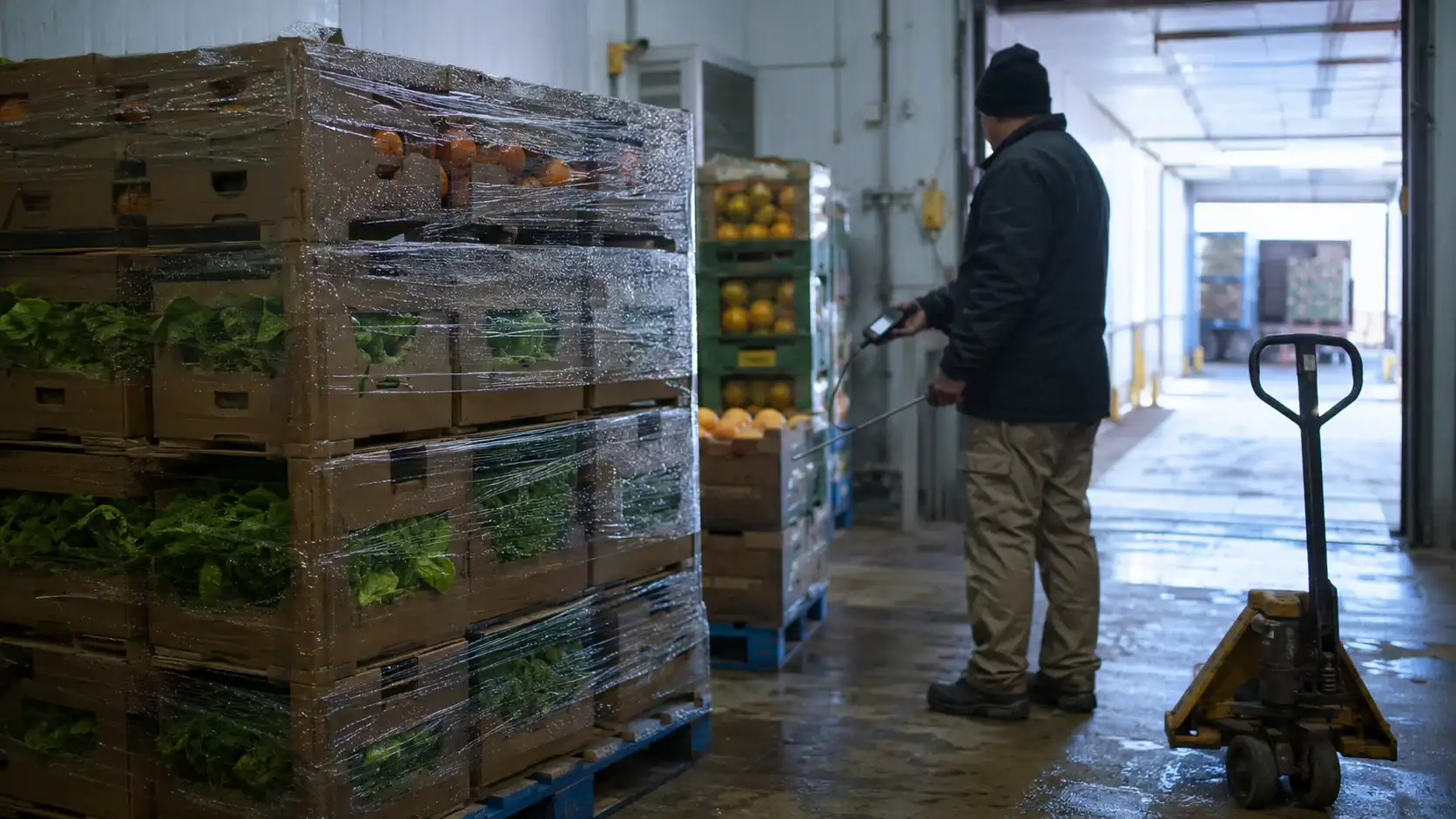
Strong fresh-produce exporters usually do four things well. They define the destination-market requirements early. They build the phytosanitary path before the freight path. They sequence inspection, handling, and logistics so the goods stay commercially viable. And they treat documentation quality as part of product quality.
In practice, that looks like a more disciplined workflow.
- They start with destination acceptance, not with transport capacity. The lane has to be valid before it is fast.
- They map the certificate path before they book the chain. If inspection or official documents drive the sequence, the freight plan has to respect that.
- They coordinate perishability with compliance. The product’s physical life and the regulatory life of the file have to work together.
- They build repeatability. A successful produce export process should become easier to run again, not be reinvented from scratch each time.
- They communicate constraints early. Buyers, packers, and internal teams do better when the market-access pressure is clear before the shipment is rushed forward.
This is what turns produce exports from hopeful shipments into repeatable export business.
That repeatability matters commercially. A buyer gains more confidence when the exporter can show that the lane, documentation sequence, and product-handling logic are not improvised each time. The exporter also benefits because each successful consignment should reduce uncertainty on the next one. That is one of the quiet advantages of disciplined produce-export operators over competitors who are still discovering the process consignment by consignment.
In that sense, process quality becomes part of the export product too.
Fresh-produce export is one of those categories where capability compounds slowly and decays quickly. An exporter who runs three years of clean phytosanitary clearances builds something competitors cannot easily replicate: a track record with DAFF inspectors, established treatment-provider relationships, a packing crew that already knows the documentation cadence, and a customer base in the destination market that no longer prices in disruption risk. None of those individually look like a moat. Together they become one. Conversely, an exporter can let that capability lapse through a rushed harvest, a documentation shortcut, or an under-rehearsed treatment process. The cost is usually not the immediate consignment. It is the inspector memory, the buyer caution, and the freight-rate quote that gets less competitive next quarter. The discipline is the asset. The certificates are just the receipts.
Look at why fresh-produce export so often goes wrong, and the answer is rarely the regulation itself. The rules for phytosanitary certification, MICOR pathway selection, and market-access compliance are documented, public, and reasonably stable. The friction lives in the gap between the regulator’s mental model and the exporter’s. The regulator thinks in terms of pest-risk pathways, treatment efficacy, and country-specific protocols. The exporter thinks in terms of harvest dates, container bookings, and delivery commitments. Both views are correct. Both are necessary. But the system does not align them automatically. The exporter has to align them, and most exporters either skip it or do it inconsistently. The exporters who consistently clear cleanly have built internal processes that translate from one mental model to the other. They run a pre-departure documentation review not because anyone asks them to, but because they understand the alignment problem and refuse to leave it to chance. Exporters who move the same product into nearby ASEAN destination markets season after season eventually learn the pathway before the harvest, not after. That head start is the quiet advantage a first-time exporter cannot buy.
Australian produce exporters planning a commercial export program can review Australian export and customs requirements on the Swift Cargo Australia page or request a freight quote for a specific shipment.
The Part Nobody Tells You Before Your First Export Shipment
Here is the fear you are probably not saying out loud: the fruit is picked, the coolroom is full, the truck is booked for tomorrow morning, and the phytosanitary certificate still is not in your hand. You did not get into growing produce to become an expert in export paperwork, and now the paperwork feels like the only thing standing between a season’s work and a shipment that might not go at all.
Here is what is actually true: that scenario is avoidable, but only if the process starts backwards from how it feels natural to start it. Most first-time exporters treat certification as the last step before the truck leaves, because that is when it feels urgent. It needs to be one of the first steps taken once you know what you are growing and where it is going. That means checking the MICOR conditions for that destination market before harvest, not during the week of it. A treatment requirement like fumigation, cold treatment, or a pre-export inspection window can take days a picked, perishable crop does not have to spare. A certificate that takes three working days to issue is not a problem when you start it a fortnight out. It is a genuine crisis when you start it the morning the truck is already loading.
The honest version of the advice is this: you will probably still feel behind the first time, even doing everything right, because a first shipment always feels like it is happening to you rather than something you are running. That feeling fades by the second or third shipment, once the certification timeline is simply part of the harvest calendar instead of a scramble that starts after the fruit is already boxed. It is not about becoming a compliance expert overnight. It is about moving one conversation from the week of shipping to the week you plan the harvest: the conversation with your export documentation, whether that is your own research or a customs broker who already handles produce.
A produce exporter who has cleared quarantine cleanly for two years is not necessarily safe. They are untested against the one protocol update that changes a treatment requirement for their specific destination market, and a smooth record simply means that update has not happened yet on their watch. The exporters who get burned worst are usually the ones with the longest clean history, because a long run of easy clearances teaches a business to stop checking MICOR before every shipment rather than after. The safer posture is the opposite of what feels safe: treat each shipment’s conditions as unverified until checked fresh, no matter how routine the last twenty were, because the protocol that finally changes will not announce itself in advance.
Frequently Asked Questions
Why is fresh produce export work so compliance-heavy?
Because importing countries apply plant-health rules that require official certification and condition compliance before the goods are accepted.
Does being perishable make export planning more important?
Yes. Perishability increases the commercial cost of document mistakes, timing errors, and market-access delays because the value of the cargo can deteriorate quickly.
What role does MICOR play?
It helps exporters understand importing-country requirements and should be part of planning before the cargo moves.
What is the biggest exporter mistake here?
Treating produce quality and freight speed as enough while underestimating the market-access and certification system that actually decides whether the shipment can succeed.