
Export certification sounds administrative until a shipment is delayed, rejected, or stripped of commercial value because the importing country’s conditions were not met. That is why exporters should think about certification as a market-access system rather than as a paperwork exercise.
For Australian exporters, the core question is not just whether the goods exist and can be moved. The real question is whether the shipment can be accepted at destination under the importing country’s official requirements. If the certificate pathway, inspection logic, and freight plan do not line up, the cargo can be physically mobile and still commercially blocked.
This matters most with plant goods and plant products, where phytosanitary controls sit directly inside market access. But the broader lesson applies to controlled exports more generally. Documentation is not a layer that sits on top of the shipment after the real work is done. It is part of the shipment design.
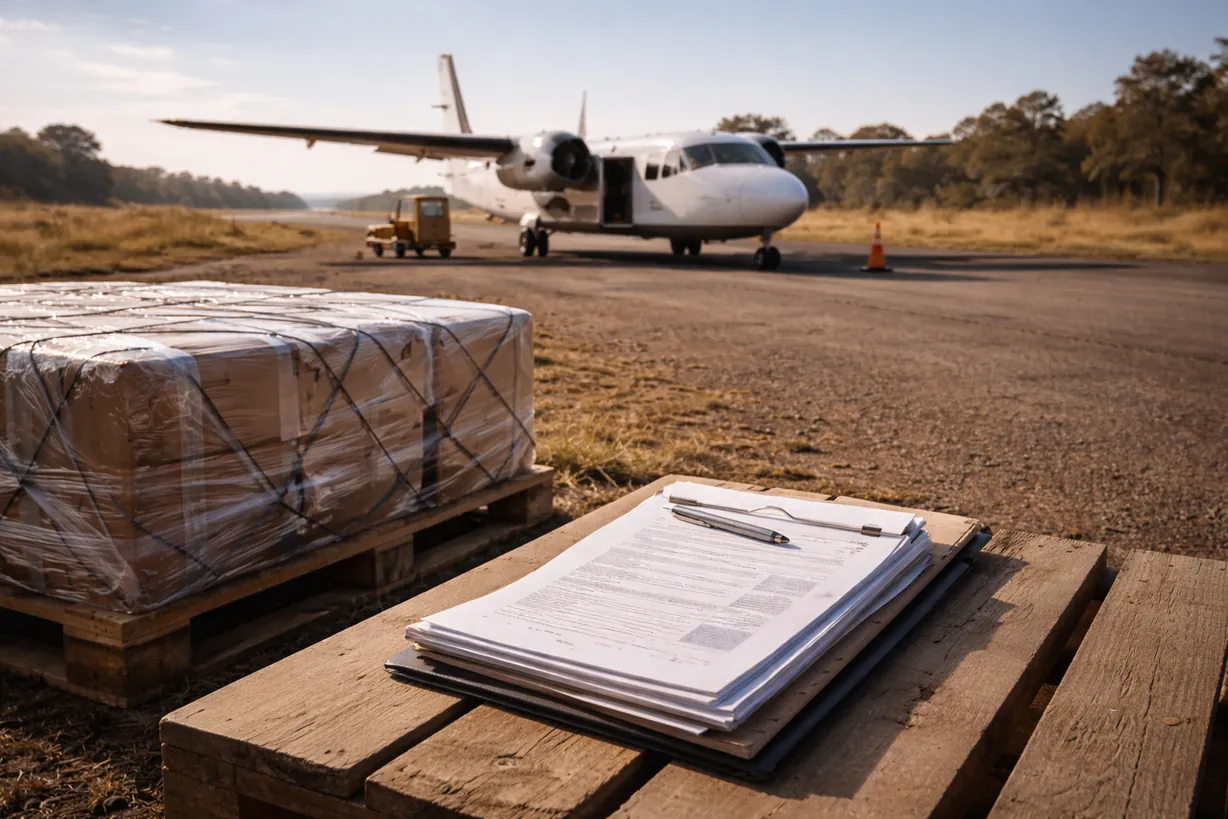
Why Export Certification Is Really a Market-Access Problem
Many exporters learn this lesson too late. They assume the commercial sale is the hard part and the certificate work is an administrative tail-end task. In reality, the certificate pathway often decides whether the sale can be completed.
That is because official documentation is not generic. It has to match the importing country’s conditions. A certificate may be technically issued and still misaligned with destination requirements. That mismatch leaves the goods stuck, rejected, or delayed. The exporter can feel as if the shipment is “ready” when the market-access side is still unfinished.
That is why the best framing is simple: export certification is part of market design. It tells you whether the lane is commercially viable, whether the cargo needs inspection or official treatment, and whether the documents will support entry at the other end. Treating it as paperwork leads to weak execution because the freight plan gets built before the access logic is stable.
For Australia-based exporters, official certification interacts with DAFF systems, controlled-goods pathways, and the destination country’s own requirements. For consignments bound for ASEAN markets, the AANZFTA preference framework adds an origin-certification layer that must align with the phytosanitary pathway. That is a chain, not a checklist.
Why Phytosanitary Requirements Matter So Much
Phytosanitary requirements matter because plant and plant-product trade is governed by risk control, not by transport willingness. Cargo can be packed, booked, and moved. None of that says whether a destination country will allow it in.
Importing countries want official assurance that relevant plant goods meet their plant-health conditions. That is where phytosanitary certificates matter. The certificate is not ceremonial. It is evidence inside a destination-country risk framework. DAFF: Plant Export Certification
Many exporters underestimate how early they need to plan here. If the goods need inspection, treatment, sampling, specific declarations, or a precise description format, those details cannot always be repaired after packing and booking are already underway. The shipment design needs to reflect the certificate logic early enough for the pathway to remain credible.
How Certification and Country Rules Interact
The exporter has to understand two things at once. First, what Australia can certify. Second, what the destination country actually requires. Those are related questions, but they are not identical.
This is where systems such as MICOR become strategically useful. MICOR records importing-country requirements and the conditions attached to different goods and markets. MICOR That matters because a certificate is only commercially useful if it matches the conditions controlling entry at destination.
In practical terms, that means documentation, inspection, commodity preparation, and freight timing all need to be read together. If the destination expects a certain inspection sequence or official assurance and the exporter builds the freight plan first, the job becomes fragile. A shipment can move physically while the compliance side remains unresolved.
Destination rules need to shape the plan upstream, not arrive late as a compliance surprise after the goods are already committed to a lane.
That timing point is more important than it looks. If inspections, certificate issuance, supporting declarations, or authority checks need to happen in a certain order, then the freight booking cannot be treated as the master plan. In many export workflows, the certificate sequence is what makes the booking viable in the first place. When exporters reverse that logic, they create urgency where none was needed and lose control over the job.

What the Certificate Actually Certifies
“Certification” in the abstract hides how specific the machinery is, so it is worth being concrete about the paperwork. A job-to-be-done framing helps here: the exporter is not really buying a document, but hiring a certificate to unlock one importing country’s border rule. The consignment may be entirely genuine. If the certificate does not match that specific rule, it has not done the job it was hired for.
For most Australian agricultural exports the Department of Agriculture, Fisheries and Forestry issues the phytosanitary certificate under the Export Control Act 2020. The EXDOC system generates it once the goods meet the destination’s declared conditions. Those conditions are not guesswork: the department maintains the Manual of Importing Country Requirements (MICoR), which records what each market demands. The certificate has to align with that wording rather than a generic template. Wood packaging adds a second layer. ISPM 15 requires timber pallets and dunnage to be heat-treated or fumigated and stamped with the international mark. A missing or unreadable stamp can hold an otherwise-compliant consignment at the border. The most common failure is not fraud or contamination; it is a certificate that describes the shipment accurately but does not match the exact form of words the destination lodged with the IPPC.
Why Documentation Quality Decides Smoothness
Export failures are often blamed on regulation in the abstract, but the deeper cause is usually one of three things: requirement mismatch, weak documentation quality, or poor sequencing. None of those problems are glamorous. All of them are expensive.
A weak file can damage a perfectly saleable shipment. Product details may be described too loosely. Certificate assumptions may not match the commodity or the destination. Supporting records may be incomplete. An inspection step may be mistimed. The problem is not that regulators love friction. The problem is that the file no longer gives the destination market the assurance it expects.
This is why exporters have to treat documentation quality as a commercial discipline. Good exporters do not simply gather papers. They build a file that supports the real destination pathway.
- They verify the market and commodity requirement set early.
- They check whether the required official wording, declarations, or inspection steps are clear before the cargo is locked in.
- They avoid treating certificate requests as generic admin requests detached from the lane.
- They make sure freight timing does not undermine the inspection or document sequence.
This is also where repeat exporters gain an advantage. Once the team has seen how a market behaves, they can start building repeatable documentation habits instead of reinventing the file each time. That reduces delay risk and makes it easier to spot when a new consignment is drifting away from the conditions that made the prior one work.

What Strong Exporters Do Differently
Strong exporters work backwards from destination acceptance. They identify the market’s import conditions, confirm the certificate pathway, prepare the goods to satisfy that pathway, and only then finalize the logistics plan. That sequence sounds basic, but it separates serious operators from hopeful ones.
In practice, the better workflow usually looks like this.
- Start with the destination rule set. The question is not “what documents do we usually ship with?” It is “what does this market require for this product?”
- Confirm the official certification pathway. Make sure the certificate that can be issued actually supports the destination requirement.
- Prepare the cargo around the certificate logic. Inspection, treatment, packing, and timing should not undermine the official pathway.
- Build the freight plan after the compliance path is credible. Transport speed is useless if the market-access side is weak.
- Protect repeatability. The strongest exporters do not just get one shipment through. They build a process that can survive the next shipment too.
Buyers and partners see operator quality here too. An exporter who understands certification as part of market access is easier to trust than one who talks about paperwork only after a problem appears.
Export certification is one of those areas where the gap between competent and confused exporters compounds quietly over time. Some exporters treat phytosanitary, MICOR pathway selection, and destination-country attestation as a permanent operating capability: staffed, documented, reviewed quarterly. They run cleaner consignments at lower cost than competitors who treat each shipment as a fresh research problem. The cost difference rarely shows up on a single invoice. It shows up in inspection-rejection rates, treatment-provider relationships, buyer trust, and the freight quotes that get sharper because the cargo is genuinely lower-risk. None of those compound dramatically. They compound consistently. The exporter who industrialises certification capability ends up with a structural cost edge that competitors cannot replicate by working harder on individual shipments. The certificates are public. The discipline is the moat.
Consider the chronology of how a single export-certification failure unfolds at the Australian end. A South Australian grape consignment leaves Adelaide on a Tuesday morning. By Wednesday afternoon the importer in Shanghai notes a discrepancy on the phytosanitary certificate: the variety listed in box 9 does not match the variety listed on the commercial invoice. By Thursday, the consignment is held at the Chinese port. By Friday, the Australian exporter has been notified, has called the original phytosanitary inspector, and has been told the certificate cannot be reissued retroactively. By the following Monday, the consignment is being re-routed, downgraded, or destroyed. Each step in that chronology was preventable at the previous step. The certificate discrepancy was a typing error a week earlier. The variety mismatch existed on the documents three days before departure. The cost of catching it on Tuesday morning was zero. The cost of catching it on the following Monday was the entire margin on the consignment. The certificate is not the safeguard. The internal documentation review is. Exporters who run that review as a non-negotiable pre-departure step pay almost nothing for it. Exporters who skip it sometimes pay everything.
The Recordkeeping Trail Regulators Actually Follow
Every phytosanitary certificate DAFF issues sits on top of a documentation trail, and that trail is what regulators go looking for when a pattern of rejections starts to form. Under the Export Control Act 2020, established exporters do not necessarily submit fresh paperwork for every shipment. Many operate under what DAFF calls an Approved Arrangement. This standing accreditation lets a business self-certify defined export functions inside a documented quality system that DAFF audits periodically. Those functions include inspection, packing, and labelling. The arrangement replaces one-off government sign-off on every consignment.
The distinction is bigger than it sounds. An exporter without an Approved Arrangement is, in effect, asking a DAFF officer to verify every shipment from first principles. An exporter who has earned one is trusted to run the process itself. DAFF then checks the paperwork behind the system rather than the produce in front of it.
That trust is not free. Earning it requires a demonstrated quality system, trained staff, and records that hold up months after the ship has sailed. That last requirement is the one exporters underestimate until an audit finds it. The certificate that leaves the country with the cargo is a summary. The file that stays behind is the evidence, and it is the file DAFF actually pulls when a pattern of rejections, not a single mistake, triggers a review. Exporters who treat that standing file as an afterthought are the ones who eventually lose the arrangement. Exporters who make one honest error on a variety code rarely do. DAFF’s own audit logic is built to catch systems breaking down, not shipments that had one bad day.
Related Export Pages
Exporters looking at commodity-specific certification should continue to Exporting Fresh Produce from Australia or Exporting Animal Products from Australia. For lane design and regional market logic, Australia–ASEAN Logistics Strategy covers the broader routing framework. For Australian customs requirements on inbound shipments, Swift Cargo’s Australian customs guide covers what goods face on arrival.
Phytosanitary certification changes the bargaining position between an Australian exporter and an overseas buyer in a way that is easy to overlook. A buyer who has already built a relationship with an exporter whose certificates consistently clear inspection has very little reason to switch to a cheaper, unproven supplier, because the buyer absorbs real cost if a shipment gets rejected at their own border. That makes certification reliability a source of buyer loyalty that has nothing to do with price. An exporter who treats each certificate as a one-off box to tick is leaving that advantage on the table. An exporter who treats a clean certification record as the actual product being sold, not just paperwork attached to it, is building the one thing a cheaper competitor cannot immediately copy: a buyer who has stopped comparison shopping because switching now carries their own risk.
Frequently Asked Questions
What is a phytosanitary certificate?
It is an official certificate used to show that plant or plant-product goods meet the relevant plant-health requirements of the destination market.
Why does export certification matter so much?
Because many markets will not accept goods unless the official documentation and certificate pathway match their import conditions.
Can exporters treat certification as a final admin step?
That is risky. Certification logic should shape the export plan before the shipment is booked, not after the logistics side is already committed.
What is the biggest export mistake here?
Moving the cargo plan ahead of the destination-country compliance pathway and assuming the documentation can always be repaired later.