
Last updated: February 2026
Thai Customs applies a simple standard to duty-free personal effects. The friction begins when your shipment makes that standard hard to verify.

Inspection decisions are often triggered by packaging and paperwork signals, not by what you intended.
Most duty disputes aren’t about contraband. They’re about classification. Thailand customs used items are assessed on how the shipment reads: like a household relocation, or like a retail import wearing a household label.
Thailand’s published exemption rests on three words: owned, possessed, used. If those words aren’t easy to verify, clearance becomes interpretive. Interpretation is where delays and cost exposure begin.
Case vignette (composite): The paperwork says “used household effects.” The container mostly supports it. Then one premium appliance appears in pristine retail packaging: foam inserts, manuals, plastic wrap. The officer doesn’t need to prove it is new. They only need to doubt it is used. The file pauses. Clarifications begin. Storage charges accumulate while proof is requested.
Composite based on recurring patterns described in public guidance and expat clearance anecdotes. Not a single verified individual case.
Jump to a section
- What rule does Thai Customs actually apply?
- Timing: the 1-month / 6-month window
- Red Line vs Green Line: what it really means
- The “Used vs New” decision logic officers apply
- The signals that make items look “new”
- High-risk items that trigger questions
- What actually happens during inspection
- How to prove items are used in Thailand
- Packing list: what clears vs what stalls
- Pre-shipment evidence checklist
- Myths vs reality
- Edge-case scenarios that cause surprise duty
- If items become dutiable: duty/VAT (conceptual)
- FAQ
What rule does Thai Customs actually apply?
Thai Customs states that duty/tax exemption can apply to used household effects that were owned, possessed, and used in the country where the importer lived before returning to Thailand.
Thai Customs (official): personal effects / household effects rule + timing window
Visa status and eligibility: who actually qualifies?
The household effects exemption is tied to a change-of-residence framework. In practice, Customs expects documentation that supports lawful residence and the conditions under which personal effects are being imported.
Eligibility is not based on intent. It is based on documentation. Different visa categories and residency circumstances can affect how a shipment is treated at clearance.
- Work-authorized entrants: Typically must show valid visa status and supporting authorization documentation consistent with a relocation.
- Returning Thai nationals: Must demonstrate overseas residence consistent with Customs’ published conditions.
- Long-stay categories (retirement, education, other non-work classes): May face different treatment depending on whether the shipment clearly meets change-of-residence conditions.
Relocation to Thailand is not just a shipping event. It is a residency event. Customs treatment aligns with your documented move status. When your visa pathway, entry timing, and shipment narrative match, clearance tends to follow process rather than debate.
Different long-stay categories carry different practical expectations at clearance, as our retirement visa shipping guide sets out. Customs reviews retirement pathways, work-authorized entry, and categories such as the DTV visa shipping pathway in the context of relocation intent, not just by visa label.
Timing: the 1-month / 6-month window
Timing is a separate gate from used status. Customs guidance ties exemption to goods arriving no earlier than one month before, and no later than six months after, the importer’s arrival.
Thai Customs (official): timing window tied to importer arrival
The 1-month / 6-month rule for household goods is not flexible in spirit, even when it appears flexible in conversation. Customs evaluates shipment arrival against your documented entry date. Small paperwork inconsistencies create larger eligibility questions.
Red Line vs Green Line: what it really means
Thailand uses a selectivity system that routes import declarations into inspection channels. Green Line typically clears with minimal review. Red Line can trigger document checks and physical inspection.
Thai Customs (official): selectivity / inspection channels overview
Selection does not mean wrongdoing. It means Customs is looking at your file more closely. At that point, presentation matters.
The “Used vs New” decision logic officers apply
Officers are not debating philosophy. They are drawing inferences.

Clear inventories reduce interpretation. Interpretation creates delays.
- Presentation first: If an item looks retail, it will often be treated like retail until you supply context.
- Quantity second: Multiples of high-value items can resemble resale, even when they belong to a real household.
- Documentation third: Vague inventories force interpretation. Specific inventories force classification.
- Timeline last: Clear ownership history and a clean arrival window usually stop the questions quickly.
No formal burden-of-proof language exists. In practice, prior use must be obvious.
The signals that make items look “new”
- Original packaging: sealed plastic, inserts, brand-new cartons.
- Uniform identical units: several monitors, identical appliances.
- Unopened accessories: cables and manuals still factory sealed.
- High resale categories: premium electronics, specialty tools, coffee equipment.
None of these automatically create duty. They invite questions.
Every item on that list is a status signal before it’s a customs signal. Sealed packaging, matched sets and factory-fresh accessories are the exact cues a marketer uses to say “this is new, this is desirable, this hasn’t been touched.” An officer at Laem Chabang reads the same cues for a different purpose: not “would I buy this,” but “does this match the used-household-effects story on your paperwork.” If your shipment sends a new-goods signal, the burden shifts to you to explain the mismatch. The fix is not hiding the signal. It is making sure your documented story and your shipment’s signals tell the same tale before the container ever leaves.
High-risk items that commonly trigger questions
- Espresso machines and premium kitchen appliances
- Large-screen televisions and OLED monitors
- Professional camera gear
- High-end audio systems
- Multiple power tools
- Designer furniture in factory wrapping
These categories hold resale value. That alone can increase scrutiny when they appear unused. A few related categories may not be importable at all: knives, drones, certain electronics and luxury items. The distinction between restricted and prohibited is worth checking before the container is sealed.
What actually happens during inspection
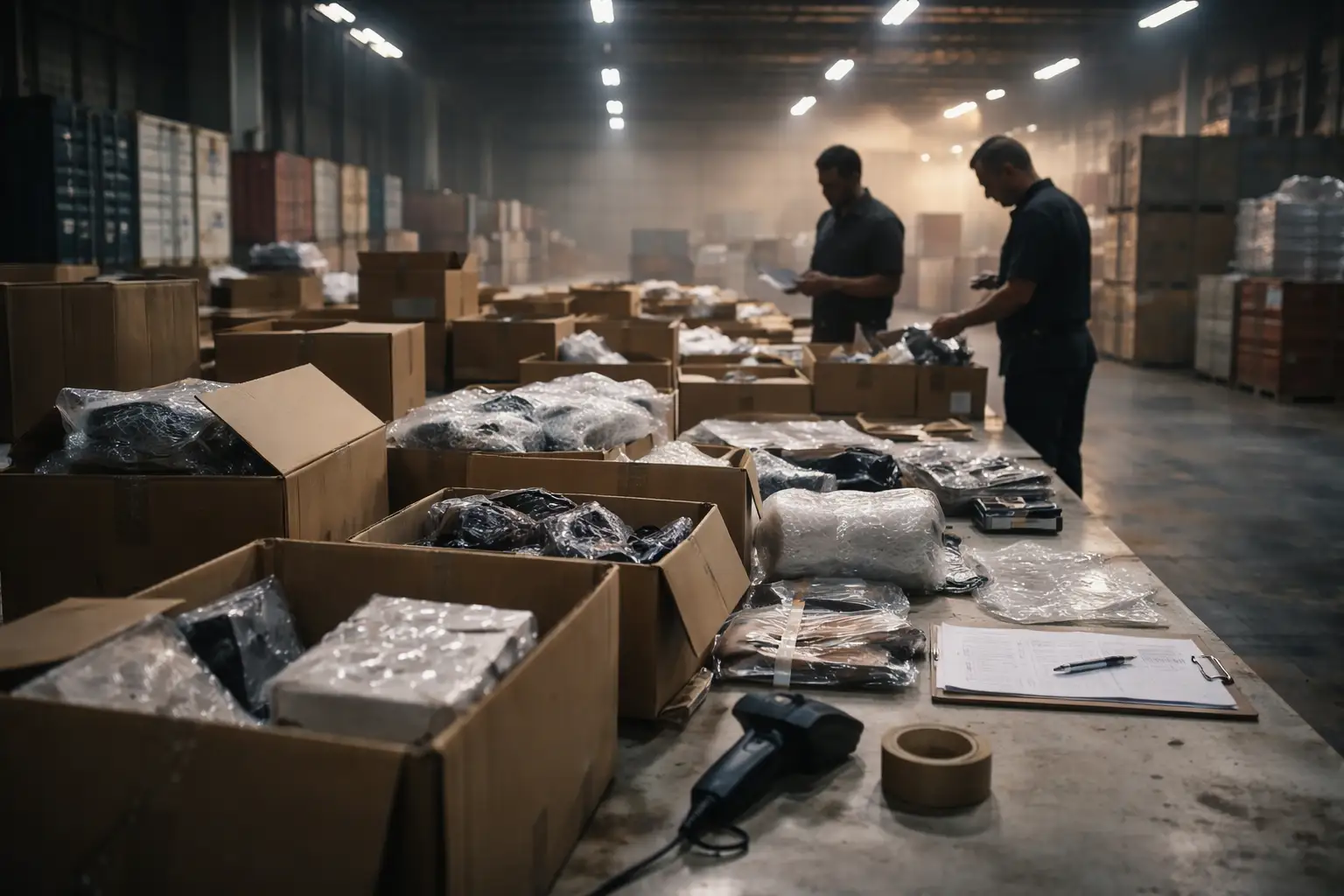
Inspections usually start with a few high-signal cartons and expand only if inconsistencies appear.
When a shipment is selected for inspection, the sequence is usually routine. The stress comes from uncertainty, not from the steps.
- Document review (visa status, timing, inventory).
- Clarification questions on high-value items.
- Physical opening of selected cartons.
- Condition review and quantity cross-check.
- Determination or request for additional proof.
Delays usually come from incomplete answers, not from the existence of inspection itself.
Port selection does not eliminate inspection risk, but operational flow differs by location, as our comparison of Laem Chabang vs Bangkok Port sets out. Understanding how documentation is reviewed at your arrival port reduces avoidable procedural delays.
How to prove Thailand customs used items qualify for exemption
- Dated photos before packing: show items in a lived-in environment.
- Serial number documentation: connects the physical item to prior use.
- Ownership records: older invoices can help establish timeline.
- Condition notes in inventory: small scratches or wear details.
- Remove retail cues: avoid shipping used goods as showroom units.
Customs does not evaluate documents in isolation. Visa status, packing list specificity, shipment timing, and item condition are read together. When those signals align, clearance accelerates. When they conflict, scrutiny expands.
Packing list: what clears vs what stalls
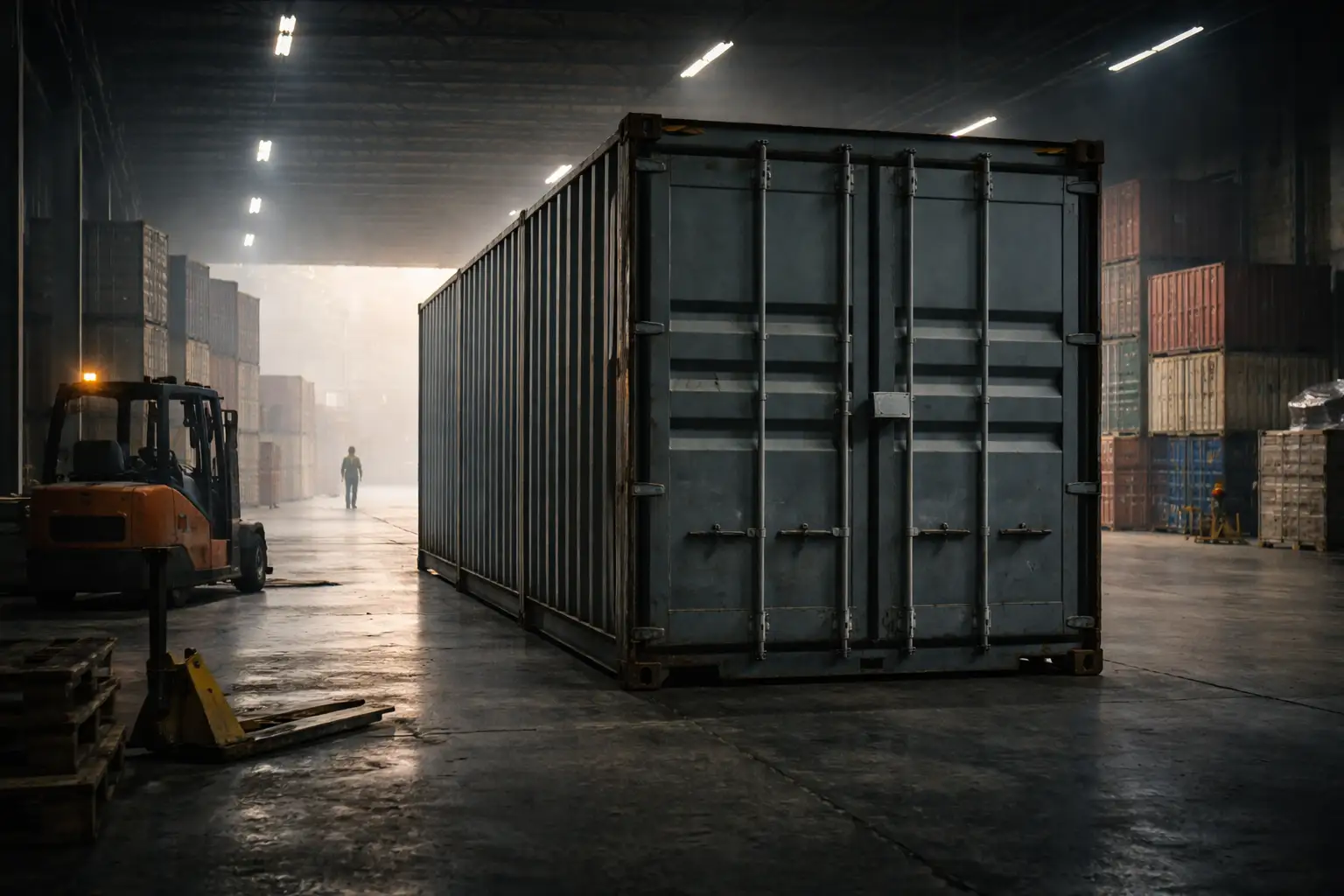
A shipment can read like a household move, or like retail inventory, depending on how it is packed and documented.
- Weak: “Electronics – assorted”
- Stronger: “Used 55-inch television (1 unit)”
- Stronger: “Used espresso machine (1 unit, household use)”
The more specific the line, the less there is to interpret.
Pre-shipment evidence checklist
- Photograph high-value items before movers pack them.
- Confirm shipment timing aligns with arrival window.
- Remove unnecessary factory packaging.
- Prepare a clean, itemized inventory.
- Keep visa and arrival documentation accessible.
Myths vs reality
Myth: If it is older than six months it is automatically duty-free.
Reality: Age helps. Presentation still matters.
Myth: Sea freight is always easier than air.
Reality: Both are subject to selectivity.
Myth: Receipts always help.
Reality: Recent receipts can create questions.
Myth: If you label everything “used personal effects,” it will be treated as used.
Reality: Labels help. Signals and evidence carry more weight.
Myth: A packing list can be generic as long as Customs can open boxes.
Reality: Generic lists increase inspection scope and slow resolution.
Myth: One questionable item won’t affect the rest of the shipment.
Reality: One questionable item often expands the questions. It can still be resolved item-by-item if you respond fast.
Edge-case scenarios that cause surprise duty
Exemptions are usually lost on the margins, on Thailand customs used items that don’t match the story the paperwork tells. When documentation and presentation diverge, scrutiny escalates quickly. The scenarios below are the common failure modes, each with its practical correction.
1) The item is used, but it ships like it’s new
This is the most common trigger: a genuinely used appliance or electronics unit packed in pristine retail packaging.
- How it gets interpreted: Retail import disguised as personal effects.
- What reduces doubt: Pre-shipment photos in use, serial-number proof, and an inventory line that reads like household use, not resale.
2) You bought replacements right before moving
Many relocations involve last-minute purchases: a new monitor after an old one breaks, a new kitchen appliance because it was cheaper to replace than repair.
- How it gets interpreted: New goods imported under the household-effects umbrella.
- What reduces doubt: Separate the new items, declare them clearly, and avoid mixing them into the “used household” narrative.
3) Gifts and unopened items
Unopened goods are hard to defend as “used.” Gifts create the same problem: ownership may be clear, prior use usually isn’t.
- How it gets interpreted: Newly acquired goods entering Thailand as consumer imports.
- What reduces doubt: If it’s unopened, assume scrutiny. Decide whether to ship it separately and be prepared for assessment.
4) Multiples of identical high-value items
Two laptops can be a couple. Four identical monitors in perfect condition can look like inventory.
- How it gets interpreted: Quantity inconsistent with “reasonable household” use.
- What reduces doubt: Explain household composition (family members, home office), itemize each unit, and document prior use for the most resale-friendly items.
5) “Home office” shipments that resemble business equipment
Modern households blur lines: monitors, docking stations, network gear, specialty printers.
- How it gets interpreted: Commercial equipment entering under personal effects.
- What reduces doubt: Describe the items as household/home-office use, avoid bulk quantities, and keep the packing list specific.
6) Mixed shipments: used goods plus clearly new goods
The fastest way to widen inspection is to mix a relocation shipment with a small retail import.
- How it gets interpreted: The shipment contains dutiable goods; Customs may examine more of it to separate categories.
- What reduces doubt: Segregate: pack new items together, label them clearly, and do not force officers to hunt box-by-box.
7) Timing that is technically close, but messy in the paperwork
Even when you are within the 1-month / 6-month window, multiple entries and unclear “arrival” evidence can slow clearance.
- How it gets interpreted: Unclear eligibility timeline.
- What reduces doubt: Keep clear arrival evidence and align the file to the entry date your broker will present.
If items become dutiable: duty/VAT (conceptual)
If Customs classifies items as dutiable, how it assesses them depends on HS classification and valuation methodology. VAT then applies under the relevant framework.
For an overview of Thailand’s customs regulatory environment and valuation framing, see:
U.S. International Trade Administration (Trade.gov): Thailand customs regulations overview
How Thailand determines customs value (conceptual overview)
When items are treated as dutiable, assessment is not arbitrary. Customs valuation follows internationally recognized principles, typically anchored to transaction value and adjusted under defined methodologies when necessary.
Officers may rely on alternative valuation methods permitted under customs law frameworks when no invoice exists, or when the invoice does not reflect the value Customs considers appropriate. That is why documentation consistency matters even for personal effects.
Classification (HS code) determines the applicable duty structure. Valuation determines the base on which any duty and VAT are calculated. The two are separate analytical steps. In sequence, Customs classifies the item, determines value under valuation rules, applies duty where relevant, and then calculates VAT on the assessed base.
What happens if only one item is disputed?
Disputes are often item-specific, not shipment-wide. If one appliance or electronics unit is treated as dutiable, Customs may assess duty on that item while allowing the remainder of the shipment to clear under the household effects framework.
The key variable is documentation response time. Delays usually stem from clarification requests rather than from Customs rejecting the whole container.
Delay risk: storage and timing exposure
When clearance pauses for clarification or reassessment, storage and handling timelines continue. Ports and bonded facilities operate on procedural schedules independent of relocation stress.
Most costly scenarios arise from slow documentation turnaround rather than from enforcement intensity. Preparing the file in advance shortens time under review, and less time under review means less cost exposure.

A simpler decision rule before you start packing
The whole “used vs new” framework comes down to one practical filter: can a customs officer hold an item up and instantly recognize it as a thing you have already lived with? If yes, it almost always passes. If no, it almost always invites a question. Original packaging, retail tags, factory wrapping and mint condition are what put an item in that second group. That single test will not catch every edge case, but it correctly classifies the vast majority of household items in under a second per item.
The discipline most relocators skip is applying that test before the packers arrive, not after the inventory is sealed. Spend an hour walking your possessions with this filter, set aside anything that fails, and decide for each: ship in original condition and accept the duty exposure, sell or donate locally, or ship after deliberately removing the original packaging and using the item for thirty days first. The decision is cheap to make in your origin country and expensive to make at the Thai border.
Watch what actually happens at the inspection bench, step by step, and the decision looks less like a rule and more like a sequence. The officer opens the container manifest, then the packing list, then a box. The question is evidentiary. Does the wear on this item match the story the paperwork tells? A sofa with visible use, a receipt two years old, and an address history that lines up will move. The same sofa wrapped in factory plastic, with no provenance, invites a second look. The ruling follows the evidence in front of the officer, in the order it is presented. That is why the packing decisions made weeks earlier, at home, tend to settle the outcome before anyone reaches the border.
Related reading: Moving to Thailand Duty-Free: What Qualifies and What Doesn’t
FAQ
How do I prove items are used for Thailand customs?
Short answer: Show clear proof the items were owned and used before shipping.
Thai Customs applies the standard “owned, possessed, and used.” The strongest proof includes dated pre-shipment photos, serial-number documentation, and a clear itemized packing list. The goal is to make prior use obvious without forcing officers to interpret vague descriptions.
What does “owned, possessed, and used” mean under Thailand Customs rules?
Short answer: The goods must clearly have been owned and used abroad.
The exemption is designed for relocation, not retail import. Customs expects the goods to have been in your possession and actually used in your previous country of residence. Packaging, quantity, and documentation must support that narrative.
What is the 1-month / 6-month rule for personal effects in Thailand?
Short answer: It must arrive within the official 1-month before / 6-month after window.
Customs guidance generally ties eligibility to goods arriving no earlier than one month before and no later than six months after your arrival in Thailand. Clear arrival documentation is essential to avoid timeline disputes.
What is considered “reasonable quantity” for Thailand customs household goods?
Short answer: Only quantities consistent with a normal household qualify.
Customs does not publish fixed limits. Instead, officers evaluate whether the shipment resembles a genuine household relocation rather than commercial inventory. Multiples of identical high-value goods can increase scrutiny.
Can I import brand-new items duty free when moving to Thailand?
Short answer: No. Brand-new items are usually dutiable.
The household effects exemption applies to used goods. Brand-new, unopened, or recently purchased items may fall outside the exemption and be assessed under standard import rules.
Does visa type affect Thailand customs duty exemption?
Short answer: Yes. Eligibility depends on your documented residence status.
Customs reviews visa and residency documentation as part of the eligibility check. Work-authorized entrants and returning Thai nationals must demonstrate compliance with change-of-residence conditions.
What happens during a Red Line inspection in Thailand?
Short answer: It undergoes detailed document and physical inspection.
Red Line selection does not imply wrongdoing. It means Customs will review documentation in more detail and may open selected cartons to verify condition, quantity, and consistency with your declared inventory.
Can one disputed item cause duty on the entire shipment?
Short answer: No. Duty is typically assessed item-by-item.
Customs commonly assesses duty only on the questioned item. However, a single high-risk item can expand inspection scope if documentation is unclear, which may slow overall clearance.
How does Thailand Customs calculate duty and VAT on household goods?
Short answer: Based on HS classification and customs valuation rules.
If goods are treated as dutiable, assessment depends on HS classification and valuation methodology. VAT is applied according to the relevant framework. Duty rates vary by product category.
Do receipts help prove items are used?
Short answer: Sometimes. Older receipts help more than recent ones.
Older receipts can support ownership history. Recent purchase invoices may create questions if they suggest the item was acquired specifically for import.
Are gifts treated differently under Thailand customs rules?
Short answer: Yes. Gifts can still be dutiable.
Unopened or newly acquired gifts may not qualify as “used household effects.” Ownership alone is not enough; prior use is typically the key factor.
Does shipping by sea reduce inspection risk compared to air?
Short answer: No. Both air and sea shipments face selectivity.
Thailand’s selectivity system applies across transport modes. Sea freight may feel less urgent, but both air and sea shipments can be routed to detailed inspection channels.
What packing list format reduces Thailand customs delays?
Short answer: Use specific, itemized, descriptive entries.
Avoid generic labels like “electronics” or “kitchen items.” Instead, describe each significant item individually, noting it is used and specifying quantity. A clear inventory gives officers less to interpret.
What are the most common reasons Thailand customs personal effects shipments are delayed?
Short answer: Vague paperwork and retail-style presentation.
Delays usually stem from unclear packing lists, retail-style packaging, timeline confusion, or slow responses to clarification requests. Inspection itself is rarely the cause.
Can I appeal a Thailand customs decision on personal effects?
Short answer: Yes. Formal review procedures exist.
Appeal or review mechanisms exist under customs frameworks, typically handled through licensed brokers or formal submission processes. Fast, structured documentation improves outcomes.
To get a document review before you seal the container, see how Swift Cargo handles Thai customs clearance for household effects.