
Most DTV guides explain eligibility. This one is the practical playbook for DTV visa shipping belongings to Thailand, so your shipment clears without expensive delays.

Moving timelines don’t happen in a vacuum. Housing, paperwork, and port schedules collide in real life.
Customs treatment depends on what you import and whether your paperwork is coherent.
For remote workers on the Destination Thailand Visa (DTV), the friction starts at customs clearance for personal effects.
If you’re planning a digital nomad Thailand relocation, focus on three decisions: what to ship, how to document it, and which quote structures prevent surprises.
You want your goods delivered without turning week one into a paperwork sprint.
Call it the DTV shipping paradox: you can stay longer, but your shipment can still be assessed like a standard import.
Budget for more than freight.
Case vignette (composite): A DTV holder ships a chair, a monitor, and a few cartons labeled “used personal effects,” assuming it will clear like a routine relocation. The shipment arrives, and Customs requests a tighter inventory and supporting documents. The quote they budgeted for becomes a duty/VAT and destination-fees conversation.
This composite reflects recurring patterns described in public-facing clearance guidance and expat communities, not a single verified individual case.
Consular checklists emphasize completeness and consistency, especially for proof of funds and remote-work evidence.
Jump to a section
- What the DTV visa allows (and why it matters for shipping)
- Why DTV status can change your customs expectations
- Why people think DTV is getting “harder”
- The DTV shipping profile
- The strategic edit: voltage, value, and sentiment
- Air vs sea vs door-to-door
- Three strategies DTV holders actually use
- Thailand customs: what gets shipments delayed
- TDAC: the arrival step that can derail your timeline
- A relocation checklist built for DTV holders
- Ship vs buy: the nomad strategy
- The voltage reality check
- Tax residency timing
- How costs usually show up
- How to keep costs predictable
- FAQ: DTV visa shipping belongings to Thailand
What the DTV visa allows (and why it matters for shipping)
The DTV is a multiple-entry visa valid for five years, with stays of up to 180 days per entry, extendable once per entry at a Thai immigration office.
Consular checklists cite a 10,000 THB fee, charged as the local-currency equivalent, and proof of savings of no less than 500,000 THB.
(Thai MFA: DTV revised guidance (PDF))
(Royal Thai Embassy Helsinki: DTV page (updated October 2025))
(Thai Consulate LA: DTV checklist)
This matters for movers because DTV is no longer niche. Thailand is pitching it as a tool to attract longer-stay remote workers.
The visa drew reports of tens of thousands of applications in its first year, according to news coverage of early demand.
(IMI Daily: DTV demand reporting)
(Travel And Tour World: DTV context + demand)
From a logistics standpoint, Thai customs doesn’t evaluate your shipment in isolation. The documentation that supports your long-stay presence (passport biodata page,
visa approval, entry stamps) helps explain why a container of “personal effects” is arriving.
Why DTV status can change your customs expectations
DTV movers commonly make one mistake: they assume Thailand will treat the relocation like a classic “expat household move” with broad duty relief.
Thai Customs distinguishes between personal effects for personal use and household effects imported as part of a change of residence, and the duty exemption attaches to the change of residence rather than to the person.
To qualify as a nonresident changing residence, Thai Customs asks for a non-immigrant quota shown in your passport, a one-year non-immigrant visa issued by the Immigration Department, or a work permit valid for no less than one year. It also requires the goods to arrive no earlier than one month before you do and no later than six months after.
The DTV carries no Thai work permit and is not that one-year non-immigrant visa, so it does not by itself satisfy the change-of-residence test.
If you don’t clearly qualify, assume Customs will assess normal duty and VAT unless you’ve confirmed otherwise before cargo departs.
(Thai Customs: household effects import clearance criteria)
(Thai Consulate LA: DTV checklist)
Treat your shipment like a personal-effects import. For DTV customs duty questions, your inventory and supporting documents do most of the talking.
If duty relief matters, confirm eligibility before cargo departs.
Why people think DTV is getting “harder”
The DTV hasn’t “closed,” but it can feel stricter when consulates push for tighter documentation.
If your bank statements, employment evidence, or supporting letters leave room for interpretation, you may be asked for clarifications or told to re-submit.
The fix is boring but effective: match the checklist exactly and keep every document internally consistent.
Thailand’s DTV rules can be applied differently across consulates and over time. Always verify the latest checklist with the Thai e-Visa portal and the consulate handling your application.
From 1 January 2026, small parcels that previously cleared with minimal charges may now be assessed for VAT and duty.
If you planned to “split shipments into smaller boxes” to avoid fees, revisit that assumption before you ship.
(Tilleke & Gibbins: Thailand removes the low-value import duty exemption)

The DTV shipping profile: smaller loads, higher expectations
Most DTV holders aren’t shipping an entire household. Typical moves are a few cartons, work gear, and one bulky item.
The economics shift. The priority is rarely the lowest cost per cubic meter. It’s speed, predictability, and low friction.
- Typical volumes: a few boxes to a small shared-load (LCL) shipment.
- Typical contents: electronics and professional equipment, plus personal effects.
The strategic edit: voltage, value, and sentiment
Before you compare quotes, decide what deserves space in the shipment.
Edited moves clear faster: fewer items, cleaner lists, fewer questions.
The framework below sorts what to ship from what to replace locally.
| Decision filter | Ship when… | Buy locally when… |
|---|---|---|
| Voltage (electronics) |
The device is dual-voltage (often labeled 100–240V), specialist, or central to your work. Keep chargers/labels and list it clearly on the packing list. |
It’s a high-draw 110V appliance (kitchen appliances, hair tools, vacuums) or anything that would need a bulky transformer. Replacement is usually simpler than importing. |
| Value (replacement cost) | Replacement in Thailand would be materially higher, or the item is hard to source (specialist gear, instruments, calibrated monitors, niche tools). |
The item is common and replaceable (flat-pack furniture, basic kitchenware, generic bedding). These are the items where taxes and destination fees often erase any shipping “savings.” |
| Sentiment (irreplaceable) | It’s irreplaceable (family items, personal archives) and can be packed safely with clear documentation. | It’s sentimental but bulky/fragile and would drive up volume; consider storing it at origin or carrying a smaller subset in luggage. |
| Customs optics | Items look like personal use: used condition, realistic quantities, and no original retail packaging. |
Items look commercial: multiple brand-new units, sealed retail boxes, or high quantities of the same SKU. These tend to invite questions. |
The table works because it removes a decision most people make on autopilot. Left to instinct, movers default to “ship everything I already own”: the status-quo option requires no choices at all, so it wins by default even when it’s the most expensive path. A filter like this one forces four small, deliberate decisions instead of one large, lazy one, and small deliberate decisions are where the real savings live: the framework isn’t telling you what to think about your belongings, it’s just removing the default that would otherwise make the choice for you.
The shipping decision that shapes everything: air vs sea vs door-to-door
Most DTV moves are small. That’s why the wrong shipping method gets expensive fast.
Choose based on two constraints: how much you’re sending (volume/weight) and how quickly you need it.
Typical timelines and price levers (what actually moves your quote)
Costs vary by origin, volume, and clearance, but most quotes move on the same levers: chargeable weight/volume, destination handling,
delivery constraints (condo rules, stairs, island transport), documentation quality, and speed.
- Air freight: fastest (often days) and priced mainly by chargeable weight; best for small, time-sensitive cartons.
- Sea freight (LCL/shared): slower (often weeks) and priced by cubic volume plus destination handling; best for bulkier household items.
- Sea freight (FCL/container): best when you have enough volume to justify a dedicated container; fewer consolidation touchpoints.
- Door-to-door: bundles pickup → export → main carriage → Thai clearance → delivery; reduces “surprise fees” by defining inclusions upfront.
Note: duties/taxes (when applicable) are assessed by Thai Customs based on declared/assessed value and item category.
VAT is generally 7% in Thailand.
(Thai Customs: household effects import clearance criteria)
Option 1: Air freight (fast, expensive, paperwork-light)
- Best for: 2–10 cartons, essential equipment, urgent personal items
- Typical experience: faster transit, simpler warehouse handling, but higher per-kg cost
- Watch-outs: lithium batteries, high-value electronics, incomplete invoices/packing lists
Option 2: Sea freight (economical per volume, slower, more moving parts)
- Best for: household goods, furniture, bulk items, bikes, multiple cartons
- Typical experience: lower cost per cubic meter, longer transit, more fees at origin and destination
- Watch-outs: port storage windows, customs inspections, missing document originals
Option 3: Door-to-door (premium convenience, fewer surprises)
Door-to-door services bundle pickup, export handling, ocean/air movement, Thai import clearance, and local delivery.
For DTV holders, the advantage isn’t just convenience. It’s accountability.
Start with a door-to-door quote that explicitly includes Thai destination fees. Then layer in duty/tax estimates from your itemized inventory.
If you’re planning a home move (not just a few cartons), use our Thailand home relocation planning page to structure your quote request.
See pricing details and what an itemized door-to-door quote should include: Thailand relocation pricing and inclusions.
Three strategies DTV holders actually use
Most DTV moves land in one of three patterns. The right choice depends on speed, duty exposure, and how much you want to ship at all.
1) Minimalist import: fly with the essentials, ship only what you can’t replace
This is the default. Carry high-value tech with you, then ship only what you can’t replace, can’t safely carry, or can’t easily source locally.
Fewer line items means fewer questions.
2) Sequence the move: settle first, then ship once your documentation is stable
If you’re still choosing a base city or waiting on a long lease, delaying the shipment can prevent address mismatches and rushed inventories.
Clearance is cleaner when the address, entry stamps, and paperwork line up.
3) Replace locally: treat shipping as the exception, not the default
Thailand’s retail market is deep. Once you price in handling, storage windows, and tax assessment, basics are often cheaper to replace than import.
Ship only the items that justify the friction.
Thailand customs: what gets shipments delayed
Clearance is usually straightforward when the paperwork is consistent.
Problems start when a shipment looks commercial, inconsistent, or under-declared.
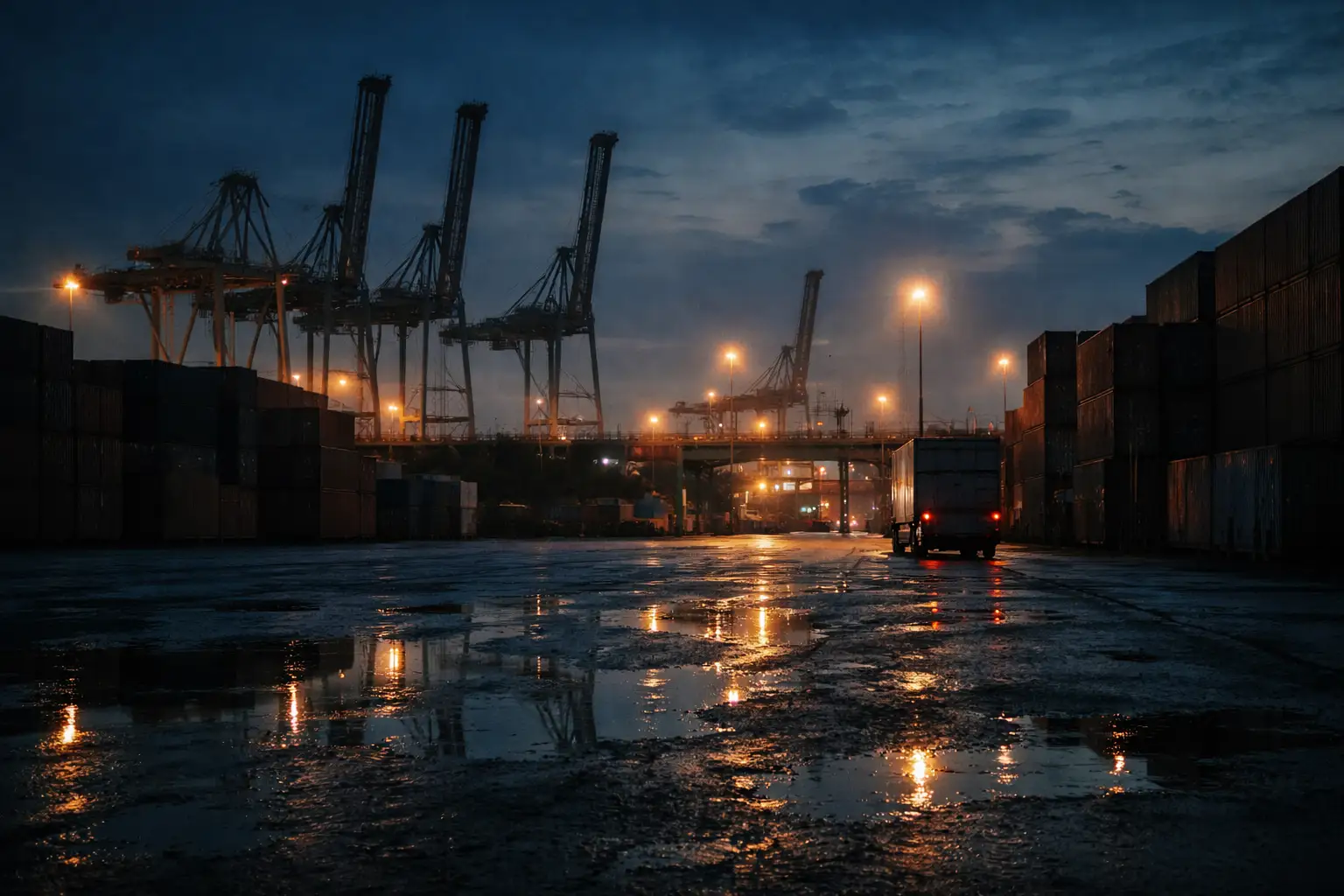
Most surprises don’t come from freight. They come from the handoff between paperwork and release.
One more reason to be conservative and precise: Thailand’s modern customs regime includes penalties for false declarations and smuggling-related offences.
You don’t need bad intent to trigger trouble. Omissions, inconsistent inventories, or “new in box” goods presented as used can escalate a routine clearance.
(Tilleke & Gibbins: Thai Customs Act penalty scheme)
How the bill is typically calculated
When charges apply, costs arrive as a stack: customs duty (by category) plus VAT.
VAT is generally 7% and is commonly applied to a base that includes the goods value, freight/insurance, and any assessed duty.
That means freight can raise the taxable base, another reason quotes should be explicit about what’s included.
The documents you should assume you’ll need
- Packing list (itemized; cartons numbered; major electronics listed separately)
- Passport biodata page and supporting visa/entry documentation (DTV approval or visa page)
- Transport document: Bill of Lading (sea) or Air Waybill (air)
- Address in Thailand (proof of residence helps; at minimum, a stable delivery location)
- Power of attorney (if you’re authorizing a broker/agent to clear on your behalf)
Consular DTV document lists commonly specify passport biodata pages and the DTV visa approval as part of core identity documentation.
(Thai Consulate LA: DTV checklist)
Items that trigger questions
- Brand-new goods in packaging (can look like resale/import)
- High quantities of the same item (commercial signal)
- High-value electronics without clear personal use context
- Restricted goods (certain medications, firearms/weapons, counterfeit items)
Restricted items to double-check before you pack
Rules change and enforcement can vary. Treat this as a “check first” list, not legal advice.
If you’re unsure, ask your shipper to flag items that may require permits or special handling.
- Vapes / e-cigarettes: high-risk category in Thailand; don’t ship them.
- Medications: especially controlled prescriptions; keep documentation and verify rules.
- Weapons and ammunition: don’t ship; restrictions are severe.
- Counterfeit goods: never ship; seizures are common worldwide.
- Telecom / radio equipment: some devices can trigger questions; check specifications before you pack.
- Alcohol: avoid shipping; travelers should verify personal allowance rules separately.
Don’t forget TDAC: the arrival step that can derail your timeline
Since 1 May 2025, Thailand has required non‑Thai travelers entering by air, land, or sea to complete the Thailand Digital Arrival Card (TDAC) within 3 days prior to arrival.
It doesn’t replace shipping documents, but it can affect your entry timeline.
If clearance requires you in-country, treat TDAC as a dependency.
(Thailand Immigration: TDAC official portal)
(U.S. Embassy Bangkok: TDAC launch notice)

For DTV moves, entry timing is a dependency, especially if clearance requires you in-country.
A relocation checklist built for DTV holders
Treat shipping like a project with milestones and deadlines.
Use the checklist below to keep your visa timeline and shipment timeline aligned.
Before you book
- Create an inventory: carton number, contents summary, estimated value, and weight/volume.
- Decide what must arrive quickly (air) vs what can follow later (sea).
- Photograph valuable items and keep receipts where available.
- Plan your Thailand address and access (condo rules, delivery hours, elevator bookings).
Before departure
- Make digital backups of your passport and DTV documents.
- Confirm your entry date and whether you intend to extend your stay.
- Remove prohibited items and separate batteries/power banks where required.
- Ask what destination fees apply (port/terminal handling, inspection, storage windows).
During transit
- Track milestones: export cleared → departed → arrived (port/airport) → customs → released → delivery.
- Be reachable: customs questions often have short response windows.
At arrival
- Have your ID/visa documents ready for clearance support.
- Expect inspections. They’re routine; delays aren’t automatically a red flag.
- Check cartons on delivery and document damage immediately.
The nomad strategy: ship what’s irreplaceable, buy the rest locally
If the Thailand replacement cost is lower than the expected landed cost (freight + destination fees + estimated duty/VAT), buy locally.
If the item is specialized, sentimental, or hard to source, and replacement is meaningfully higher, ship it.
- Ship: specialist work gear, a favorite chair, a calibrated monitor, musical instruments, sports equipment you can’t easily replace.
- Buy in Thailand: everyday home goods, small appliances, furniture basics, pantry items, especially if you’re still testing your base city.
- Hybrid: the expensive tech in your luggage, the bulky-but-worth-it items in the shipment, and everything else sourced locally after you settle.

Furnished rentals change the math: ship specialist gear, then buy everyday items once you’ve settled.
If you’re building a life in Thailand (not just shipping a box), these guides cover the practical extras that shape your timeline:
The voltage check (why some items aren’t worth importing)
Thailand uses 220V / 50Hz power. If you’re coming from a 110V market, many household appliances won’t run safely without step-down transformers, and even then,
voltage fluctuations can be rough on sensitive gear.
For many DTV movers, the clean play is to import only dual-voltage electronics and specialist equipment, then replace everyday appliances locally.
It’s often cheaper than shipping items that need transformers, or won’t run safely.
Tax residency timing: a DTV blind spot worth planning around
Shipping decisions can collide with tax planning. Thailand generally treats you as a tax resident in a given calendar year if you are present in the country for 180 days or more.
That can change your reporting obligations.
If you plan to stay for long stretches, consider tax advice before you commit to large imports or long leases.
(Expat Tax Thailand: 180-day tax residency rule)
How costs usually show up for DTV shipments
Read pricing as a stack. A low headline freight number can mask real landed costs.
Duty/VAT outcomes vary by category and Customs assessment. Treat any estimate as planning guidance, not a guarantee.
- Freight: the air or sea movement cost (priced by weight or volume).
- Origin handling: pickup, export documentation, warehouse/consolidation fees.
- Destination handling: terminal/port handling, documentation, and release fees.
- Clearance support: broker/admin work, sometimes billed separately.
- Duties & VAT: assessed by Thai Customs based on declared/assessed value and category.
- Last-mile delivery: Bangkok vs islands, condo access rules, stairs/elevator bookings.
Avoid surprises with an itemized quote that states what’s included at destination and what’s excluded as “government charges.”
How to keep costs predictable
Most losses aren’t on the ocean line item. They show up in the in-between: storage windows, last‑mile constraints, and paperwork mistakes.
Costs stay predictable when your quote and your documents are clean.
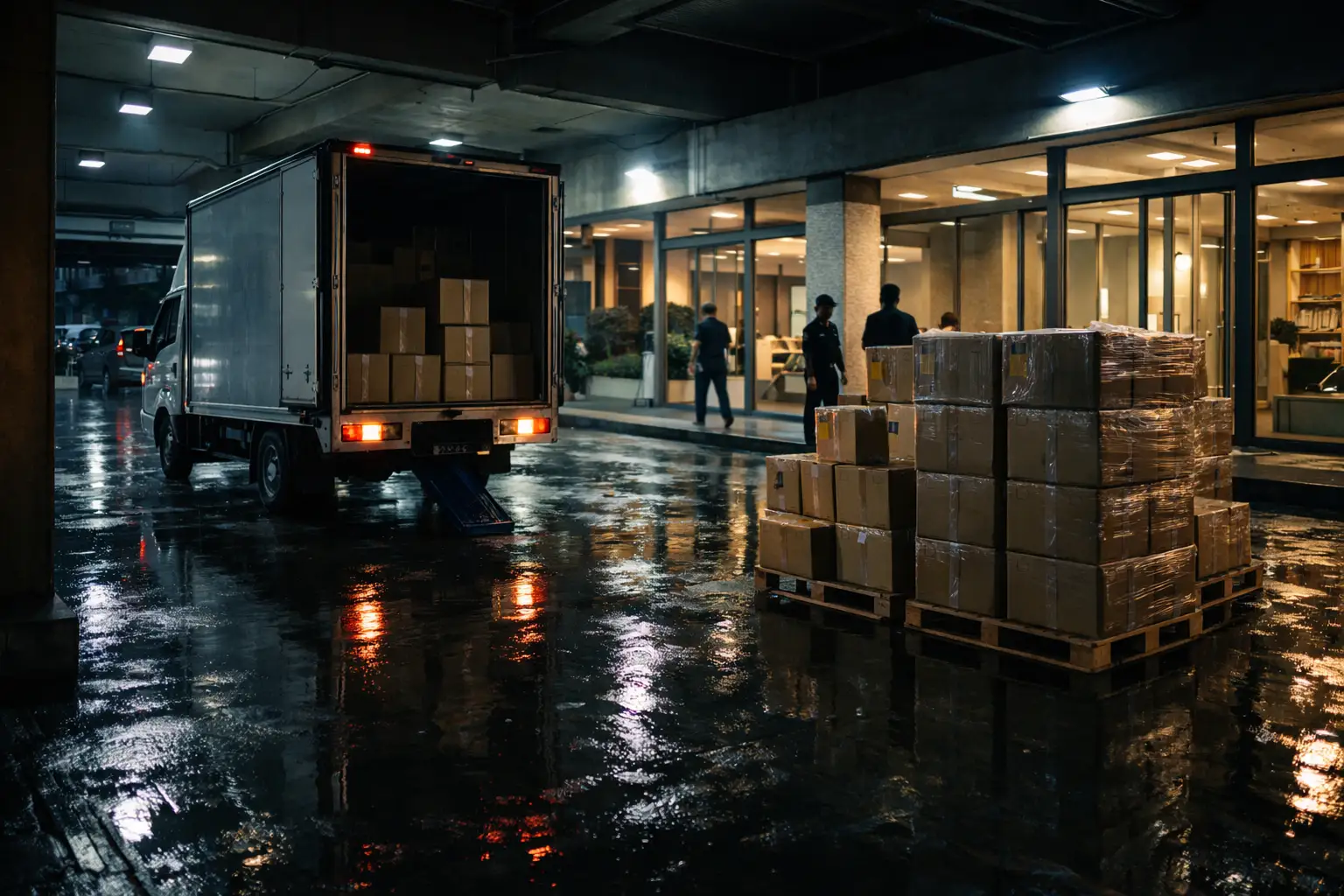
Condo rules, elevator bookings, and delivery windows are real line items. Get them into the scope early.
What quotes often omit (and what to demand in writing)
- Destination handling and release: ask whether terminal/port handling, documentation, and release fees are included; left out of the quote, they can be material.
- Brokerage scope: confirm whether customs clearance support is included, and whether you’ll need to sign a separate broker agreement or power of attorney.
- Storage windows: ask how long you have before storage charges begin, and what happens if Customs selects your shipment for inspection.
- Duty/tax assumptions: if the quote says “government charges excluded,” ask for an estimated range based on your inventory, then budget for variance.
- Ask for an all-in structure: origin pickup → export → main carriage → Thai clearance → delivery.
- Don’t improvise your packing list: inconsistent lists are a fast path to re-checks.
- Be honest about “new” items: unopened, high-value items can change the customs conversation.
Most DTV visa holders treat the household-shipping decision as logistics: what to ship, how to ship it, when to clear customs. The best DTV relocators treat it as a discovery problem first, and a logistics problem second. Before booking a container, they want to know three things: what their daily life in Thailand is going to look like, whether their shipment can qualify for duty relief at all, and how their tax position changes once they have spent 180 days in-country. Those three answers settle, in order, what they need, what the shipment will actually cost to land, and what they should not bring. The DTV holders who land cleanly are the ones who answered the discovery questions in the three months before the move. The DTV holders who do the logistics first and the discovery later are the ones who arrive with a half-unpacked container in a Bangkok serviced apartment, slowly realizing they shipped the wrong things.
Related reading: Thailand’s 6-Month Goods Rule: What Happens If You Miss It
FAQ: DTV visa shipping belongings to Thailand
1) Can DTV holders ship personal belongings to Thailand?
Short answer: Yes. DTV holders can ship belongings, but the shipment still has to clear Thai Customs like any other import.
The practical issue is classification and documentation. Customs will focus on your packing list, whether items appear for personal use, and whether the shipment looks commercial.
Keep the inventory coherent, avoid retail packaging where possible, and be ready to supply supporting documents quickly if asked.
2) Do DTV holders get duty-free import of household goods?
Short answer: Don’t assume it. Many duty-relief pathways depend on specific eligibility conditions.
Classic “expat household move” advice often assumes a status or condition you may not have.
If duty relief is a make-or-break factor, confirm eligibility before cargo departs. Otherwise, plan for duties/VAT as the baseline and budget around the landed cost.
3) What documents do I need for DTV visa shipping belongings to Thailand?
Short answer: Assume you’ll need a detailed packing list, identity/visa docs, and the transport document (B/L or AWB).
For most personal-effects shipments, the minimum set is an itemized packing list (cartons numbered), passport biodata page and visa/entry documentation, and the Bill of Lading (sea) or Air Waybill (air).
If you use an agent or broker, you may also need a signed authorization/power of attorney.
4) What’s the safest shipping method for a digital nomad Thailand relocation?
Short answer: For small loads, air freight can reduce handling steps; for larger loads, sea freight can be economical but adds more moving parts.
Many DTV moves are small: cartons, work gear, and one bulky item. In that profile, the “safest” method is the one with fewer handoffs and clearer inclusions.
Door-to-door quotes are often easier to compare because they define pickup, export handling, Thai clearance support, and delivery in one scope.
5) How do I avoid hidden charges when shipping to Thailand?
Short answer: Demand an itemized quote that states what’s included at destination and what’s excluded as “government charges.”
The headline freight number rarely equals landed cost. Ask for destination handling/release fees, clearance support scope, storage windows, and last‑mile delivery terms in writing.
If the quote says “government charges excluded,” request an estimated range based on your inventory so you can budget for variance.
6) What should a door-to-door quote include in Thailand?
Short answer: Pickup, export handling, main carriage, Thai destination handling/release, clearance support, and last‑mile delivery.
Door-to-door should read like a scope of work. You want explicit inclusions for destination handling/release, documentation, and delivery constraints (condo rules, elevator bookings, island transport).
A clean door-to-door scope is what lets you compare providers like-for-like.
7) Should I ship electronics to Thailand on a DTV visa?
Short answer: Ship only what you need and what will run reliably on Thailand’s power standards.
Focus on dual‑voltage devices (often labeled 100–240V) and specialist equipment you rely on for work.
High-draw 110V appliances can be a bad trade once you factor transformers and risk. List major electronics clearly on the packing list and keep chargers/labels.
8) Can I ship lithium batteries, power banks, or devices with batteries?
Short answer: Treat batteries as a compliance risk. Many carriers and lanes restrict them.
Battery rules vary by carrier, mode, and the specific battery type. Some items can’t move by air; some require special packing or declarations.
Flag any battery-containing items upfront so your shipper can advise what can move, how it must be packed, and what has to travel with you instead.
9) Will Customs inspect my shipment?
Short answer: It can happen. Inspections are routine and don’t automatically mean something is wrong.
Inspections are often triggered by inconsistencies (vague packing lists, new-in-box goods, high quantities of the same item) or restricted categories.
The best defense is a clean inventory, realistic quantities, and quick responses if Customs requests clarifications.
10) Do I need to be in Thailand to clear my shipment?
Short answer: Not always. Many people clear through an authorized agent, but requirements vary.
Clearance often requires identity/visa documentation and signatures. If you’re not available, a broker or agent may clear on your behalf with proper authorization.
Plan this early (especially if your travel dates are fluid), so you’re not trying to solve it when cargo is already waiting at destination.
11) What address should I use if I’m moving between Bangkok, Chiang Mai, and Phuket?
Short answer: Use the most stable delivery location you can, and keep it consistent across documents.
Address mismatches delay your shipment. If you’re still choosing a base, consider settling first and shipping second.
If you must ship before you finalize housing, work with your shipper to use a documented, stable delivery address and align it with your entry timeline.
12) What’s the simplest way to decide what to ship vs buy locally?
Short answer: Ship what’s irreplaceable or essential for work; buy basics locally.
For DTV holders, shipping makes the most sense for specialist gear, calibrated equipment, or truly sentimental items.
For everyday goods (flat‑pack furniture, basic kitchenware, generic bedding), the landed cost often beats any savings.
Use the “Ship vs Buy” test in this guide and default to smaller, edited shipments.
The practical takeaway
The operational bar is rising. Consulates judge applications on document quality. Customs judges shipments on document coherence.
Use our Thailand relocation page to request an itemized door-to-door quote structure and avoid destination-fee surprises.
Sources (for manual verification)
- Thai Ministry of Foreign Affairs, DTV revised document (PDF): Thai MFA: DTV revised guidance (PDF)
- Thai Consulate (Los Angeles), DTV visa public service page: Thai Consulate LA: DTV checklist
- Thailand.go.th, Government overview of the Destination Thailand Visa (DTV): Thailand.go.th: DTV overview
- BDO Thailand, Destination Thailand Visa (DTV) overview (PDF): BDO Thailand: DTV overview (PDF)
- Thai Customs, Household effects import clearance, including the change-of-residence criteria for duty exemption (English): Thai Customs: household effects import clearance criteria
- Thai e-Visa portal, Official application portal and current checklists: Thai e-Visa portal
- Tilleke & Gibbins, Removal of the THB 1,500 low-value import duty exemption from 1 January 2026: Tilleke & Gibbins: removing the low-value import duty exemption
- Tilleke & Gibbins, Thai Customs Act penalty scheme explainer: Tilleke & Gibbins: Customs Act penalty scheme
- Expat.com, Moving to Thailand / shipping overview (pre-DTV): Expat.com: moving/shipping overview (pre-DTV)
- ASQ.in.th, DTV shipping Q&A thread: ASQ.in.th: DTV shipping Q&A thread
- MoneyMgmnt, Thailand customs duty/import tax explainer: MoneyMgmnt: duty/import tax explainer
- Royal Thai Embassy Helsinki, Destination Thailand Visa (DTV) page (updated Oct 2025): Royal Thai Embassy Helsinki: DTV page
- Thailand Immigration, Thailand Digital Arrival Card (TDAC) official site: Thailand Immigration: TDAC portal
- U.S. Embassy Bangkok, TDAC launch notice (May 1, 2025): U.S. Embassy Bangkok: TDAC launch notice
- IMI Daily, Reporting on DTV demand (35,000+ applicants in first year): IMI Daily: DTV demand reporting
- Travel And Tour World, Reporting on DTV context and demand: Travel And Tour World: DTV context + demand